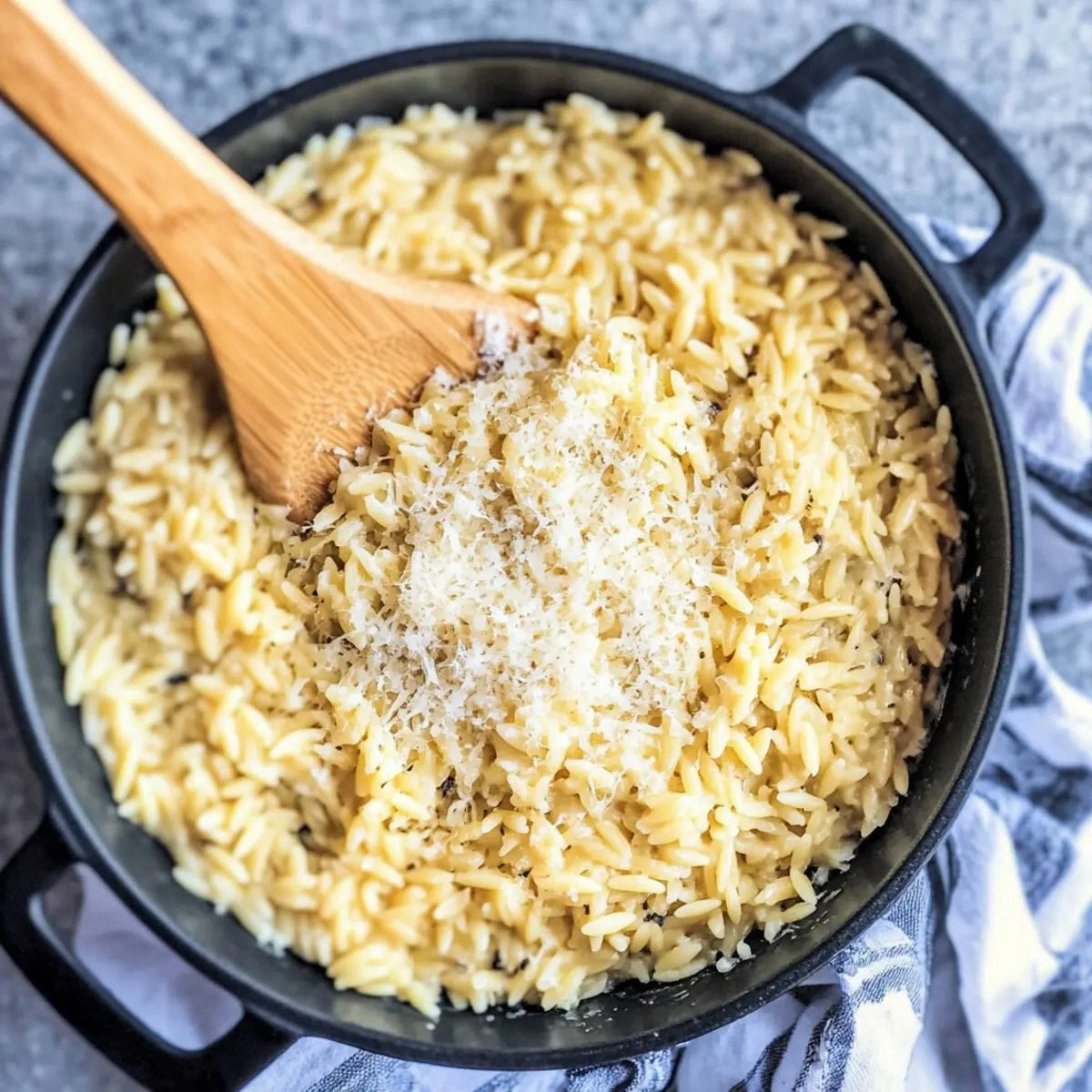
Picture this: it’s a rainy Thursday night, you’ve just rescued a burnt batch of risotto from the brink of disaster, and the kitchen smells like smoky disappointment. I was staring at the charred grains, cursing my timing, when a sudden craving for something creamy and comforting hit me like a wave. I rummaged through the pantry, grabbed a box of orzo, a handful of Parmesan, and a couple of cloves of garlic, and thought, “What if I could turn this mishap into the ultimate side dish?” That moment sparked a culinary experiment that turned a simple grain into a velvety, buttery masterpiece that could make even the most stubborn food critic swoon.
The first bite was a revelation: the orzo was perfectly al dente, each piece coated in a sauce that clung like a silk scarf draped over a statue. The garlic sang a low, aromatic hum, while the Parmesan melted into a golden river that swirled through every nook. I could hear the faint pop of butter as it hit the pan, and the steam rose like a warm, fragrant curtain. My taste buds did a little dance, and I knew I had stumbled onto something extraordinary—something that would become my go‑to comfort side for every occasion from weeknight dinners to holiday feasts.
Most orzo recipes out there either drown the grain in a watery broth or overload it with cheese until it turns into a clumpy mess. I’ve tried them all, and I’ll be honest — I ate half the batch before anyone else got to try it, because it was that good. This version, however, strikes a perfect balance: the creaminess is rich without being heavy, the garlic is bold but never overpowering, and the Parmesan adds that sharp, nutty finish that makes you want to lick the spoon. I dare you to taste this and not go back for seconds.
Now, let’s walk through every single step — by the end, you’ll wonder how you ever made it any other way. Okay, ready for the game‑changer? This next part? Pure magic. Stay with me here — this is worth it.
What Makes This Version Stand Out
- Silky Texture: The combination of butter, cream, and Parmesan creates a sauce that coats the orzo like velvet, delivering a mouthfeel that’s both luxurious and comforting.
- Garlic Punch: Freshly minced garlic is sautéed just until fragrant, giving a deep, aromatic backbone without the bitterness of burnt garlic.
- Simplicity: With only eight core ingredients, this dish is approachable for beginners yet sophisticated enough to impress seasoned cooks.
- Ingredient Quality: Using high‑quality Parmesan and extra‑virgin olive oil elevates the flavor profile, turning humble pantry staples into a gourmet experience.
- Crowd‑Pleaser: Whether it’s a family dinner or a potluck, this side dish consistently garners rave reviews and empty plates.
- Make‑Ahead Friendly: The flavors deepen after a short rest, making it perfect for prepping ahead and reheating without losing its creamy charm.
- Versatile Base: It pairs effortlessly with roasted chicken, grilled steak, or a crisp salad, acting as a canvas for countless main courses.
- Time‑Efficient: From start to finish it takes under 45 minutes, so you can have a restaurant‑quality side without the wait.
Inside the Ingredient List
The Flavor Base
Olive Oil (1 tablespoon): This is the silent workhorse that carries the garlic’s aroma into every bite. A drizzle of extra‑virgin olive oil ensures a fruity undertone that balances the richness of butter and cream. If you skip it, the garlic may stick and burn, leaving a bitter aftertaste. For a smoky twist, try a splash of infused olive oil, but remember—less is more when you’re aiming for a clean flavor.
Garlic (2‑3 cloves): Fresh garlic is the heart of this dish, providing a pungent, slightly sweet note once it’s sautéed. Mince it finely so it releases its oils evenly; a larger piece can dominate the palate. If you’re sensitive to raw garlic’s bite, let it cook a bit longer until it turns golden, but watch closely—overcooking leads to that dreaded burnt flavor. A quick tip: crush the cloves with the flat side of a knife before mincing for an easier prep.
The Texture Crew
Orzo (1 cup): This rice‑shaped pasta offers a perfect bite—soft yet firm enough to hold the sauce. The key is cooking it al dente; overcooking turns it mushy and loses that satisfying chew. Rinse the cooked orzo briefly under warm water to stop the cooking process, then return it to the pan for the final coating. If you can’t find orzo, try substituting with small pearl couscous, but expect a slightly different texture.
Butter (2 tablespoons): Butter adds a luxurious mouthfeel and a subtle caramel note that rounds out the sauce. Use unsalted butter so you can control the salt level precisely. Melt it over medium heat; if it foams too quickly, lower the temperature to avoid scorching. For a dairy‑free version, swap with a plant‑based butter, but the flavor profile will shift.
The Unexpected Star
Parmesan Cheese (½ cup): Freshly grated Parmesan is essential; pre‑grated versions contain anti‑caking agents that prevent a smooth melt. The cheese melts into the cream, creating that glossy, velvety finish. If you’re out of Parmesan, Pecorino Romano works as a sharper alternative, though it will add a saltier edge. A good rule of thumb: always add cheese off the heat to avoid a grainy texture.
Cream/Half‑and‑Half (½ cup): This is the liquid gold that binds everything together. Half‑and‑half gives a lighter body, while full cream yields an indulgent richness. Whisk it gently before adding to prevent curdling. If you prefer a lighter version, substitute with whole milk plus a teaspoon of flour to thicken, but the silkiness will be slightly reduced.
The Final Flourish
Salt & Pepper (to taste): Seasoning is the final brushstroke. Add salt gradually, tasting as you go; the Parmesan already contributes saltiness. Freshly cracked black pepper adds a subtle heat that brightens the dish. If you love a little kick, a pinch of red‑pepper flakes can elevate the flavor without overwhelming the creaminess.
Everything's prepped? Good. Let’s get into the real action…
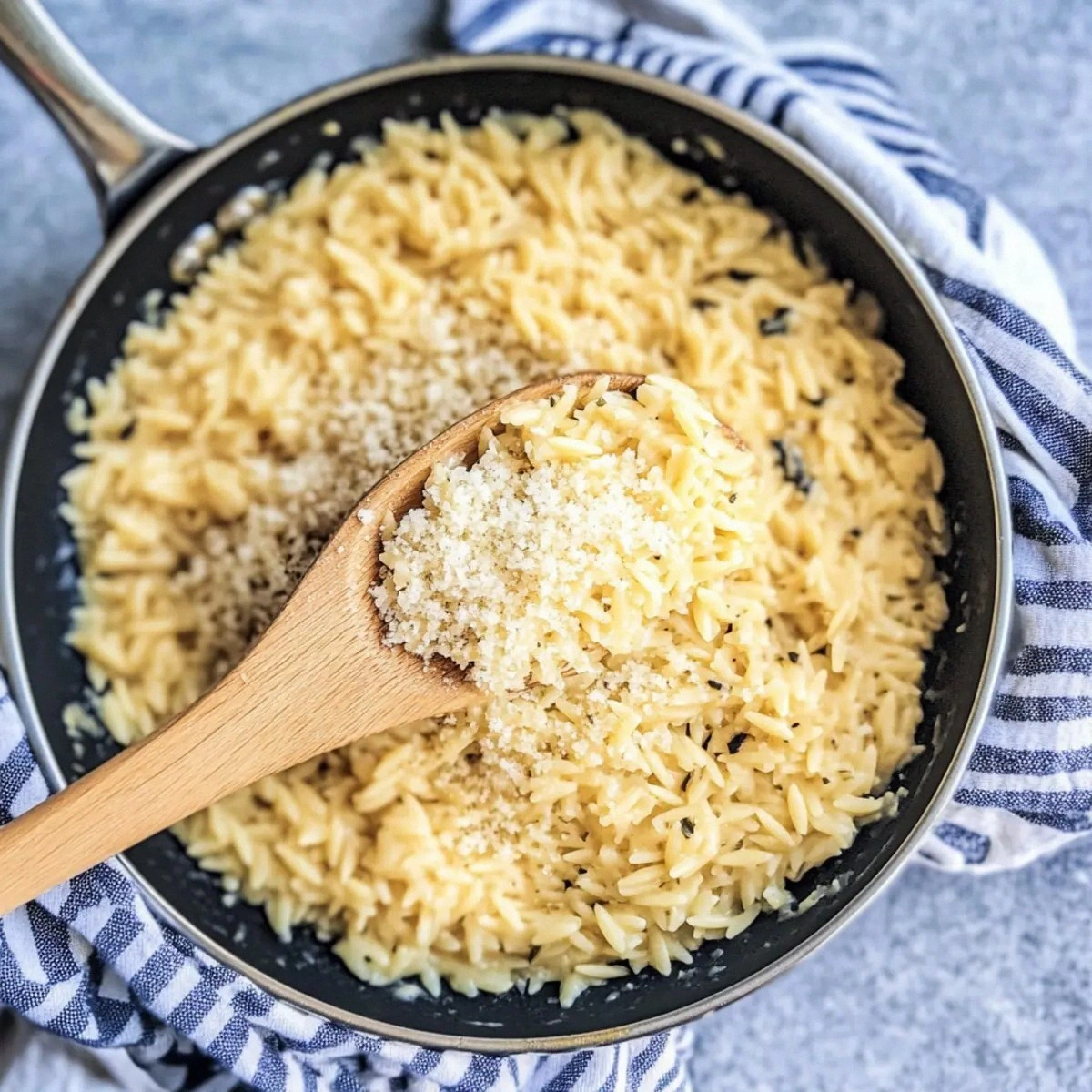
The Method — Step by Step
Heat a large, heavy‑bottomed skillet over medium heat and drizzle the olive oil, letting it shimmer for about 15 seconds. Add the butter and watch it melt into a golden pool; you’ll hear a gentle sizzle that signals it’s ready for the next step. This is the moment of truth—if the butter browns too fast, lower the heat to avoid a nutty bitterness.
Kitchen Hack: Use a silicone spatula to swirl the butter and oil together; this creates an emulsion that helps the sauce stay smooth later.Drop in the minced garlic, stirring constantly. You’ll notice the aroma rising within 30 seconds—this is the scent that tells you you’re on the right track. Keep the garlic moving; if it starts to brown, it’s heading toward bitterness. Once it’s fragrant and just barely golden, it’s ready for the orzo.
Introduce the orzo to the pan, tossing it to coat each grain in the buttery‑garlic mixture. Let it toast for 2‑3 minutes, listening for a faint nutty crackle. This step builds a subtle depth that most recipes skip, and it’s the secret behind the dish’s “nutty undertone” that makes it unforgettable.
Pour in 2 cups of hot chicken broth (or vegetable broth for a lighter version) and bring the mixture to a gentle boil. Reduce the heat to a simmer, cover, and let the orzo absorb the liquid for about 10 minutes. You’ll see the grains swell and the broth thicken, turning the pan into a creamy pool.
When the orzo is nearly al dente, stir in the cream or half‑and‑half. The pan should hiss softly as the liquid meets the hot grains—this is the “silk‑forming” stage. Keep the mixture at a low simmer, stirring constantly to prevent a skin from forming on top.
Watch Out: Adding the cream too quickly can cause it to separate; pour it in a thin stream while whisking.Fold in the grated Parmesan, watching it melt into a glossy ribbon that swirls around each piece of orzo. The sauce should become thick enough to cling to the back of a spoon—if it looks too thin, let it reduce a minute longer. Remember, the cheese is the glue that holds everything together.
Season with salt and freshly cracked black pepper, tasting after each addition. The goal is a balanced flavor where the cheese’s saltiness meets the pepper’s subtle heat. If you’re feeling adventurous, add a pinch of smoked paprika for a whisper of smoky depth.
Turn off the heat and let the orzo rest in the pan for 2 minutes. This short pause allows the flavors to meld, creating that “comfort‑wave” sensation when you bite into it. Cover the pan with a clean kitchen towel to keep the heat in, and resist the urge to stir too vigorously.
Give the dish a final flourish by drizzling a tiny extra splash of olive oil and a few extra shavings of Parmesan on top. This adds a glossy finish and a hint of extra richness that makes the plate look restaurant‑ready. Serve immediately while the sauce is still glossy and warm.
That’s it — you did it. But hold on, I’ve got a few more tricks that’ll take this to another level…
Insider Tricks for Flawless Results
The Temperature Rule Nobody Follows
Keep your skillet on medium‑low once the cream is added. High heat can cause the dairy to curdle, ruining the silky texture. I once tried a “speed‑up” method on high, and the sauce broke into a grainy mess. The secret is patience; a gentle simmer lets the starches in the orzo release slowly, thickening the sauce naturally.
Why Your Nose Knows Best
Before you even taste, trust your sense of smell. When the garlic turns golden and the butter begins to brown, you know the flavor base is ready. If you can’t smell the buttery‑garlic perfume, the pan is likely too cool, and the dish will lack that deep, aromatic foundation.
The 5‑Minute Rest That Changes Everything
After you turn off the heat, let the orzo sit covered for exactly five minutes. This rest allows the starches to fully hydrate, resulting in a creamier mouthfeel. Skipping this step often leads to a slightly dry texture, especially if you’re serving the dish later in the evening.
Butter‑First, Then Cream
Adding butter before the cream creates an emulsion that stabilizes the sauce. I once added the cream first, and the result was a thin, watery consistency that never thickened. The butter acts as a “fat anchor,” keeping the cream from separating.
Seasoning in Layers
Don’t dump all the salt and pepper at the end. Season the broth before adding it to the orzo, then adjust after the cheese melts. This layered approach ensures every bite is perfectly seasoned, not just the surface.
Creative Twists and Variations
This recipe is a playground. Here are some of my favorite ways to switch things up:
Sun‑Dried Tomato Burst
Stir in a quarter cup of chopped sun‑dried tomatoes after the cheese melts. The tangy sweetness cuts through the richness, adding a bright pop that pairs wonderfully with grilled chicken.
Herb‑Infused Elegance
Mix in a tablespoon of fresh chopped basil or flat‑leaf parsley right before serving. The herbaceous lift brightens the dish, making it feel lighter and perfect for spring gatherings.
Spicy Kick
Add a pinch of red‑pepper flakes or a dash of hot sauce when you season with salt. The heat adds depth without overwhelming the creamy base, ideal for those who love a subtle burn.
Mushroom Medley
Sauté a cup of sliced cremini or shiitake mushrooms alongside the garlic. Their earthy umami complements the Parmesan, turning the side into a hearty main‑course contender.
Lemon Zest Finish
Grate a teaspoon of lemon zest over the finished dish and drizzle a little lemon juice. The citrus brightens the palate and balances the richness, perfect for summer meals.
Cheese Swap
Replace half the Parmesan with Gruyère for a nutty, slightly sweet twist. The meltiness of Gruyère adds a different texture while still delivering that luxurious coating.
Storing and Bringing It Back to Life
Fridge Storage
Transfer the cooled orzo to an airtight container and store it in the refrigerator for up to three days. The flavors will meld further, making it even more comforting the next day. When reheating, add a splash of milk or cream to revive the sauce’s silkiness.
Freezer Friendly
Portion the cooked orzo into freezer‑safe bags, removing as much air as possible. It freezes beautifully for up to two months. To reheat, thaw overnight in the fridge, then warm gently in a skillet with a splash of broth or cream, stirring until glossy.
Best Reheating Method
For the ultimate texture, reheat in a non‑stick skillet over low heat, stirring constantly. Add a tablespoon of water or broth before you start; the steam will bring the sauce back to life without making it watery. Avoid microwaving at high power, as it can cause the cheese to separate.