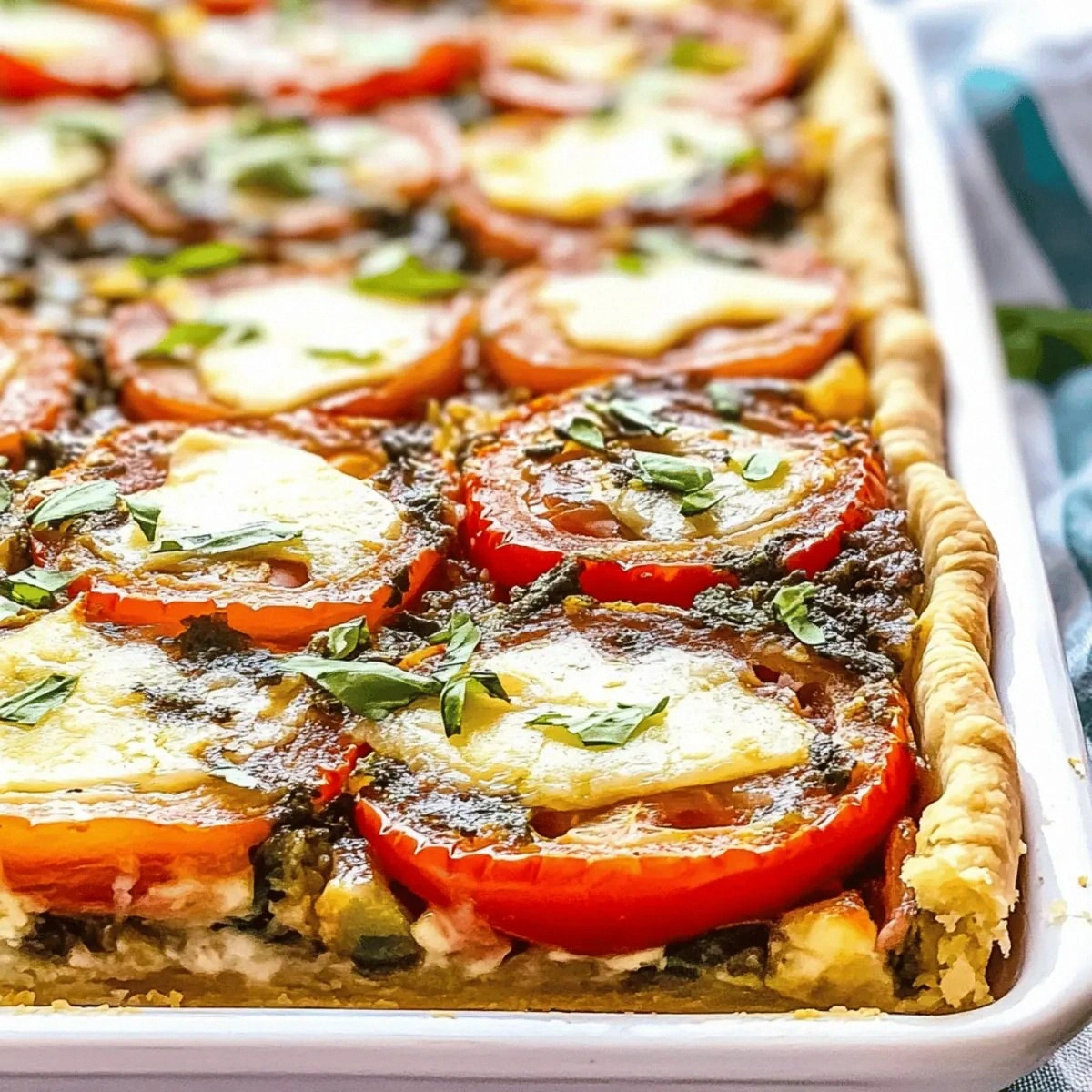
Picture this: it's late July, the kind of oppressive afternoon where your shirt sticks to your back the second you step outside, and the neighborhood smells like hot asphalt and chlorine. I was supposed to be working, but my mind kept drifting to the heap of candy-sweet tomatoes on my counter—four perfect globes that had been ripening on the windowsill for days, their skins taut and fragrant. I'd already botched one lunch attempt that week (note: never try to rush a frittata when you're on a conference call), so the stakes felt oddly high for a simple tomato pie. I muttered the words "slab pie" out loud, mostly to amuse myself, and suddenly the idea latched on like a favorite song you can't shake. Thirty minutes later I was elbow-deep in flour, grinning like a kid who'd just discovered the cookie jar, convinced I was about to crack the code on the ultimate summer comfort food.
If you've ever sunk your teeth into a tomato sandwich so juicy it ran down your wrist and thought, "I wish this joy could last longer," you're in the right place. This savory slab tomato pie is my edible love letter to August, a buttery, flaky raft carrying waves of roasted tomato, melty cheese, and garden herbs that tastes like liquid sunshine. Most tomato pies are dainty little tarts that disappear in three polite bites; mine is the sheet-pan rebel that feeds a crowd and still leaves you sneaking midnight slivers straight from the fridge. The crust shatters like thin ice, the filling stays silky thanks to a custard trick nobody expects, and the top bronzes into the kind of blistered beauty that makes everyone at the cookout ask for your secrets.
Confession time: I ate half the first test batch standing up at the stove, alternating bites with swigs of cold white wine while the sun went down. My plan had been to photograph the finished slab for the blog the next morning, but by 11 p.m. only a ragged corner remained, and I had to bake a second round before sunrise. If that isn't a testimonial to its dangerous deliciousness, I don't know what is. Ready to risk your own late-night fork raids? Let me walk you through every single step—by the end, you'll wonder how you ever made it any other way.
What Makes This Version Stand Out
Crust Couture: Instead of a single round crust, we press a sheet of rough-puff into a quarter-sheet pan, giving you those coveted crispy edges in every bite. The high butter-to-flour ratio means shards fly like confetti when you cut it, and the bottom stays cracker-thin, never soggy.
Cheese Strategy: Most recipes dump all the dairy in raw, ending in rubbery layers. We blanket tomatoes with a quick-blend custard of eggs, herbs, and a two-cheese combo—melty mozzarella for stretch and a crumble of feta for tangy pops. The result is a quiche-meets-pizza vibe that slices cleanly.
Tomato Triage: Forget the watery mess that soaks your crust. A 10-minute countertop salt-and-drain pulls excess juice, concentrating flavor into tomato candy. Reserve those ruby drippings; you'll whisk them into the custard for an umami bomb.
Herb Explosion: Basil, thyme, and a whisper of oregano get layered three ways—under the tomatoes, inside the custard, and strewn on top—so every forkful tastes like you face-planted into a summer garden.
Crowd Geometry: Slab pie = maximum surface area = maximum bronzed cheese real estate. One pan feeds eight as a main, twelve as a side, and the squares stack like edible Jenga for beach picnics.
Make-Ahead Magic: Blind-bake the crust up to two days early; assemble and chill until guests arrive. Pop in the oven as the first glass of rosé is poured, and serve it warm while conversation is still sparkling.
Alright, let's break down exactly what goes into this masterpiece...
Inside the Ingredient List
The Flavor Base
Tomatoes are the divas here, so buy the best you can find—heavy, fragrant globes that still carry a faint whiff of vine. Farmers' market beefsteaks are ideal, but ripe Romas work if that's what you've got. Skip anything pale, rock-hard, or mealy; underripe tomatoes will weep water and taste like refrigerated disappointment. You need four cups, sliced a generous quarter-inch thick; too thin and they melt into mush, too thick and they refuse to play nicely with the custard.
The Texture Crew
Pie crust purists, avert your eyes—I use a high-quality store-bought sheet because summer is too short to laminate dough when you could be on a paddleboard. If you're a from-scratch hero, swap in your favorite rough-puff, but roll it thin, about one-eighth inch, so it bakes through without par-bake drama. Eggs act as the velvety glue, setting the filling into a sliceable slab; large eggs, not medium, because we're depending on their protein to firm up against juicy tomatoes.
The Unexpected Star
Cheese choice changes the pie's personality. Mozzarella delivers Instagram-worthy cheese pulls, but swap in crumbled feta for a salty, creamy funk that plays off sweet tomatoes like a beachside romance. A modest half-cup of each nets the perfect balance. If you're feeling rebellious, smoked gouda slips in a campfire whisper that'll have guests asking, "What's that amazing flavor?"
The Final Flourish
Fresh herbs are non-negotiable. Basil brings the classic Caprese vibe, thyme adds lemony pine notes, and oregano deepens everything with earthy warmth. Tear, don't chop, the basil—those bruised edges release aromatic oils that perfume the custard. Dried herbs? Only if you're stranded on a desert island, and even then, consider swimming to the next island for fresh.
Everything's prepped? Good. Let's get into the real action...
The Method — Step by Step
- Heat your oven to 400°F. Drape the pie crust into a greased 9-by-13-inch quarter-sheet pan, pressing it gently into the corners so it hugs the metal like a favorite sweater. Trim excess, leaving a one-inch overhang; fold that lip under itself to build a sturdy edge that won't slump. Prick the base all over with a fork—think stabby morse code—then slide the pan into the hot oven on the lowest rack for 15 minutes, until the crust looks pale gold and smells like buttery popcorn. While it's baking, ignore the urge to open the door; drafts collapse rising pastries faster than soufflé heartbreak.
- Meanwhile, slice your tomatoes into generous quarter-inch rounds and lay them on a paper-towel-lined sheet pan like edible poker chips. Shower both sides with a teaspoon of kosher salt; the salt acts like a magnet, pulling out excess water so you'll get concentrated flavor and a crisp crust. Let them sit for 10 minutes, then blot the tops with more towels. Reserve those rosy juices—you'll whisk two tablespoons into the custard for tomato-on-tomato intensity.
- Crack the eggs into a bowl, add the reserved tomato juices, a splash of milk, and whisk until the mixture is the color of sunrise. Stir in half the cheese and half the herbs; think of this as your savory custard latte. Season with a few grinds of black pepper and a pinch of salt, but go easy—remember the tomatoes carry their own salinity.
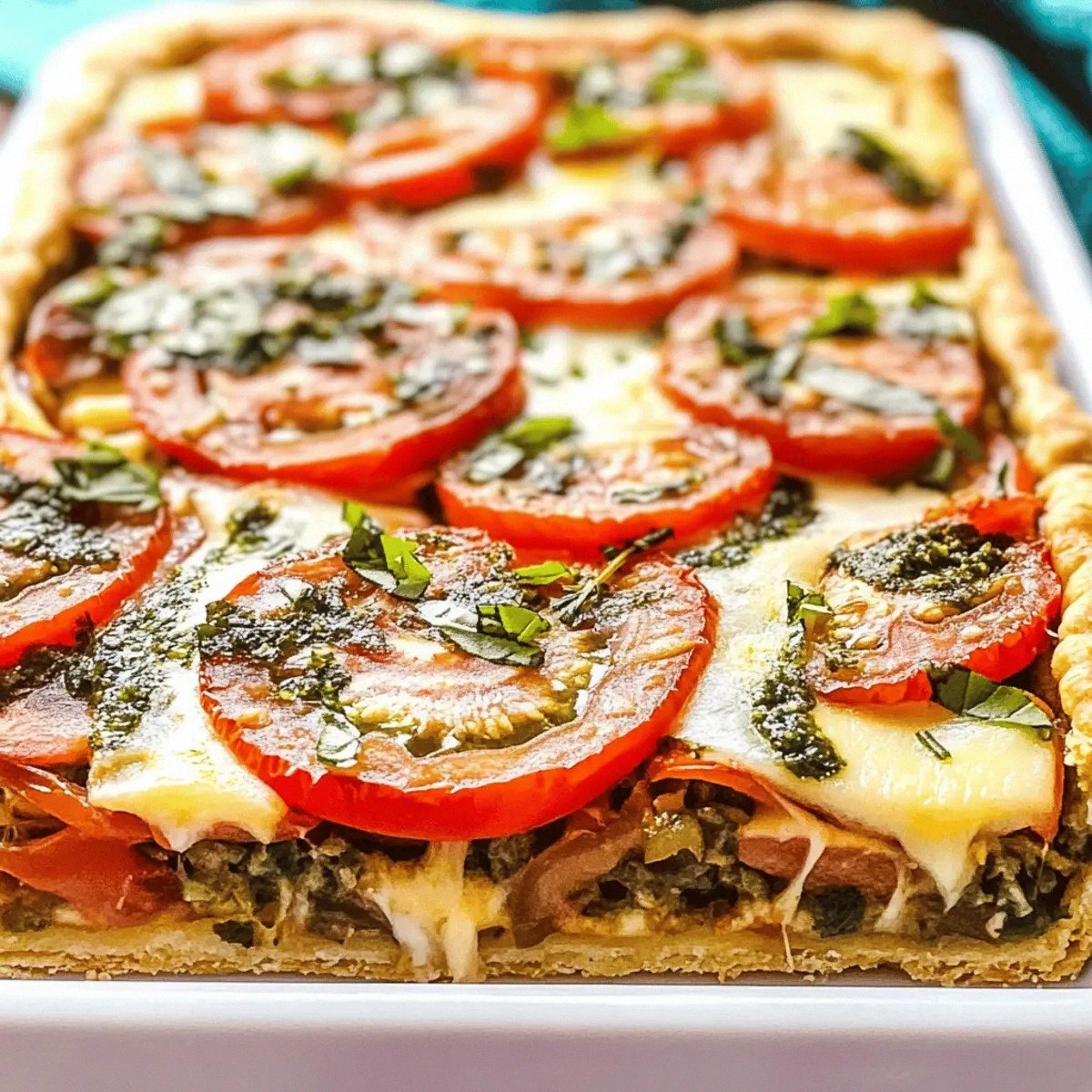
- Scatter the remaining cheese across the blind-baked crust, then layer the tomatoes in overlapping shingles, covering every square inch like a Mediterranean tile roof. Pour the custard over the top; it will seep around the tomatoes like liquid gold. Tilt the pan gently so the custard reaches every corner—this is the glue that holds your edible mosaic together.
- Bake the assembled slab for 25 to 30 minutes, until the custard is puffed and the top develops leopard-spot browning. Your kitchen will smell like pizza night at a farmhouse—tomato perfume mingling with nutty brown butter. Resist cutting it the moment it emerges; give it a 10-minute rest so the custard sets into tidy squares.
- While it rests, chop the remaining herbs and shower them over the surface for a fresh pop of color. Serve warm or at room temperature, ideally with a crisp green salad and a cold bottle of something white and chilled. Leftovers—should you be that disciplined—reheat like a dream under foil, or eat cold straight from the fridge, standing in front of the open door.
That's it—you did it. But hold on, I've got a few more tricks that'll take this to another level...
Insider Tricks for Flawless Results
The Temperature Rule Nobody Follows
Start the pie on the lowest rack for the first 15 minutes; radiant heat from the floor blasts the bottom crust, setting it before juices have a chance to seep in. Then move it to the center rack so the top browns evenly without burning the edges. A friend tried skipping this step once—let's just say her crust resembled laminated cardboard.
Why Your Nose Knows Best
Don't rely solely on the timer. When the pie is done, your kitchen will smell like tomato soup married to grilled cheese and moved to the countryside. If you open the oven door and get a faint whiff of raw egg, give it another five minutes; the custard is still too wobbly.
The 5-Minute Rest That Changes Everything
Slice too early and the custard oozes like a lava lamp. Let the slab rest five to ten minutes; during this time the proteins finish setting and the cheese relaxes, giving you restaurant-clean cuts. Cover loosely with foil if you're worried about heat loss, but don't seal it—steam will soften that gorgeous crust you worked for.
Creative Twists and Variations
This recipe is a playground. Here are some of my favorite ways to switch things up:
Mediterranean Sunset
Swap half the tomatoes for thinly sliced zucchini rounds, and fold chopped olives into the custard. Finish with a crumble of feta and a drizzle of pesto for coastal-café vibes.
Smoky Mountain
Replace mozzarella with smoked gouda and add a whisper of chipotle powder to the eggs. Top with charred corn kernels and cilantro for a Southwestern campfire feel.
Greenhouse Gatsby
Layer in ribbons of fresh spinach and slivers of sweet onion under the tomatoes. The spinach wilts into silky threads, and the onion caramelizes into jammy sweetness.
Brunch Queen
Add a handful of crumbled breakfast sausage to the custard and serve the squares with a side of fruit salad. Suddenly it's the star of your Sunday buffet.
Caprese Remix
Dot the top with mini fresh mozzarella pearls once the pie comes out of the oven; the residual heat softens them into creamy puddles. Finish with a balsamic glaze zig-zag.
Fire-Roasted Flair
Char the tomato slices under a broiler for two minutes before salting; the blistered skins add smoky depth reminiscent of wood-fired pizza.
Storing and Bringing It Back to Life
Fridge Storage
Cool completely, then cover the pan tightly with plastic wrap or transfer squares to an airtight container. It keeps up to four days, though the crust will gradually soften. For best texture, reheat only the portion you plan to eat.
Freezer Friendly
Wrap individual squares in plastic, then foil, and freeze for up to two months. Thaw overnight in the fridge, then reheat in a 350°F oven for 12 minutes. The custard survives freezing beautifully, though the crust won't be quite as shattery.
Best Reheating Method
Place slices on a pre-heated sheet pan in a 375°F oven for 8 to 10 minutes. Add a tiny splash of water to the pan before sliding it in; the gentle steam revives the custard without turning the base soggy.