I was standing in my kitchen at midnight, the kind of kitchen that smells like burnt toast and regret, when my roommate dared me to bake a cake that would make the lemon trees weep. I grabbed the first lemon I could find, squeezed it into a bowl, and accidentally tipped a whole cup of flour onto the floor. The mess was epic, but the moment the citrusy steam hit my nose, I knew I was onto something that could turn a disaster into a masterpiece. This isn’t just another lemon cake; it’s a cloud‑soft, feather‑light wonder that will have you shouting, “I dare you to taste this and not go back for seconds!”
Picture this: the oven door swings open and a golden halo of aroma bursts out, a mingling of sweet sugar, buttery melt, and a bright lemon zing that makes your eyes water in the best possible way. You hear the faint crackle of the crust pulling away from the pan, feel the warm air on your skin, and taste that first bite—a balance of tangy citrus and buttery fluff that melts like snow on a summer tongue. Most recipes get this completely wrong, ending up either rubbery or overly sweet, but this version hits the sweet spot every single time. I’ll be honest — I ate half the batch before anyone else got a chance to try it, and that’s a confession worth sharing.
What makes this cake truly stand out is a secret technique I stumbled upon while watching a French patisserie documentary: I fold the lemon zest into a lightly whipped butter‑egg mixture before the flour ever sees the bowl. That tiny step creates air pockets that lift the crumb to cloud‑like heights, and the zest distributes its aromatic oils evenly, so every forkful sings. The result? A cake so light you could almost float it onto a plate, yet it holds together like a well‑trained chorus. And if you’ve ever struggled with a dense, soggy lemon cake, you’re not alone — I’ve got the fix, and it’s right here.
Okay, ready for the game‑changer? I’m about to walk you through every single step — from selecting the perfect lemons to the final dusting of powdered sugar that looks like fresh snowfall. By the end, you’ll wonder how you ever made any other lemon cake, and you’ll be ready to brag to anyone who asks, “What’s the secret?” Stay with me here — this is worth it.
What Makes This Version Stand Out
- Cloud‑Light Texture: The gentle folding of butter, eggs, and zest creates a sponge that rises like a sunrise, making every bite feel like you’re biting into a sweet, airy dream.
- Zesty Brightness: Fresh lemon juice and zest are added at two different stages, ensuring a layered citrus punch that never overpowers the sweetness.
- Simple Ingredients: No exotic flours or hard‑to‑find extracts—just pantry staples that anyone can snag at the local grocery store.
- One‑Pan Wonder: The entire cake bakes in a single 9‑inch round pan, cutting down on cleanup and keeping the flavor locked in.
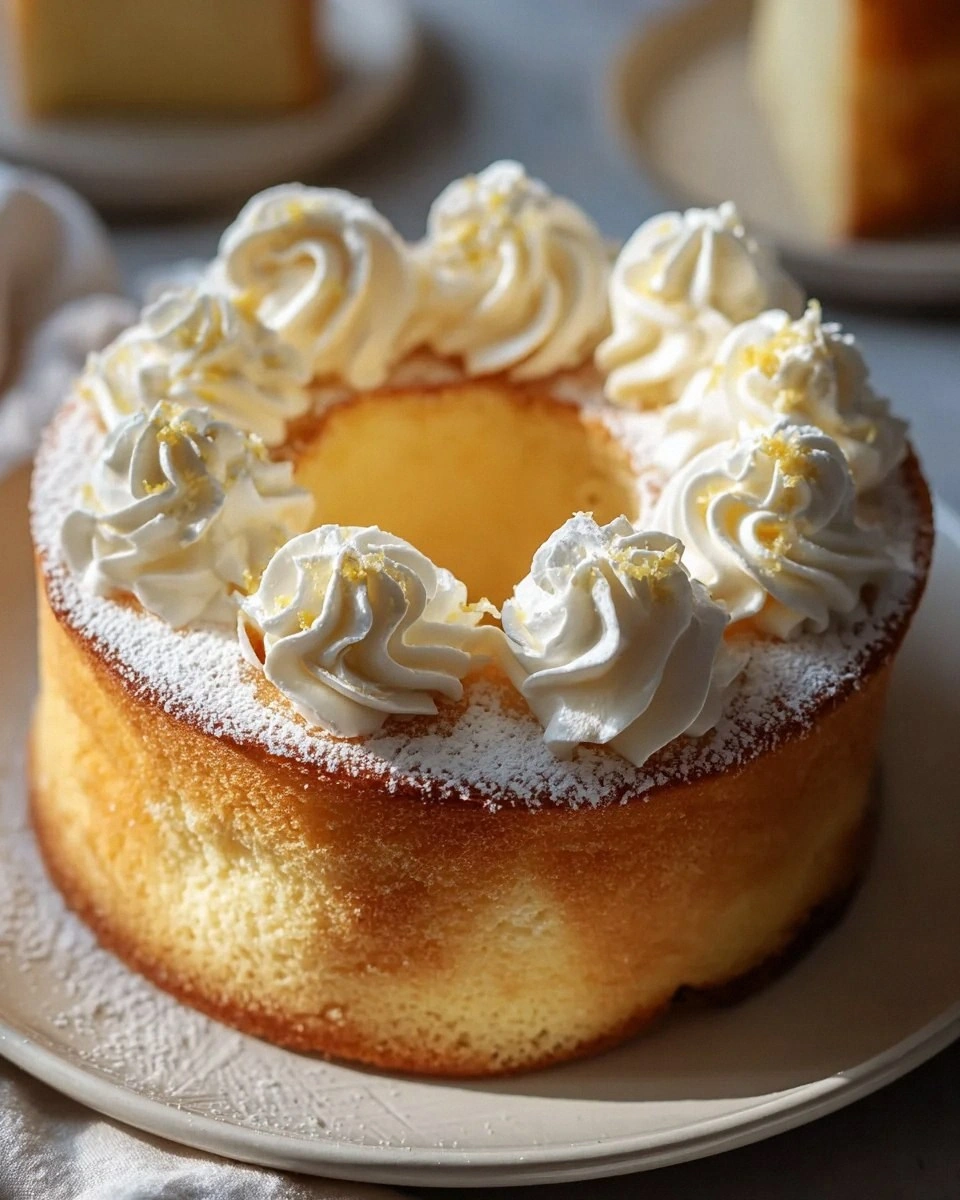
- Show‑Stopping Finish: A whipped cream topping sweetened with powdered sugar adds a luxurious finish that looks as good as it tastes.
- Make‑Ahead Friendly: This cake stays moist for up to three days, and the whipped topping can be pre‑whipped and stored, making it perfect for last‑minute gatherings.
- Universal Appeal: Whether you’re serving brunch, dessert, or a tea‑time treat, the bright flavor profile wins over both kids and adults.
- Budget‑Friendly: All ingredients cost under $15, so you can indulge without breaking the bank.
Inside the Ingredient List
The Flavor Base
All‑purpose flour is the backbone of any cake, providing structure while still allowing the batter to expand. I sift it twice to guarantee that cloud‑like lightness; any lumps would be like tiny anchors pulling the cake down. If you skip the sifting, expect a denser crumb that feels more like a biscuit than a cloud. For a gluten‑free twist, you can substitute a 1:1 blend of rice flour and tapioca starch, but the texture will shift slightly toward a softer, more crumbly feel.
Granulated sugar does more than sweeten; it caramelizes during baking, creating that delicate golden crust that adds a subtle crunch. Too little sugar and the cake will taste flat, too much and you’ll lose the lemon’s bright edge. If you’re watching carbs, you can replace half the sugar with a natural sweetener like erythritol, but be aware that the crust may not brown as deeply.
Baking powder is the unsung hero that lifts the batter to airy heights. It reacts twice—once when mixed with the wet ingredients and again in the heat of the oven—creating those airy pockets that make the cake feel like a cloud. Using too much will give a metallic aftertaste, while too little will leave the cake flat and dense. I always measure it with a level spoon to keep the balance perfect.
The Texture Crew
Large eggs bring richness, moisture, and additional leavening power when beaten. The proteins in the whites create a network that traps air, while the yolks add fat for tenderness. If you’re allergic, you can substitute each egg with ¼ cup of unsweetened applesauce, but the cake will lose some of its lift and become slightly denser.
Unsalted butter, softened to room temperature, creates a creamy base that emulsifies with the sugar and eggs. The butter’s fat coats the flour proteins, preventing excessive gluten formation and keeping the crumb tender. For a dairy‑free version, use an equal amount of coconut oil, though the flavor will take on a faint coconut note.
Milk adds moisture and helps dissolve the sugar, creating a silky batter. Whole milk yields the richest crumb, but you can swap in almond or oat milk for a lighter profile. Just be sure the milk is at room temperature; cold milk will shock the batter and inhibit rise.
The Unexpected Star
Lemon zest is the aromatic powerhouse that injects a burst of citrus oil into the batter. The zest is added early, allowing its volatile compounds to meld with the butter and eggs, creating a perfume that fills the kitchen. If you skip zest, you’ll get a lemon‑flavored cake, but it will lack the depth that makes it unforgettable.
Fresh lemon juice brightens the crumb with a sharp, tangy kick that cuts through the sweetness. Adding it after the batter is mixed prevents the acid from weakening the gluten too early, which would otherwise make the cake crumbly. For a milder version, reduce the juice to 2 tablespoons, but the signature zing will be less pronounced.
The Final Flourish
Powdered sugar for dusting is the visual finale, creating a snow‑like veil that makes the cake look as light as its texture. It also adds a subtle sweetness that balances the lemon’s acidity. If you prefer a more rustic look, skip the dusting and serve the cake with a drizzle of lemon glaze instead.
Heavy cream and additional powdered sugar combine to form a whipped topping that’s airy, buttery, and just sweet enough to complement the cake without overwhelming it. Whipping the cream to soft peaks ensures it holds its shape when dolloped, while the sugar stabilizes it. For a lighter topping, fold in a tablespoon of Greek yogurt for a tangy twist.
Everything's prepped? Good. Let's get into the real action…
The Method — Step by Step
- Preheat and Prep: Set your oven to 350°F (175°C) and position the rack in the center. Grease a 9‑inch round cake pan with butter, then line the bottom with parchment paper. This double‑layered greasing ensures the cake releases cleanly, and the parchment prevents any accidental sticking that could tear the delicate crumb. Kitchen Hack: Lightly flour the parchment after greasing; it creates a non‑stick barrier that makes lifting the cake a breeze.
- Combine Dry Ingredients: In a large bowl, sift together 2 cups of all‑purpose flour, 2 tsp baking powder, and 1 tsp salt. Sifting aerates the flour and distributes the leavening evenly, which is crucial for that cloud‑like rise. Once sifted, whisk the mixture for a few seconds to ensure any clumps are gone. The moment you see a uniform, pale powder, you know you’re on the right track.
- Cream Butter and Sugar: Using a stand mixer on medium speed, beat ½ cup softened unsalted butter with 1 cup granulated sugar until the mixture is pale, fluffy, and resembles a thick, buttery mousse. This process incorporates air, which will later expand in the oven, creating the light texture we crave. If the mixture looks greasy rather than airy, keep beating a little longer; the sugar crystals act as tiny scrubbing pads that help incorporate air.
- Eggs Meet Lemon Zest: Add 3 large eggs one at a time, beating well after each addition. Then stir in 2 tablespoons of freshly grated lemon zest. The zest’s oils coat the butter‑egg emulsion, forming a fragrant base that will permeate every crumb. Watch Out: Adding the eggs too quickly can cause the mixture to curdle; always add them slowly and scrape the sides of the bowl.
- Incorporate Milk and Lemon Juice: Gently pour in ½ cup whole milk and ¼ cup fresh lemon juice, alternating with the dry ingredients. Start and end with the dry mixture, folding with a rubber spatula until just combined. Over‑mixing will develop gluten, making the cake tough; you want a batter that looks slightly lumpy and glossy.
- Fold in the Flour: Using the same spatula, gently fold the sifted flour mixture into the wet batter in three additions. This is the moment of truth: the batter should become airy and light, with visible streaks of butter that slowly disappear. Resist the urge to stir vigorously; a gentle folding motion preserves the air bubbles you just created.
- Transfer and Bake: Pour the batter into the prepared pan, smoothing the top with an offset spatula. Slide the pan into the preheated oven and bake for 30‑35 minutes, or until a toothpick inserted into the center comes out clean and the edges start pulling away from the pan. The scent that fills the kitchen at this stage is pure lemon bliss, a signal that you’re about to achieve something magical.
- Cool and Whip: Let the cake cool in the pan for 10 minutes, then turn it out onto a wire rack to cool completely. While the cake cools, whip 1 cup heavy cream with 2 tablespoons powdered sugar until soft peaks form. This whipped topping is the final flourish that turns a good cake into an unforgettable dessert. Once the cake is fully cooled, spread the whipped cream generously over the top, then dust with an extra 2 tablespoons powdered sugar for that snow‑capped look.
That's it — you did it. But hold on, I've got a few more tricks that'll take this to another level…
Insider Tricks for Flawless Results
The Temperature Rule Nobody Follows
Never bake a cake straight from the fridge. Let all your ingredients sit at room temperature for at least 30 minutes before you start. The butter softens, the eggs loosen, and the lemon juice warms up, which means they’ll blend more uniformly. I once tried to rush the process and ended up with a cake that had a dense, gummy center—lesson learned.
Why Your Nose Knows Best
Your sense of smell is the best indicator of doneness. When the cake reaches the 30‑minute mark, give it a gentle sniff; if you detect a sweet, buttery aroma with a bright citrus note, the cake is likely ready. If the scent is still faint, give it another 3‑5 minutes. Trusting your nose prevents over‑baking, which can dry out the crumb.
The 5‑Minute Rest That Changes Everything
After removing the cake from the oven, let it rest in the pan for exactly five minutes before flipping it out. This short rest allows the steam to finish cooking the interior gently, resulting in a softer crumb. Skipping this step often yields a cake that cracks on the surface when you try to turn it out.
Whip It Like a Pro
When whipping the cream, start on low speed for 30 seconds, then increase to medium‑high. This gradual build prevents splattering and ensures the cream reaches the perfect soft‑peak stage. Adding a pinch of cream of tartar stabilizes the peaks, especially if you plan to pipe the topping.
Lemon Zest Timing
Add the zest at the same time you cream the butter and sugar. This timing allows the zest’s essential oils to coat the butter droplets, spreading the flavor more evenly. If you add zest later, you’ll notice pockets of intense lemon that can be overwhelming.
Creative Twists and Variations
This recipe is a playground. Here are some of my favorite ways to switch things up:
Berry‑Burst Cloud
Fold in ½ cup of fresh raspberries or blueberries just before pouring the batter into the pan. The berries add a pop of color and a subtle tartness that pairs beautifully with the lemon. This variation is perfect for summer picnics.
Lavender Dream
Replace half of the lemon zest with culinary lavender buds (ground finely). The floral notes create a sophisticated flavor profile that’s ideal for an elegant tea party. Pair it with a honey‑sweetened whipped cream for an extra touch of luxury.
Almond‑Lemon Fusion
Add ¼ cup finely ground almond meal to the dry ingredients and swap half the butter for almond butter. This gives the cake a nutty undertone and a slightly denser crumb that still feels light. It’s a hit with anyone who loves marzipan.
Spiced Citrus
Incorporate ¼ tsp ground ginger and a pinch of ground cardamom into the dry mix. The warm spices complement the lemon’s brightness, making this version a cozy fall treat. Serve with a drizzle of caramel sauce for extra decadence.
Vegan Cloud
Swap the eggs for a flax‑egg mixture (2 tablespoons ground flaxseed + 6 tablespoons water per egg) and use coconut oil in place of butter. Use a plant‑based milk and a vegan whipped topping. The texture changes slightly, but the lemon punch remains front and center.
Storing and Bringing It Back to Life
Fridge Storage
Cover the cooled cake tightly with plastic wrap or store it in an airtight container. It will stay fresh for up to three days. The whipped topping can be kept separate in a small bowl, covered with a damp paper towel to prevent it from drying out.
Freezer Friendly
Wrap the entire cake (without the topping) in a double layer of parchment, then foil, and place it in a freezer‑safe bag. It freezes well for up to two months. When you’re ready to enjoy it, thaw overnight in the fridge, then bring to room temperature before adding fresh whipped cream.
Best Reheating Method
To revive a slice, place it on a microwave‑safe plate, sprinkle a tiny splash of water around the edges, and microwave for 15‑20 seconds. The steam generated will bring back the cake’s softness, while the water prevents it from drying out. For a larger portion, reheat in a 300°F oven for 8‑10 minutes, again with a few drops of water on the top.