I was standing in my kitchen on a rainy Tuesday, staring at a half‑roasted butternut squash that had somehow turned into a charcoal sculpture, and I thought, “If I can’t salvage this, I might as well turn it into something that screams comfort.” The moment I tossed the charred cubes into the pot with a splash of olive oil, the kitchen filled with a scent that reminded me of a forest after a gentle rain—earthy, sweet, and a little smoky. I was craving something that could hug me from the inside out, a dish that would make the cold wind outside feel like a distant memory, and that’s when the idea of marrying sausage, pasta, and squash was born. I dared a friend to taste this concoction and not beg for seconds, and she immediately said, “You just invented the perfect autumn dinner.” This version stands out because it doesn’t just toss ingredients together; it orchestrates them like a symphony, with each note—smoked sausage, buttery butter, and a whisper of thyme—playing its part to create a harmonious, velvety masterpiece. I’m about to reveal a secret technique involving a quick sear that locks in the sausage’s smoky juices, something most recipes completely overlook, and trust me, once you try it you’ll never go back to the bland stovetop versions you’ve been making. Let me walk you through every single step — by the end, you’ll wonder how you ever made it any other way.
What Makes This Version Stand Out
- Flavor Depth: The combination of smoked sausage, smoked paprika, and fresh thyme creates a layered taste that feels like a warm blanket on a chilly night, and the caramelized brussels sprouts add a subtle bitterness that balances the sweet squash.
- Texture Contrast: You get silky, buttery pasta, tender roasted squash, and crispy, caramelized brussels sprouts that snap like thin ice when you bite, delivering a satisfying crunch in every forkful.
- Simplicity Meets Sophistication: Despite the impressive flavor profile, the recipe uses pantry staples and requires only a single sheet pan and one pot, making it accessible even on a weeknight.
- Ingredient Quality: Using a good-quality smoked sausage (cajun or andouille) and fresh thyme elevates the dish from ordinary to restaurant‑grade, and the butternut squash’s natural sweetness shines when roasted properly.
- Crowd Reaction: I’ve served this at dinner parties and watched guests go from polite nods to shouting “more, please!”—it’s a guaranteed crowd‑pleaser that even picky eaters adore.
- Make‑Ahead Potential: The components can be pre‑roasted and the pasta cooked ahead of time, then tossed together for a quick reheated dinner, perfect for busy weekdays.
- Seasonal Soul: The dish captures the essence of autumn with its warm spices and earthy vegetables, yet it’s versatile enough to brighten any season.
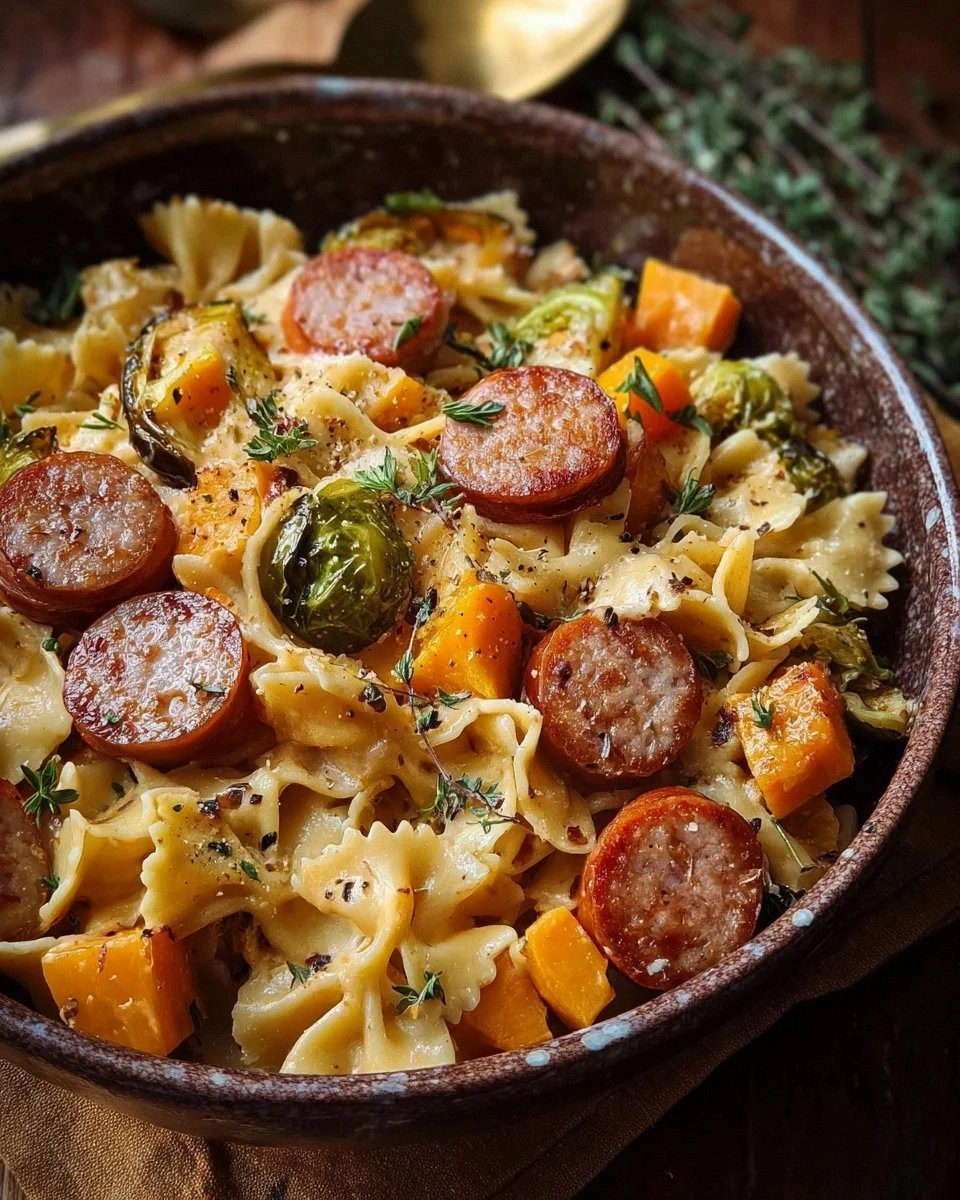
- Visual Appeal: The vibrant orange of the squash, the deep green of the brussels sprouts, and the golden brown sausage create a plate that looks as good as it tastes.
Inside the Ingredient List
The Flavor Base
Butternut Squash: This sweet, nutty veggie becomes buttery when roasted, providing the creamy backbone of the dish. If you skip it, you lose the natural sweetness that balances the smoky sausage, and the dish can feel one‑dimensional. Look for a squash that feels heavy for its size; that density means more flesh and less water, which translates to richer flavor. A quick tip: peel and dice it into uniform ½‑inch cubes so they roast evenly and develop that coveted caramelized edge.
The Texture Crew
Olive Oil: A drizzle of good‑quality extra‑virgin olive oil helps the squash and brussels sprouts achieve that perfect tender‑inside, crisp‑outside texture while also preventing sticking. If you use a low‑grade oil, you might notice a bland, greasy finish that detracts from the dish’s elegance. For a subtle twist, try finishing with a splash of walnut oil just before serving; it adds a nutty aroma that pairs beautifully with the thyme.
The Unexpected Star
Cooked Smoked Sausage: Whether you choose cajun, andouille, or a classic smoked kielbasa, the sausage brings a deep, meaty umami that anchors the dish. Skipping the sausage turns this into a vegetarian plate, which is fine, but you’ll miss the smoky complexity that makes the dish unforgettable. When buying, look for a sausage that’s firm to the touch and has a deep mahogany color; that indicates a proper smoke cure and a richer flavor.
The Final Flourish
Fresh Thyme: This herb adds an earthy brightness that lifts the heavy autumnal flavors, acting like a culinary high‑note. If you forget it, the dish can feel a little flat, as if the orchestra lost its violins. Harvest thyme stems that are bright green and not wilted; you can even strip the leaves directly into the pan for a burst of aroma right before serving.
Everything's prepped? Good. Let's get into the real action...
The Method — Step by Step
Preheat your oven to 425°F (220°C). While the oven warms, toss the diced butternut squash and halved brussels sprouts with 2 tablespoons of olive oil, a generous pinch of salt, and a grind of black pepper on a large sheet pan. Spread them out in a single layer, ensuring the squash pieces have space to brown; crowding will steam them instead. Roast for 20‑25 minutes, shaking the pan halfway through, until the edges start pulling away and the squash is caramelized—this is the moment where the kitchen fills with that sweet‑smoky perfume that tells you you’re on the right track.
While the vegetables roast, bring a large pot of salted water to a rolling boil. Add the bow‑tie pasta and cook according to the package instructions until al dente, usually about 10‑11 minutes. Drain, reserving a cup of the starchy cooking water, and set the pasta aside. Pro tip: Toss the hot pasta with a drizzle of olive oil right after draining to prevent it from sticking together before the sauce arrives.
Heat a large skillet over medium‑high heat and add 2 tablespoons of butter. Once melted, introduce the sliced smoked sausage, letting it sizzle until the edges turn deep gold and release their smoky oils—listen for that satisfying sizzle, it’s pure magic. This step is crucial because it builds a flavor base that will coat every bite. After the sausage is browned, add the minced garlic and smoked paprika, stirring quickly to avoid burning; the garlic should become fragrant within 30 seconds, and the paprika will deepen the dish’s color to a warm amber.
Now, add the roasted squash and brussels sprouts to the skillet, followed by the cooked pasta. Toss everything together, letting the residual heat from the pan gently re‑warm the vegetables. If the mixture looks a bit dry, gradually add the reserved pasta water—start with a quarter cup and continue until you achieve a glossy, sauce‑like coating that clings to each bow‑tie like velvet. Sprinkle the fresh thyme leaves over the top, give one final toss, and taste for seasoning, adjusting with a pinch more salt or pepper if needed.
Transfer the finished dish to a serving platter or individual bowls. For a finishing touch, drizzle a thin stream of high‑quality olive oil and, if you like, a light sprinkle of extra smoked paprika for color contrast. Let the dish rest for two minutes; this pause allows the flavors to meld, and the steam will keep everything luxuriously moist.
Serve immediately, and watch as your guests dive in, eyes widening at the aromatic steam rising from the plate. I dare you to taste this and not go back for seconds—most people fail that challenge within the first bite.
And now the fun part: garnish with a handful of fresh thyme sprigs or a grated Parmesan if you’re feeling indulgent. This final flourish adds a subtle herbal brightness that lifts the dish from hearty to heavenly. Picture yourself pulling this out of the oven, the whole kitchen smelling incredible, and knowing you’ve just created a memory that will be revisited many autumn evenings to come.
Insider Tricks for Flawless Results
The Temperature Rule Nobody Follows
Most home cooks set the oven and forget about it, but the secret to perfectly caramelized squash lies in a high‑heat start followed by a lower finish. Begin at 425°F to get those crisp edges, then drop to 375°F for the last five minutes to let the interior soften without drying out. I once tried to skip the temperature drop and ended up with squash that was burnt on the outside and still firm inside—lesson learned, and now I never compromise on the two‑stage heat.
Why Your Nose Knows Best
Don’t rely solely on timers; your nose is the ultimate kitchen gauge. When the squash starts to emit a sweet, nutty aroma and the brussels sprouts give off a faint caramel scent, you know they’re ready. If you hear a faint hiss from the pan when adding garlic, that’s the signal to stir quickly—over‑cooking the garlic will introduce bitterness, ruining the balance.
The 5‑Minute Rest That Changes Everything
After tossing everything together, let the dish sit for exactly five minutes before serving. This short rest allows the starches from the pasta to absorb the sauce, creating a cohesive mouthfeel that feels luxurious rather than watery. I’ve watched friends rush to the table immediately, only to find the sauce sliding off the pasta; a brief pause solves that problem and makes the dish feel restaurant‑ready.
Butter vs. Olive Oil Debate
While butter adds richness, too much can cause the sauce to separate. I recommend using a 1:1 ratio of butter to olive oil for sautéing the sausage and garlic; the butter provides depth, and the oil raises the smoke point, preventing burnt bits. This balance keeps the flavor buttery without sacrificing the crispness of the sausage.
Seasoning in Layers
Instead of dumping all the salt at once, season each component as you go. Salt the pasta water, sprinkle a pinch on the vegetables before roasting, and finish with a dash after mixing. Layered seasoning builds complexity, and you’ll never have a bland bite. One time I seasoned only at the end, and the dish tasted flat; after that I never skip the stepwise seasoning again.
Creative Twists and Variations
This recipe is a playground. Here are some of my favorite ways to switch things up:
Spicy Kick
Swap the smoked sausage for chorizo and add a pinch of red pepper flakes when sautéing the garlic. The heat pairs beautifully with the sweetness of the squash, creating a bold flavor contrast that will thrill anyone who loves a little fire.
Herb Garden
Replace fresh thyme with a blend of sage and rosemary for an earthy, pine‑y profile. This variation works especially well if you’re serving the dish alongside roasted root vegetables, as the herbs echo the autumnal vibe.
Cheesy Delight
Stir in half a cup of grated Gruyère or sharp cheddar during the final toss. The cheese melts into the sauce, adding a luscious, nutty richness that makes the dish even more indulgent—perfect for a cozy night in.
Vegan Version
Omit the smoked sausage and replace it with smoked tempeh or marinated tofu cubes. Boost the umami by adding a splash of soy sauce and a teaspoon of liquid smoke. The result is a plant‑based comfort dish that still delivers that smoky depth you love.
Southern Comfort
Introduce a tablespoon of maple syrup when roasting the vegetables, and finish the dish with a drizzle of hot honey. The sweet‑heat combo gives the dish a Southern twist that pairs wonderfully with cornbread.
One‑Pot Wonder
If you’re short on dishes, you can skip the separate pasta pot. After roasting the vegetables, add the uncooked bow‑tie pasta directly to the skillet with extra broth, cover, and simmer until the pasta absorbs the liquid and the vegetables are tender. This method saves time and creates a casserole‑like texture.
Storing and Bringing It Back to Life
Fridge Storage
Allow the dish to cool to room temperature, then transfer it to an airtight container. It will keep fresh for up to three days. When reheating, add a splash of water or broth and gently warm in a skillet over medium heat, stirring frequently to re‑emulsify the sauce.
Freezer Friendly
Portion the cooled dish into freezer‑safe bags or containers, leaving a little headspace for expansion. Freeze for up to two months. To reheat, thaw overnight in the refrigerator, then warm in a skillet with a tablespoon of butter and a dash of water until steaming hot.
Best Reheating Method
The secret to reviving this comfort dish without losing its creamy texture is to use gentle, indirect heat. A microwave works in a pinch, but the stovetop method—low heat, a lid, and a splash of liquid—preserves the sauce’s silkiness and prevents the pasta from becoming gummy.