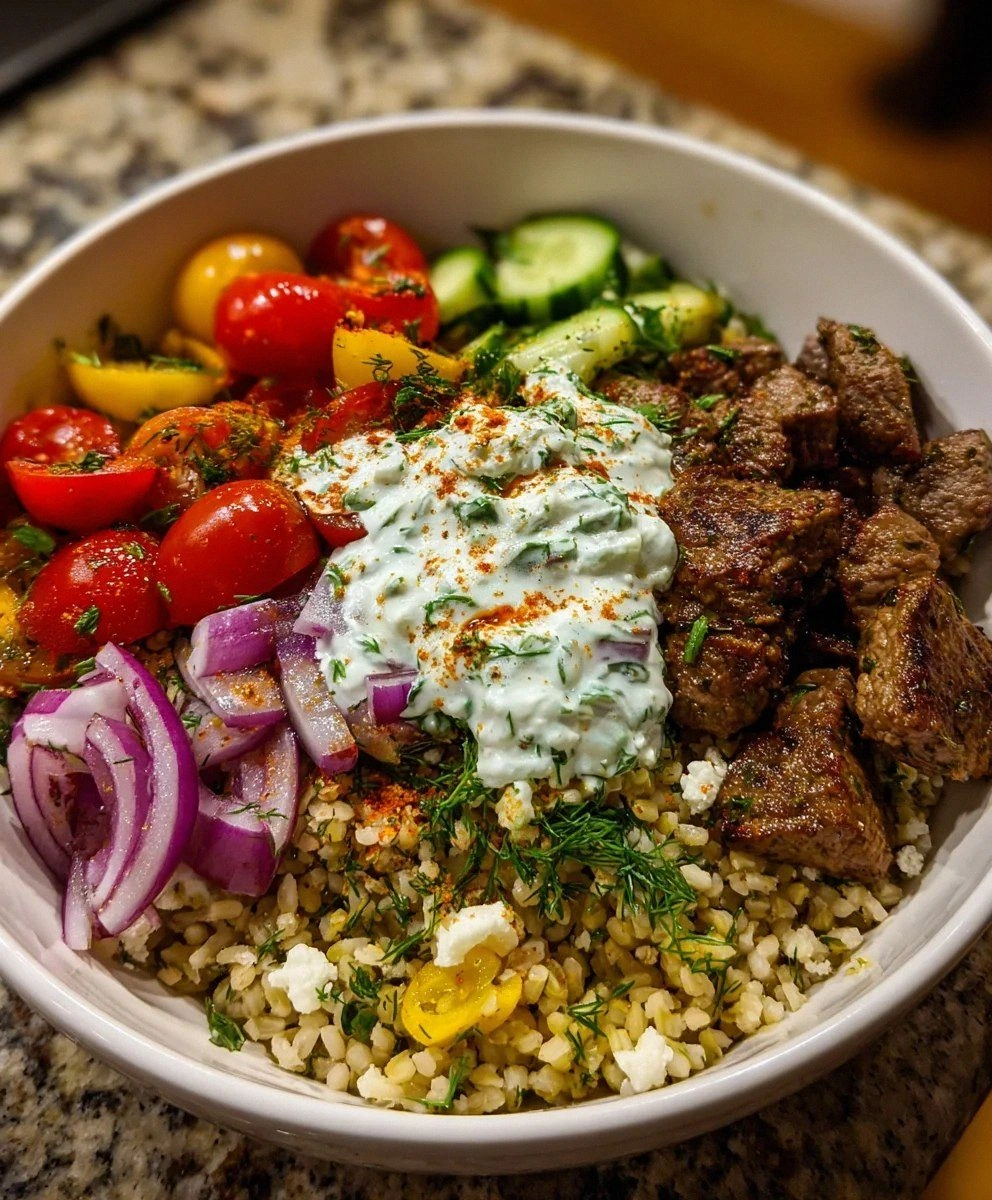
I still remember the Tuesday night I almost ordered takeout for the third time that week. My fridge held a sad collection of half-used vegetables and a pound of beef that was one day away from expiring. In a moment of culinary desperation, I started throwing things into a hot pan, certain I was about to create a disaster that would end with me eating cereal over the sink. Instead, what emerged was this Mediterranean Beef Bowl — a dish so outrageously good that I stood at the counter eating it straight from the serving spoon, completely forgetting to plate it properly. The combination of warmly spiced beef, cool herbed yogurt, and those bright vegetables created such a perfect balance that I found myself texting friends at midnight, insisting they needed to come over and try this accidental masterpiece. That first bite changed everything I thought I knew about quick weeknight dinners.
Picture this: tender beef cubes caramelized with paprika and cumin, their edges crispy and deeply flavorful, sitting atop a bed of fluffy quinoa that's absorbed all those gorgeous meat juices. Then imagine cool, crisp cucumber and sweet cherry tomatoes that burst in your mouth, all brought together by a yogurt sauce so addictive you'll want to put it on everything from fries to your morning toast. This isn't just another grain bowl — it's a revelation that happens to take less than 45 minutes from start to finish. The secret lies in building layers of flavor quickly, using the Mediterranean pantry staples you probably already have, and understanding that contrast is everything in a truly memorable bowl.
I'll be honest — I ate half the batch before anyone else got to try it. The combination of warm spices hitting the cool yogurt sauce creates this temperature and flavor dance that's absolutely mesmerizing. Every forkful delivers something different: a crispy edge of beef here, a cool cucumber crunch there, the creamy sauce tying it all together like a silk scarf around your shoulders. This is the kind of food that makes you close your eyes involuntarily when you taste it, the kind that has you planning your next batch before you've even finished the first. If you've ever struggled with boring weeknight dinners, you're not alone — and I've got the fix that will make you excited about cooking again.
Let me walk you through every single step — by the end, you'll wonder how you ever made it any other way.
What Makes This Version Stand Out
Flavor Bomb: This isn't your typical bland bowl situation. We're building a spice profile that would make any Mediterranean grandmother proud — paprika for warmth, cumin for earthiness, and garlic that infuses every bite with savory depth. The magic happens when these spices hit the hot pan and bloom, creating an aroma that will have neighbors knocking on your door asking what you're making.
Texture Paradise: Every spoonful delivers a symphony of textures that keeps your palate engaged from first bite to last. The beef gets those crispy edges that shatter like thin ice while staying tender inside, the quinoa provides a fluffy base, and the vegetables add pops of crunch and juiciness. Then there's the sauce — cool, creamy, and luxurious, coating everything like velvet.
Weeknight Hero: From fridge to table in under 45 minutes, this recipe understands that nobody has time for complicated on a Tuesday night. The beef cooks in one pan while the grains simmer away, and the sauce comes together in the time it takes to chop a few herbs. Most of the ingredients are pantry staples, making this your new go-to for those "what's for dinner" moments.
Make-Ahead Magic: This bowl gets better as it sits, making it perfect for meal prep. The flavors meld and deepen overnight, and everything reheats beautifully. Pack the components separately, and you've got lunch that will make coworkers jealous when they smell it warming in the microwave.
Customization King: Whether you're feeding picky eaters or adventurous foodies, this recipe adapts to please everyone. Swap the grains, change up the vegetables, adjust the spice level — the basic framework is so solid that you can't break it. I've made versions with lamb, chicken, and even halloumi for vegetarians, and they all work beautifully.
Restaurant Quality: This is hands down the best version you'll ever make at home, rivaling anything you'd pay twenty dollars for at a trendy Mediterranean spot. The difference is in the technique — we're not just throwing everything together, we're building flavors methodically for maximum impact.
Alright, let's break down exactly what goes into this masterpiece...
Inside the Ingredient List
The Flavor Foundation
The beef is obviously the star here, but not just any beef will do. You want a cut that can handle high heat without turning into shoe leather — sirloin or flank steak are perfect because they're flavorful and stay tender when cooked quickly. Cut them into 1-inch cubes, not too small or they'll overcook and dry out. The key is getting those beautiful caramelized edges while keeping the centers juicy and pink. If you can only find a tougher cut like chuck, no worries — just cook it a bit longer over medium heat until it's fork-tender, and the spices will make up for any textural differences.
That quinoa (or whatever grain you choose) isn't just filler — it's a flavor sponge that soaks up all the meat juices and spice oils. Quinoa has this nutty quality that plays beautifully with the warm spices, plus it cooks in exactly the time it takes to prep and cook everything else. Rice works too, but I dare you to try farro for its chewy texture and nutty flavor that adds another dimension entirely. The grains should be fluffy, not mushy, so rinse them well and toast them in a dry pan for a minute before adding liquid — this brings out their natural oils and prevents them from becoming a gluey mess.
The Fresh Factor
Those cherry tomatoes aren't just there for color — they're little bombs of sweet acidity that cut through the richness of the beef and yogurt. Get the ripest ones you can find, the kind that actually smell like tomatoes when you hold them up to your nose. If they're not in season, grape tomatoes work too, or even diced ripe heirloom tomatoes in peak summer. The key is keeping them at room temperature so they burst with juice when you bite into them, creating little pockets of bright flavor throughout the bowl.
Cucumber brings the cool crunch that makes this bowl feel refreshing rather than heavy. English cucumbers work best because they have fewer seeds and thinner skin, but any cucumber will do — just peel the waxy skin off regular ones. Cut them into half-moons so they scoop up sauce and create little boats of flavor. If you find cucumbers bitter, slice them and let them sit in salted water for ten minutes — the salt draws out the bitter compounds and makes them extra crisp.
The Spice Symphony
Paprika is doing way more work here than just adding color — it's bringing a subtle sweetness and gentle warmth that builds slowly rather than hitting you over the head. Use good quality sweet paprika, not the stuff that's been sitting in your spice rack since 2019. The difference is remarkable — fresh paprika smells almost fruity and adds complexity that the pre-ground supermarket version can't match. If you're feeling adventurous, try smoked paprika for a deeper, more mysterious flavor that makes the whole dish taste like it was cooked over an open fire.
Cumin is the earthy backbone that makes everything taste authentically Mediterranean. Toast the whole seeds in a dry pan until they smell nutty, then grind them yourself — it's a game-changer that takes 30 seconds but elevates the dish from good to restaurant-quality. The pre-ground stuff works in a pinch, but you'll miss those citrusy, almost floral notes that fresh-ground cumin brings to the party. Don't skip this spice — it's what makes your kitchen smell like you're vacationing in Morocco.
The Creamy Dream
Greek yogurt forms the base of our sauce, but not just any yogurt will do. You want the thick, strained variety that's almost like sour cream in texture — it clings to the beef and vegetables instead of running all over the plate. Full-fat yogurt makes a sauce that's luxurious and satisfying, but 2% works if you're watching calories. Avoid non-fat — it tends to separate and get watery, plus it lacks the rich mouthfeel that makes this sauce so addictive. The yogurt should taste tangy but not sour, like good quality buttermilk.
Fresh herbs are non-negotiable here — dried parsley and dill can't hold a candle to their fresh counterparts. Parsley adds a clean, green flavor that brightens everything, while dill brings that distinctive Mediterranean character that makes you think of sunshine and sea breezes. If you're not a dill fan, fresh mint works beautifully too, giving the sauce a refreshing quality that's perfect for hot weather. Chop them just before adding so they stay vibrant and don't turn that sad gray-green color that happens when herbs sit around too long.
The Method — Step by Step
- Start with your mise en place — everything in its place. Dice your beef into 1-inch cubes, making sure they're all roughly the same size so they cook evenly. Pat them dry with paper towels (this is crucial for browning — moisture is the enemy of a good sear). Season generously with salt and pepper, then let them sit while you prep everything else. This resting time allows the seasoning to penetrate and brings the meat to room temperature, ensuring even cooking.
- Get your grains going next — they take the longest but need minimal attention. Rinse your quinoa in a fine-mesh strainer until the water runs clear, then toast it in a dry pan until it smells nutty and starts popping like tiny fireworks. Add your liquid (use stock instead of water for extra flavor), bring to a boil, then cover and simmer on low for 15 minutes. When it's done, fluff with a fork and let it steam uncovered — this prevents the dreaded quinoa mush and gives you fluffy, separate grains.
- While the grains cook, make your yogurt sauce so the flavors can meld. Combine Greek yogurt with finely minced garlic (use a microplane for the smoothest texture), chopped herbs, a squeeze of lemon juice, and a good pinch of salt. Stir well and taste — it should make you want to eat it with a spoon. If it's too thick, thin with a splash of water or milk; if it needs more zip, add another squeeze of lemon. Cover and refrigerate until you're ready to serve.
- Heat your largest skillet over medium-high heat until it's screaming hot — a drop of water should dance across the surface. Add just enough oil to coat the bottom, then carefully lay in your beef cubes in a single layer. Don't crowd the pan (work in batches if necessary) or you'll steam instead of sear. Let them cook undisturbed for 2-3 minutes until they develop a gorgeous brown crust, then flip and cook another 2 minutes for medium-rare. That sizzle when it hits the pan? Absolute perfection.
- Once your beef is browned, push it to one side of the pan and add your spice mixture directly to the hot surface. Let the paprika and cumin toast for about 30 seconds until they smell fragrant and almost smoky — this is where the magic happens. Stir everything together so the beef gets coated in those toasted spices. The oil will turn a gorgeous rust color, and your kitchen will smell like you've been transported to a Mediterranean market.
- Transfer the beef to a plate and let it rest while you quickly sauté your vegetables. In the same pan (don't wipe it out — those browned bits are pure flavor gold), toss in your sliced red onions. Cook for just a minute until they start to soften but still have some bite, then add your cherry tomatoes. Let them blister and pop, releasing their sweet juices. Finally, add your cucumber just to warm through — you want it to stay crisp and cool against the hot beef.
- Now comes the fun part — assembly! Start with a generous scoop of your fluffy grains in the bottom of each bowl. Arrange the spiced beef on top, letting some of those gorgeous juices drizzle down. Pile on your quick-sautéed vegetables, making sure to get a mix of colors and textures in each serving. The contrast between hot beef and cool vegetables should make you excited about how this is going to taste.
- Drizzle generously with your herbed yogurt sauce — don't be shy here. The cool, creamy sauce against the warm, spiced beef is what makes this dish sing. Add a final sprinkle of fresh herbs and maybe a crack of black pepper. Serve immediately and watch people's eyes light up when they take their first bite. I dare you to taste this and not go back for seconds.
That's it — you did it. But hold on, I've got a few more tricks that'll take this to another level...
Insider Tricks for Flawless Results
The Temperature Rule Nobody Follows
Room temperature beef sears better than cold beef straight from the fridge — it's a simple fact that most home cooks ignore. When cold meat hits a hot pan, the temperature drops dramatically, and you end up steaming instead of browning. Take your beef out 20-30 minutes before cooking, and you'll get that beautiful crust that makes restaurant food taste better. This isn't food safety paranoia — 30 minutes on the counter won't hurt anything, but it will transform your cooking. Your beef will cook more evenly, brown better, and stay juicier throughout.
Why Your Nose Knows Best
Trust your sense of smell more than any timer when cooking the spices. When paprika and cumin hit hot fat, they'll go from raw and dusty to fragrant and toasty in about 30 seconds. Wait for that moment when your kitchen fills with warm, almost nutty aromas — that's your cue to add the beef back to the pan. If you add it too early, the spices stay raw and harsh; too late, and they burn and turn bitter. This is where cooking becomes intuitive rather than mechanical, and it's why some dishes taste alive while others fall flat.
The 5-Minute Rest That Changes Everything
After cooking, let your assembled bowls rest for 5 minutes before serving — this isn't just being fancy, it's science in action. During this brief pause, the juices redistribute through the beef, the yogurt sauce slightly warms and becomes silkier, and the flavors meld into something greater than their individual parts. The grains absorb some of the meat juices and sauce, becoming more flavorful throughout. A friend tried skipping this step once — let's just say it didn't end well. The difference between eating immediately and waiting those five minutes is the difference between good food and food that makes you close your eyes involuntarily.
The Herb Timing Secret
Add half your fresh herbs to the yogurt sauce early so they infuse their flavor, but save the rest to sprinkle on just before serving. This gives you layers of herbal flavor — the ones in the sauce provide depth and complexity, while the fresh garnish adds brightness and that just-picked quality that makes the whole dish taste alive. Chop them at the last possible moment so they stay vibrant green and don't develop that sad, wilted appearance that happens when herbs sit around. This is why restaurant food tastes fresher — they understand that timing matters as much as ingredients.
The Salt Strategy
Season in layers, not all at once. Salt the beef before cooking, add a pinch to the vegetables as they sauté, and finish with a final seasoning of the completed dish. Each layer serves a different purpose — the initial seasoning penetrates the meat, the mid-cooking salt draws moisture from vegetables and concentrates their flavor, and the final seasoning brightens everything before serving. Taste as you go, and don't be afraid of salt — it's what makes all the other flavors pop. Under-seasoned food tastes flat no matter how good your ingredients are, while properly seasoned food makes everything taste more like itself.
Creative Twists and Variations
This recipe is a playground. Here are some of my favorite ways to switch things up:
The Lamb Lover's Dream
Swap the beef for lamb shoulder cut into 1-inch pieces, keeping everything else exactly the same. Lamb's natural gaminess pairs beautifully with the warm spices, creating a more complex, sophisticated flavor profile that tastes like it came from a trendy Middle Eastern restaurant. The yogurt sauce becomes even more important here, its cool creaminess balancing lamb's richness. Add a pinch of cinnamon to the spice mix for that authentic Mediterranean character that will transport you straight to a Greek taverna. This version is perfect for dinner parties when you want to impress without stressing.
The Vegetarian Powerhouse
Replace beef with halloumi cheese cubes, seared until golden and crispy on the outside while staying melty inside. This salty Cypriot cheese holds its shape when heated and develops the most incredible crust that provides the textural contrast we love about the original. Add chickpeas for protein, tossed with the same spice mixture and roasted until crispy. The result is so satisfying that even devoted carnivores won't miss the meat. Plus, it comes together even faster since halloumi only needs a couple minutes per side to achieve golden perfection.
The Heat Seeker's Version
Add a teaspoon of harissa paste to your yogurt sauce for a North African twist that brings gentle heat and incredible depth. The fermented chili paste adds complexity without overwhelming the fresh herbs, creating layers of flavor that build slowly rather than hitting you over the head. Mix some into the spice blend too, coating your beef with a paste that creates a gorgeous crust and deeper flavor. Finish with a sprinkle of Aleppo pepper for fruity heat and visual appeal that makes the whole dish look professionally plated.
The Low-Carb Champion
Replace grains with cauliflower rice, sautéed until golden and seasoned with the same spice mixture. The cauliflower absorbs flavors beautifully while keeping everything light and fresh, perfect for those watching their carb intake or wanting something that won't weigh them down. Add extra vegetables — zucchini, bell peppers, even eggplant — roasted until caramelized and tender. The yogurt sauce becomes even more crucial here, adding richness and satisfaction that prevents this from feeling like diet food.
The Seafood Sensation
Use large shrimp or scallops instead of beef, searing them quickly in the spiced oil until just cooked through. Seafood cooks in minutes, making this the fastest version yet, perfect for those nights when you want something special but can't spend an hour in the kitchen. The delicate sweetness of seafood pairs beautifully with the warm spices and tangy yogurt, creating an elegant dish that wouldn't be out of place at a dinner party. Just be careful not to overcook — shrimp should curl into a C shape, not an O, and scallops should have a golden crust while staying translucent in the center.
The Breakfast Bowl
Transform leftovers into tomorrow's breakfast by topping with a runny fried egg. The yolk creates an instant sauce that mingles with the yogurt and spices, creating something magical that makes getting out of bed worthwhile. Add some crumbled feta and maybe a handful of arugula, and you've got breakfast that will keep you satisfied until lunch. This is my favorite way to use up any extra components, and honestly, I've been known to make the whole thing just for weekend breakfasts.
Storing and Bringing It Back to Life
Fridge Storage
Store components separately in airtight containers for maximum freshness and the best reheating experience. The beef and vegetables keep beautifully for up to 4 days refrigerated, while the yogurt sauce stays fresh for about 3 days. Keep grains in a separate container so they don't absorb moisture from the vegetables and become soggy. Everything should be completely cooled before storing — putting warm food in the fridge creates condensation that leads to faster spoilage and texture degradation. Label everything with the date, not because you'll forget what it is, but because you'll want to know how long you have to enjoy these leftovers.
Freezer Friendly
The beef freezes wonderfully for up to 3 months — just let it cool completely, then portion into freezer bags with as much air removed as possible. The grains freeze well too, though they may need a splash of water when reheating to restore their fluffy texture. However, don't freeze the yogurt sauce or fresh vegetables — dairy-based sauces can separate and become grainy, and cucumbers turn to mush upon thawing. Instead, make fresh sauce and add fresh vegetables when you're ready to serve. Pro tip: freeze individual portions so you can grab exactly what you need for a quick lunch without defrosting everything.
Best Reheating Method
For the beef, add a splash of water to a skillet and reheat gently over medium heat, stirring occasionally. The steam helps rehydrate the meat while the direct heat recreates some of that original caramelization. Add a tiny splash of water before reheating — it steams back to perfection rather than drying out. The grains reheat perfectly in the microwave with a damp paper towel over the container to create steam. For the vegetables, I actually prefer them at room temperature rather than reheated — the contrast of temperatures makes the whole bowl feel fresh and intentional rather than like leftovers. Assemble everything cold, then let the hot beef warm the other components naturally.