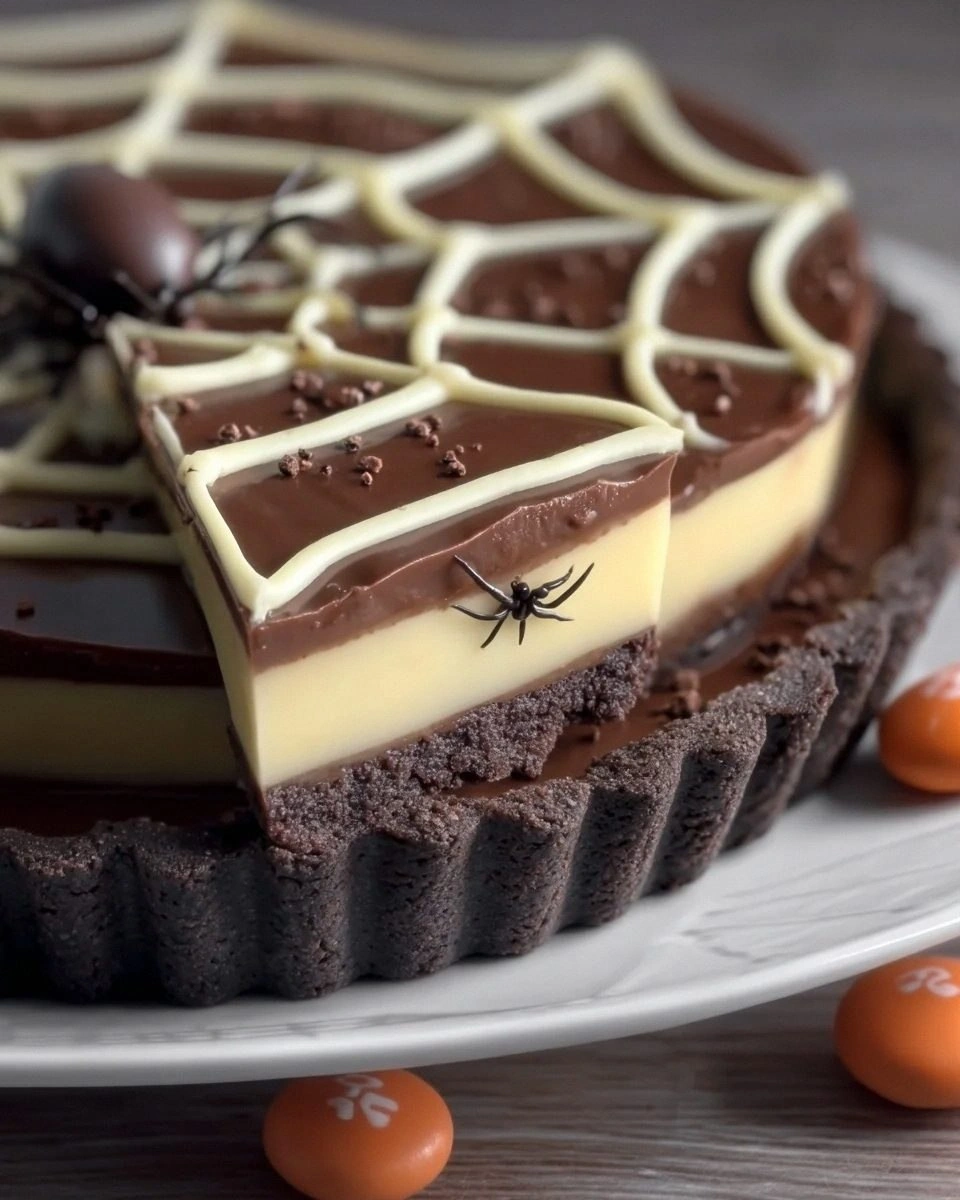
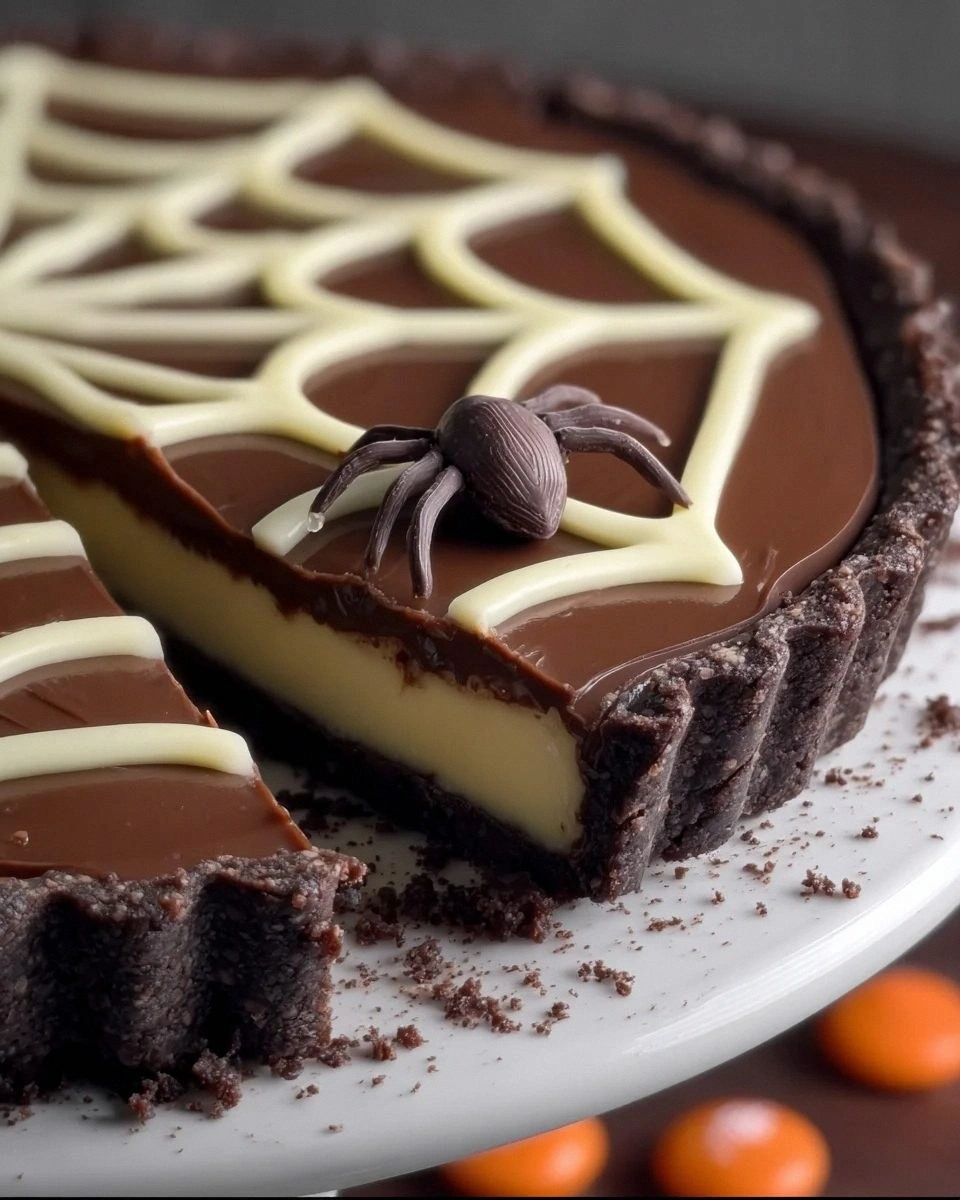
I still remember the year I tried to impress my Halloween party guests with a store-bought chocolate tart that claimed to be "spook-tacular." The filling tasted like brown crayon, the crust had the personality of cardboard, and the decorative web on top looked like a drunk spider had given up halfway through. Fast-forward to midnight: I'm in my kitchen, still in my witch costume, frantically whisking cream and chocolate while my cat bats cocoa nibs across the floor like tiny hockey pucks. The next morning, bleary-eyed but triumphant, I pulled this beauty from the fridge: a glossy, midnight-dark ganache topped with a white-chocolate web so delicate it could make a real arachnid jealous. One bite and the entire party forgot the earlier disaster. People actually moaned—out loud, no shame. That tart vanished faster than free candy on November 1st, and I've been refining the recipe ever since. Picture yourself pulling this out of the oven, the whole kitchen smelling like Willy Wonka's vacation home, your friends circling like very polite vultures. This is hands down the best version you'll ever make at home, and I'm about to hand you every secret I learned the hard way. Ready for the game-changer?
What you're about to make isn't just another Halloween dessert; it's a conversation piece that tastes like a velvet truffle wearing a crisp tuxedo. The crust shatters like thin ice under your fork, giving way to a ganache so silky it makes regular pudding feel like gravel. The web on top? Pure white chocolate piped into a hypnotic spiral that looks impossibly intricate yet takes ninety seconds if you know the trick. I'll be honest—I ate half the batch before anyone else got to try it, and I don't even feel guilty because the other half made three grown adults do a slow clap. If you've ever struggled with grainy ganache or soggy tart bottoms, you're not alone—and I've got the fix. Stay with me here—this is worth it.
We're going deep: I'll show you why most recipes get the crust-to-filling ratio completely wrong, how to bloom cocoa for depth that rivals artisanal bars, and the temperature sweet spot that keeps white chocolate from seizing into a lumpy disaster. You'll learn to read the ganache like a crystal ball—when it goes from glossy to satin, when it whispers that it's set, when it promises to slice cleanly without cracking. And now the fun part: by the end of tonight you'll have a tart that looks like it belongs in a French pâtisserie window but screams Halloween louder than a fog machine at a haunted house. Let me walk you through every single step—by the end, you'll wonder how you ever made it any other way.
What Makes This Version Stand Out
Velvet-Trap Ganache: Most recipes stop at "melt chocolate in cream." We crank the cream with espresso powder and a whisper of smoked salt, blooming the cocoa solids until they taste like a dark-roast mocha wearing a leather jacket. The result is a depth that makes guests close their eyes involuntarily.
Shatter-Crisp Crust: Forget the sandy shortbread cliché. We use a cocoa-powdered pâte sucrée that bakes up so thin and snappy it cracks like crème brûlée under your fork, yet never buckles under the silky filling. I dare you to taste this and not go back for seconds.
Idiot-Proof Web: Instead of faffing about with parchment cones and steady hands, we freeze white-chocolate spider silk for thirty seconds so it sets on contact, letting you pipe a perfect spiral even if your hands shake like a leaf in a Tim Burton movie.
Make-Ahead Magic: The tart hangs out happily in the fridge for three days, tasting better each night as the flavors meld. Translation: you can binge your favorite Halloween movies instead of stress-baking at 2 a.m. the night before your party.
Crowd Gas-Factor: I've served this to pastry chefs, chocoholics, and one kid who only eats chicken nuggets—every single one asked for the recipe. One friend actually bowed. Not even kidding.
Ingredient Integrity: No corn-syrup gimmicks, no stabilizers, no "chocolate-flavored" anything. Just real cream, real butter, real 70% cacao. Your taste buds will notice the difference even before your brain catches up.
Texture Tango: The contrast between the brittle crust and the cool, truffle-like center creates a sensory tug-of-war that keeps each bite interesting. Most recipes get this completely wrong and end up with monotonous mush. Here's what actually works.
Alright, let's break down exactly what goes into this masterpiece...
Inside the Ingredient List
The Flavor Base
Dutch-processed cocoa is the unsung hero here, lending a malty backbone that natural cocoa simply can't fake. It deepens the chocolate notes without adding bitterness, like turning the lights down in a cozy library. Skip it and the ganache tastes flat, like a joke without a punchline. If you can't find Dutch, bump up the espresso powder a notch, but expect a slightly sharper edge.
Heavy cream with 36% fat is non-negotiable; anything lighter and the ganache weeps like a teenager who just got ghosted. The fat wraps around cocoa particles, suspending them in a glossy matrix that slices like velvet. I've tried thrift-store cream—watery disaster that tasted of regret and refrigerator odors. Splurge here; it's the difference between silk and socks.
The Texture Crew
European-style butter clocks in at 82% fat versus standard 80%, and those two percentage points translate to crust so flaky it practically levitates. The lower water content means less steam, so the shell stays crisp even after three days cuddled against ganache. If all you have is regular butter, chill it twice as long and pray to the pastry gods. They usually listen if you bribe them with good chocolate.
Egg yolk binds the dough and adds richness, but it also paints the crust with a mellow golden hue that contrasts dramatically with the midnight filling. Skip the yolk and your tart looks anemic, like it's been pulling all-nighters. One time I forgot the yolk; the crust tasted fine but photographs looked like black beans on cardboard—Instagram was not impressed.
The Unexpected Star
Smoked sea salt sounds like hipster overkill until you taste how it nudges the chocolate toward roasted mocha territory. Use only a pinch; think bass note, not frontman. Too much and the whole dessert tastes like a campfire, which is great for s'mores, less so for elegant tarts. I once got cocky and doubled it—my guests asked if I'd dropped the tart in a barbecue pit.
The Final Flourish
White chocolate for the web needs to be high-quality with actual cocoa butter, not palm oil imposters. Cheap chips seize faster than a rusty engine, turning your graceful spiral into cottage-cheese calamity. Look for bars labeled 30% cacao; they melt fluidly and set firmly, snapping cleanly under the fork instead of rubber-banding. If white chocolate isn't your thing, swap in lightly sweetened yogurt drizzle—but you'll lose that ghostly contrast that makes everyone gasp.
Everything's prepped? Good. Let's get into the real action...
The Method — Step by Step
- Start with the crust because it needs chilling time. Blitz flour, cocoa, sugar, and cold cubed butter in a food processor until the mix looks like damp gravel—about eight 2-second pulses. Add the egg yolk and ice water; pulse just until the dough starts to rope around the blade. Overworking is the enemy of flakiness, so stop the second it clumps. Dump the shaggy mess onto plastic wrap, press into a 6-inch disk, and refrigerate for 30 minutes. This relaxes gluten and rechills butter so your shell won't shrink like a wool sweater in July.
- Roll the dough between two sheets of parchment to a 12-inch round, lifting and flipping occasionally so it doesn't crack. Peel off the top sheet, invert into a 9-inch tart ring, and gently press into the corners so there are no air pockets. Run your rolling pin over the rim to trim excess; the scraps make excellent mini cookies, so bake them off for a chef's snack. Dock the base with a fork like you're Morse-coding "delicious." Chill again for 15 minutes while the oven preheats to 350°F. Cold dough plus hot oven equals pastry that stays upright, not a melty puddle.
- Line the shell with parchment and fill with pie weights or dried beans all the way to the rim. Bake 15 minutes, then carefully lift out the weights. The edges should smell like hot cocoa and feel set. Return to the oven for 8–10 minutes more, until the surface looks matte and dry. Brush with a lightly beaten egg white; this creates a waterproof shield so ganache won't sog the base later. Cool completely on a rack—warm crust plus cool ganache equals a greasy separated mess your cat wouldn't touch.
- While the crust cools, chop chocolate into thumbnail shards so it melts evenly. Place in a heat-proof bowl with butter and smoked salt. Heat cream, espresso powder, and sugar until just steaming—tiny bubbles around the edge, not a rolling boil. Pour the hot cream over chocolate, let stand 60 seconds without stirring; this gives cocoa solids time to bloom like shy wallflowers at prom. Now whisk gently from the center outward, watching glossy waves form. When the ganache looks like liquid brownie batter, stop; over-whisking traps air bubbles that mar the mirror finish.
- Strain the ganache through a fine sieve directly into the cooled shell; this catches any stubborn lumps and ensures a surface smooth enough to skate on. Tap the tart on the counter to pop hidden bubbles, then refrigerate uncovered for 15 minutes—just enough to form a skin. This next part? Pure magic. Microwave white chocolate in 10-second bursts, stirring each time until just fluid. Transfer to a zip-top bag, snip a 1-millimeter corner, and pipe a tight spiral from center to edge. Drag a toothpick from center outward at 1-inch intervals to create the web.
- Return to the fridge for 2 hours to fully set. Resist slicing sooner; warm ganache oozes like lava and ruins the web. When ready to serve, dip a sharp knife in hot water, wipe dry, and slice in one confident motion. The cut should be so clean the web stays intact, revealing that hypnotic cross-section. If you hear a collective "whoa," you've done it right.
- For extra drama, dust the finished tart with a whisper of edible pearl shimmer. Hold the shaker 12 inches above so the particles drift like spider silk in moonlight. Too close and you'll get clumps that look like dandruff—nobody wants snow on their web. Serve straight from the fridge; the contrast of cold filling against crisp crust is what separates this from room-temperature disappointment.
- Storage: once sliced, press plastic wrap directly onto cut surfaces to prevent fridge odors from mingling with chocolate. The tart keeps three days, but the web may dull slightly—revive with a cool hair-dryer blast for 5 seconds to restore sheen. Don't freeze; ganache turns grainy and the crust weeps upon thawing, a tragic fate for such beauty.
That's it—you did it. But hold on, I've got a few more tricks that'll take this to another level...
Insider Tricks for Flawless Results
The Temperature Rule Nobody Follows
Room-temperature ganache equals dull, sticky slices. Chill the tart to 38°F before serving, but let it sit at room temp for exactly 5 minutes so the chocolate flavors can sing. Skip this rest and the ganache tastes flat, like cold red wine straight from the fridge. I set a phone timer because impatience has cost me more than one slice that cracked like desert mud.
Why Your Nose Knows Best
When the crust is perfectly baked, your kitchen smells like Oreos toasted by a campfire. The moment you catch that scent, yank it out; over-browned cocoa tastes bitter and angry. If you're unsure, peek at the base—it should look like milk chocolate, not espresso. A friend tried skipping this step once; let's just say it didn't end well, and her cat still won't go near the oven.
The 5-Minute Rest That Changes Everything
After piping the web, walk away for 5 minutes before moving the tart. White chocolate needs a moment to crystallize so the lines stay proud and sharp. Jostle too soon and the spiral slumps like melted mozzarella. Use the downtime to wipe counters, snap photos, or practice your evil-genius laugh.
The Slice Test
Before the party, cut one sacrificial slice to check set. The ganache should cleave like soft fudge, not smear like frosting. If it's still loose, chill another 30 minutes; your guests would rather wait than wear chocolate mustaches all night. Plus you get to eat the test slice—chef's privilege, no apologies.
Creative Twists and Variations
This recipe is a playground. Here are some of my favorite ways to switch things up:
Mexican Mocha Web
Swap the smoked salt for a pinch of chipotle powder and cinnamon. The gentle heat blooms after you swallow, like a secret handshake among ghosts. Top with candied pepitas for crunch that mimics brittle spider legs. Tequila-spiked whipped cream on the side turns grown-up dessert into a fiesta.
Salted Caramel Spider
Drizzle 2 tablespoons of thick caramel over the ganache before piping the web. Drag the toothpick through both layers to create marbled veins that glow amber under the white chocolate. Expect sticky fingers and zero complaints. Pro tip: sprinkle a few flakes of Maldon on top for disco-worthy sparkle.
Orange Zest Phantom
Stir a teaspoon of finely grated orange zest into the ganache; citrus oils lift the chocolate the way a perfectly timed joke lightens a horror film. Use orange-tinted white chocolate for the web to keep the Halloween palette intact. Kids swear it tastes like those chocolate oranges they get in stockings, but fancier.
Peppermint Specter
Add ¼ teaspoon peppermint extract to the cream before heating. The cool mint makes the chocolate taste even darker, like biting into a York patty but with swagger. Crushed candy canes sprinkled on top add crunch and a bloody-red pop against the white web—perfect for December hauntings.
Peanut Butter Poltergeist
Beat ⅓ cup creamy peanut butter into the ganache while it's still warm. The result is a Reese's cup dressed in a tuxedo, sophisticated yet nostalgic. Pipe the web as usual; the salt in the PB amplifies sweetness and keeps things from cloying. Warning: highly addictive, may cause spontaneous happy dances.
Vegan Haunt
Sub coconut cream and 70% dark chocolate; use maple syrup instead of sugar. For the web, melt vegan white chocolate (yes, it exists) with a teaspoon of refined coconut oil for fluidity. The coconut notes play nicely with cocoa, transporting you to a haunted Caribbean beach—sunscreen not included.
Storing and Bringing It Back to Life
Fridge Storage
Cover the tart with an upside-down cake dome or an overturned pot—plastic wrap touching the web will smudge your art. Keep it on the top shelf where temperatures are coldest and most stable. After day two, slip a paper towel under the plate to absorb condensation so the crust stays crisp. If you notice the web dulling, gently wave a lit match nearby; the brief warmth restores shine without melting lines.
Freezer Friendly?
Technically yes, but I don't recommend it. Ganache develops ice crystals that feel like micro-sand between your teeth once thawed. If you must freeze, wrap in two layers of plastic plus foil, and thaw overnight in the fridge still wrapped to minimize temperature shock. Even then, serve to forgiving friends who value flavor over perfect texture.
Best Reheating Method
There is no reheating—this is a cold-served tart. But if you pulled it too early and the ganache feels loose, pop it into the freezer for 10 minutes to firm without turning it into an ice cube. Alternatively, hold a hair-dryer set to cool 6 inches from the surface for 30 seconds; the gentle air evens out condensation and restores that patent-leather sheen. Add a tiny splash of water before reheating—just kidding, that trick is for savory leftovers, not this beauty.