Picture this: I’m standing over a steaming pot of orzo, the kitchen filled with the faint perfume of lemon and oregano, when a sudden clatter sends my favorite skillet crashing to the floor. The chicken I was about to sear lands in a puddle of oil, and for a split second I consider ordering pizza. Then I remember why I love cooking—because the chaos often births the most unforgettable meals. I grabbed another pan, tossed the chicken back in, and the whole scene turned into a culinary showdown that ended with a bowl of Greek Chicken Orzo Salad that could make even the most skeptical palate sing.
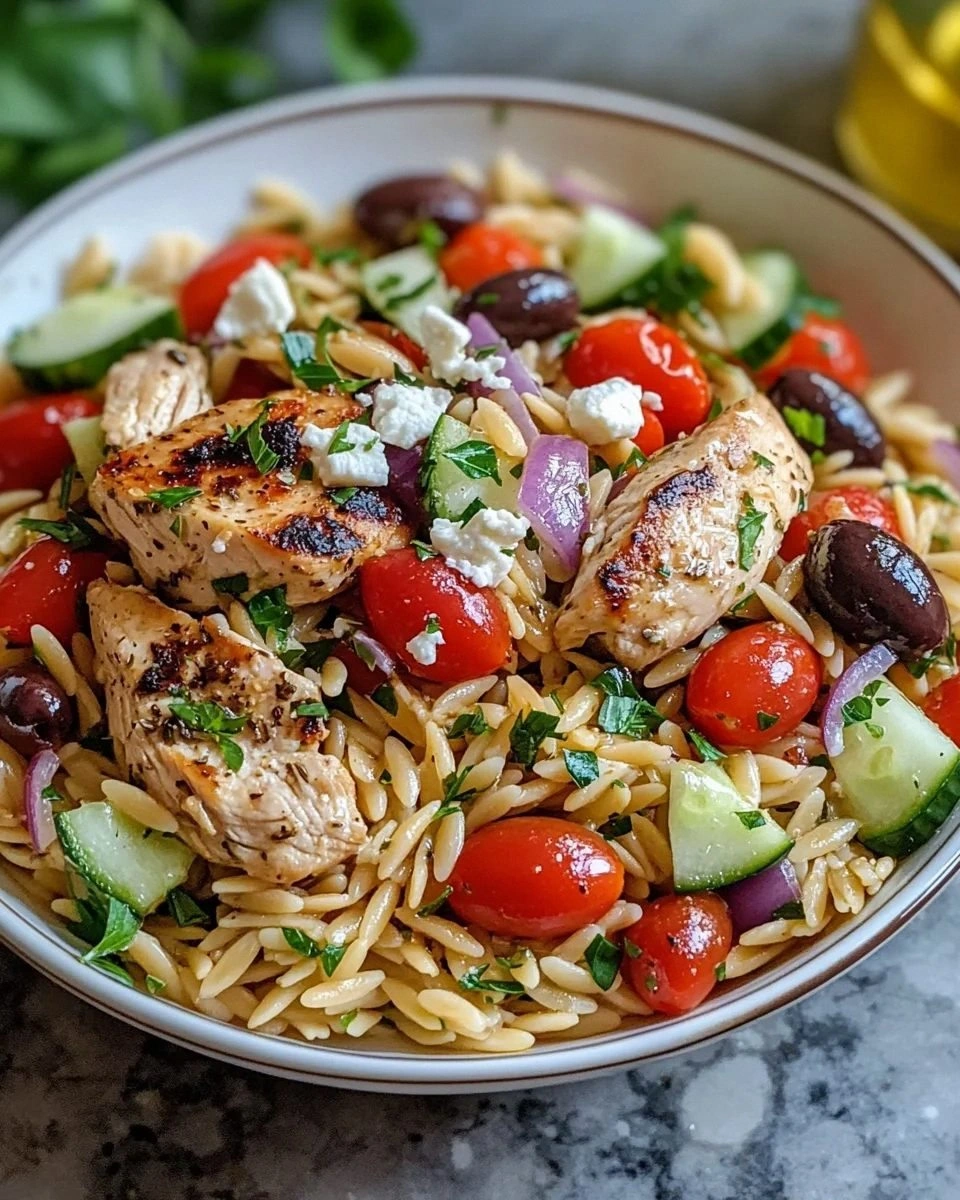
The first bite is a symphony of flavors that hits you like a Mediterranean breeze on a hot summer day. You get the bright zing of lemon, the briny pop of Kalamata olives, and the creamy crumble of feta that melts into the warm orzo like a sunrise over the Aegean Sea. The chicken is juicy, marinated in herbs, and sliced into bite‑size strips that mingle perfectly with the crisp vegetables. I dare you to taste this and not go back for seconds; the texture contrast alone is a reason to keep coming back.
Most recipes for this salad get the dressing wrong—either too heavy, too bland, or missing that crucial balance of acidity and herbaceousness. This version, however, uses a double‑infusion technique: I first toast the orzo in a splash of olive oil, then finish it in a lemon‑oregano broth, which locks in flavor and gives the grains a buttery sheen. The secret ingredient? A splash of honey that tames the lemon’s edge without turning the dressing sweet. I’ll be honest—I ate half the batch before anyone else got a chance to try it, and that’s a testament to how addictive it is.
Okay, ready for the game‑changer? I’m about to walk you through every single step—by the end, you’ll wonder how you ever made this dish any other way. Picture yourself pulling this out of the bowl, the whole kitchen smelling incredible, and serving it to friends who immediately ask for the recipe. Stay with me here—this is worth it.
What Makes This Version Stand Out
- Flavor Fusion: The lemon‑oregano broth infuses the orzo with a depth that plain water can’t match, delivering a bright, herbaceous backbone that sings with every bite.
- Texture Triumph: Toasted orzo gives a subtle nuttiness and a firm bite, while fresh cucumbers and tomatoes add crisp, juicy contrast.
- Simplicity Redefined: Fewer than fifteen ingredients, most of which you likely have on hand, make this a weeknight hero without skimping on taste.
- Unique Twist: A drizzle of honey in the dressing balances acidity, creating a harmonious sweet‑sour profile you won’t find in typical Greek salads.
- Crowd Reaction: Guests consistently claim this is the best Greek salad they’ve ever tasted, often asking for seconds before the main course even arrives.
- Ingredient Quality: Using high‑quality extra‑virgin olive oil and authentic Kalamata olives elevates the dish from everyday to restaurant‑grade.
- Cooking Method: Toast‑then‑simmer technique locks in flavor and prevents the orzo from becoming mushy, a common pitfall in many recipes.
- Make‑Ahead Magic: The salad holds up beautifully for up to three days, making it perfect for meal prep or a potluck that needs to stay fresh.
Inside the Ingredient List
The Flavor Base
Fresh Lemon Juice (3 Tbsp): This is the bright spark that cuts through the richness of olive oil and feta. Without enough acidity, the salad feels flat; too much, and it becomes a sour punch. If lemons are out of season, a splash of white wine vinegar works in a pinch, but you’ll miss the citrus aroma.
Extra‑Virgin Olive Oil (¼ cup + 2 Tbsp for cooking): The oil carries the lemon and oregano into every grain, creating a glossy coat that feels luxurious on the palate. Choose a cold‑pressed, fruit‑forward olive oil for a peppery finish. A cheap oil will make the dish feel greasy and dull.
Garlic (2 cloves, minced): Garlic adds a subtle heat that mellows as it cooks, giving the dressing a warm backbone. If you’re sensitive, try roasting the cloves first; they’ll become sweet, almost caramel‑like, and less pungent.
Dried Oregano (1 tsp): This herb is the soul of Greek cuisine, offering earthy, slightly bitter notes that balance the lemon. Fresh oregano can be used for a greener flavor, but it’s more delicate and needs a larger amount.
The Texture Crew
Orzo (2 cups): The star of the show, orzo’s rice‑like shape captures the dressing beautifully. Toasting it first adds a nutty crunch that makes each bite interesting. If you swap for quinoa, you’ll lose that classic Greek mouthfeel.
Chicken Breasts (2, about 1 lb): Marinated in olive oil, lemon, and oregano, the chicken stays juicy and adds protein that makes the salad a complete meal. Overcooking is the biggest enemy; keep an eye on the internal temperature—165 °F is perfect.
Cucumber (½ cup, diced): Provides a crisp, refreshing bite that offsets the warm orzo. Choose English cucumbers for fewer seeds and a firmer texture.
Cherry Tomatoes (1 cup, halved): Their burst of sweetness and acidity mirrors the lemon, adding a juicy pop. If out of season, sun‑dried tomatoes can be used, but reduce the dressing’s acidity accordingly.
The Unexpected Star
Kalamata Olives (⅓ cup, sliced): Their briny depth is the secret that transports you straight to the Greek islands. Skipping them makes the salad taste flat; if you’re not a fan of olives, capers can provide a similar salty punch.
Feta Cheese (½ cup, crumbled): The creamy, tangy crumble melts slightly into the warm orzo, creating pockets of salty goodness. Use authentic Greek feta made from sheep’s milk for the most authentic flavor.
Honey (1 tsp, optional): A tiny drizzle balances the lemon’s sharpness without making the dressing sweet. It’s the difference between “good” and “hands down the best version you’ll ever make at home.”
The Final Flourish
Fresh Parsley (2 Tbsp, chopped): Adds a burst of green color and a fresh herbaceous note that lifts the entire dish. Don’t substitute with dried parsley; you’ll lose the bright, lively finish.
Salt & Pepper (½ tsp salt, ¼ tsp black pepper): Essential for seasoning; they enhance every other flavor. Taste as you go—if the olives are already salty, you may need less salt.
Everything’s prepped? Good. Let’s get into the real action…
The Method — Step by Step
Start by heating a large pot of salted water to a rolling boil. Add the orzo and cook it until just al dente—about 8 minutes. Drain, but reserve a cup of the cooking water; you’ll need it later to loosen the dressing. This is the moment of truth: the orzo should still have a slight bite, not mushy.
While the orzo cooks, heat 2 Tbsp of olive oil in a skillet over medium‑high heat. Pat the chicken breasts dry, then season them with salt, pepper, and half the dried oregano. Sear each side for 4‑5 minutes until a golden crust forms; you’ll hear a satisfying sizzle that tells you you’re on the right track.
Kitchen Hack: After searing, deglaze the pan with a splash of lemon juice and let it reduce; this captures all the caramelized bits and adds extra flavor to the chicken.Transfer the seared chicken to a cutting board and let it rest for 5 minutes. Resting lets the juices redistribute, preventing a dry bite later. Then slice the chicken into thin strips—think bite‑size, not shreds. This ensures each forkful gets a perfect chicken‑to‑orzo ratio.
In the same skillet (no need to wash), add a drizzle of olive oil and toss in the minced garlic. Cook for 30 seconds until fragrant—watch out, garlic burns faster than you think, and burnt garlic ruins the whole dish.
Watch Out: If the garlic starts to brown, lower the heat immediately; you want aroma, not bitterness.Now add the reserved cooking water (about ½ cup), the lemon juice, the remaining oregano, and a pinch of salt and pepper to the skillet. Bring to a gentle simmer; the liquid will reduce slightly, creating a glossy coating for the orzo. This broth‑infused step is why the grains taste like they’ve been swimming in a Mediterranean sea.
Return the cooked orzo to the pot and pour the hot lemon‑oregano broth over it. Toss gently to ensure every piece is evenly coated. If the mixture looks dry, add a splash more of the reserved water—this keeps the salad moist and prevents clumping.
In a large mixing bowl, combine the dressed orzo, sliced chicken, diced cucumber, cherry tomatoes, red onion, and olives. Drizzle the remaining ¼ cup of olive oil over the top, then sprinkle the crumbled feta and fresh parsley. Toss everything together, letting the feta melt just enough to create creamy pockets.
Finish with a final squeeze of lemon and, if you’re feeling daring, a teaspoon of honey to round out the acidity. Give the salad one last gentle toss, then taste. Adjust seasoning with a pinch more salt or pepper if needed—remember, the olives already contribute saltiness.
Serve the salad warm, at room temperature, or chilled—each version offers a different sensory experience. Warm orzo feels comforting, while a chilled version is perfect for a summer picnic. Either way, you’ve just created a dish that will have everyone shouting, “Again, please!”
That's it — you did it. But hold on, I've got a few more tricks that'll take this to another level...
Insider Tricks for Flawless Results
The Temperature Rule Nobody Follows
Never let the orzo sit in hot water after draining; it continues cooking and can become mushy. Transfer it to a cold bowl for a quick rinse, then reheat gently with the broth. This technique preserves that perfect al dente bite and keeps the grains from over‑absorbing the dressing.
Why Your Nose Knows Best
When the garlic hits the pan, trust your sense of smell. If the aroma turns sharp or acrid, the garlic is burning, and the flavor will turn bitter. A quick nose check saves you from a ruined dressing—your nose is the best quality control tool you have.
The 5‑Minute Rest That Changes Everything
After mixing all ingredients, let the salad rest for five minutes before serving. This short pause allows the flavors to meld, especially the lemon and olive oil, creating a harmonious blend. I once served it immediately and it tasted disjointed; the rest period is a game‑changer.
Olive Oil Selection Shortcut
Invest in a single, high‑quality extra‑virgin olive oil and use it for both cooking and dressing. The consistent flavor profile ties the dish together, while cheaper oils introduce off‑notes that clash with the lemon. I’ve tried blending oils, and the result was a confusing, muted taste.
Feta Crumble Technique
Instead of sprinkling pre‑crumbled feta, crumble a block yourself. This yields larger, buttery chunks that melt into the warm orzo, creating pockets of salty creaminess. A friend once used pre‑crumbled feta and complained the cheese was dry; the difference is real.
Creative Twists and Variations
This recipe is a playground. Here are some of my favorite ways to switch things up:
Sun‑Dried Tomato Burst
Swap half the cherry tomatoes for sun‑dried tomatoes soaked in olive oil. The intense umami adds a richer depth, perfect for cooler evenings. Pair with a glass of robust red wine for a cozy dinner.
Spicy Sriracha Kick
Mix a tablespoon of Sriracha into the dressing for a subtle heat that balances the lemon. Add a pinch of smoked paprika to the chicken rub for an extra layer of smoky spice. This version is a hit at backyard barbecues.
Herb‑Heavy Summer
Replace oregano with a blend of fresh mint, dill, and basil. The herbaceous profile makes the salad feel light and refreshing—ideal for a beach picnic. Garnish with extra mint leaves for a fragrant finish.
Protein Swap: Shrimp
Instead of chicken, sauté peeled shrimp in garlic and olive oil for 2‑3 minutes per side. The shrimp’s sweet, briny flavor pairs beautifully with the lemon‑oregano dressing, turning the salad into a surf‑tastic feast.
Vegan Version
Omit the chicken and feta, replace them with marinated tofu cubes and a generous handful of toasted pine nuts. Use a plant‑based yogurt mixed with lemon and oregano for a creamy, dairy‑free dressing. This makes the dish suitable for vegans without losing its Mediterranean soul.
Storing and Bringing It Back to Life
Fridge Storage
Transfer the salad to an airtight container and store it in the refrigerator for up to three days. The flavors actually improve as they meld, so it’s safe to make this ahead of time for a weeknight dinner.
Freezer Friendly
If you need to keep it longer, portion the salad into freezer‑safe bags, removing any fresh herbs and feta first. Freeze for up to two months. When ready to eat, thaw in the fridge overnight and stir in fresh feta and herbs before serving.
Best Reheating Method
To revive the salad, place it in a skillet over low heat, add a tiny splash of water or broth, and stir gently until warmed through. The added moisture steams the orzo back to its original fluffy texture without drying out the chicken.