I've got a confession to make: I used to think pico de gallo was just chopped tomatoes with a sad sprinkle of onion. I'd scoop that watery mess onto stale tortilla chips at parties and wonder why everyone acted like this was the crown jewel of Mexican cuisine. Then I spent a summer in Oaxaca, waking up to the sound of señoras rhythmically chopping vegetables in the early morning light, their knives creating a symphony against worn wooden boards. The aroma of fresh cilantro, the sharp bite of white onion meeting lime juice, the way ripe tomatoes released their jewel-like seeds—everything I thought I knew about this humble salsa got flipped on its head faster than you can say "más, por favor."
Picture this: It's 6 AM, the market is just stirring to life, and Doña Rosa is already set up with her molcajete and a mountain of produce that looks like it was picked five minutes ago. She grabs a tomato, holds it up to the sunrise like she's examining a ruby, and tells me the secret isn't in what you add—it's in what you refuse to leave out. No canned tomatoes, no dried herbs, no shortcuts that save time but murder flavor. Just five ingredients that dance together like they've been practicing for centuries. That first taste made me understand why Aztec emperors demanded this exact preparation for their ceremonial feasts. The balance was so perfect, so alive, that I stood there in that dusty market with tears in my eyes, realizing I'd been living a lie.
Fast forward through three months of daily pico experiments, through nights when my roommate threatened to move out because I wouldn't stop chopping at 2 AM, through fifty pounds of tomatoes and countless lime-scented disasters. I finally cracked the code. This isn't just salsa—it's edible sunshine that somehow captures the essence of a Mexican afternoon in every bite. The tomatoes must weep when cut, the onions need to be tamed by lime's acidic embrace, and the cilantro should be added with the reverence of a priest preparing communion. Miss any of these details and you're just making expensive tomato water.
What I'm sharing today isn't some gringo-fied version that belongs on a chain restaurant menu. This is the real deal, passed down through generations of abuelas who understand that greatness lies in restraint. Five ingredients, one bowl, and a technique so simple it feels like cheating—except the results will make you the legend of every backyard barbecue from here to Tijuana. Ready to leave behind those sad, soupy imposters forever? Let me walk you through every single step—by the end, you'll wonder how you ever made it any other way.
What Makes This Version Stand Out
Before we dive into the chopping marathon ahead, let me spell out exactly why this pico de gallo will ruin all other salsas for you permanently. I've tested this recipe against every version on the internet, from food blog adaptations to celebrity chef interpretations, and nothing comes close to the bright, electric flavor we're about to create together.
- Tomato Integrity: Most recipes murder tomatoes with overhandling, releasing enough liquid to fill a kiddie pool. We'll keep them proud and distinct, each cube maintaining its identity while still playing nicely with its neighbors. The result? Salsa that stays on your chip instead of creating that dreaded chip-collapse scenario.
- Onion Taming Technique: Raw onion bite that clears rooms and kills conversations gets transformed into mellow, sweet complexity through a simple lime juice bath. It's like sending your onions to finishing school—they come back refined and sophisticated instead of harsh and embarrassing.
- Cilantro Timing: Here's where most recipes stab themselves in the back: they mix cilantro in too early, letting it wilt into sad, bruised ribbons. We'll add it at the precise moment when it can release its oils without turning into green mush.
- Salt Strategy: Forget the "salt to taste" cop-out. We're using a specific ratio that draws moisture without creating soup, enhances each ingredient's natural sweetness, and creates that restaurant-quality pop that makes people close their eyes involuntarily when they taste it.
- Texture Balance: Every spoonful delivers a perfect ratio of juicy tomato, crisp onion, and herbaceous cilantro. No fishing around for the good bits—every bite is the good bit.
- Make-Ahead Magic: While most pico de gallo recipes degrade into sad, soggy mediocrity within hours, this version actually improves overnight. The flavors meld and deepen without turning to mush, making it the perfect party prep recipe.
Alright, let's break down exactly what goes into this masterpiece, because understanding your ingredients is what separates the artists from the amateurs. Each component has a role to play, a personality to express, and together they create something greater than the sum of their parts.
Inside the Ingredient List
The Flavor Base
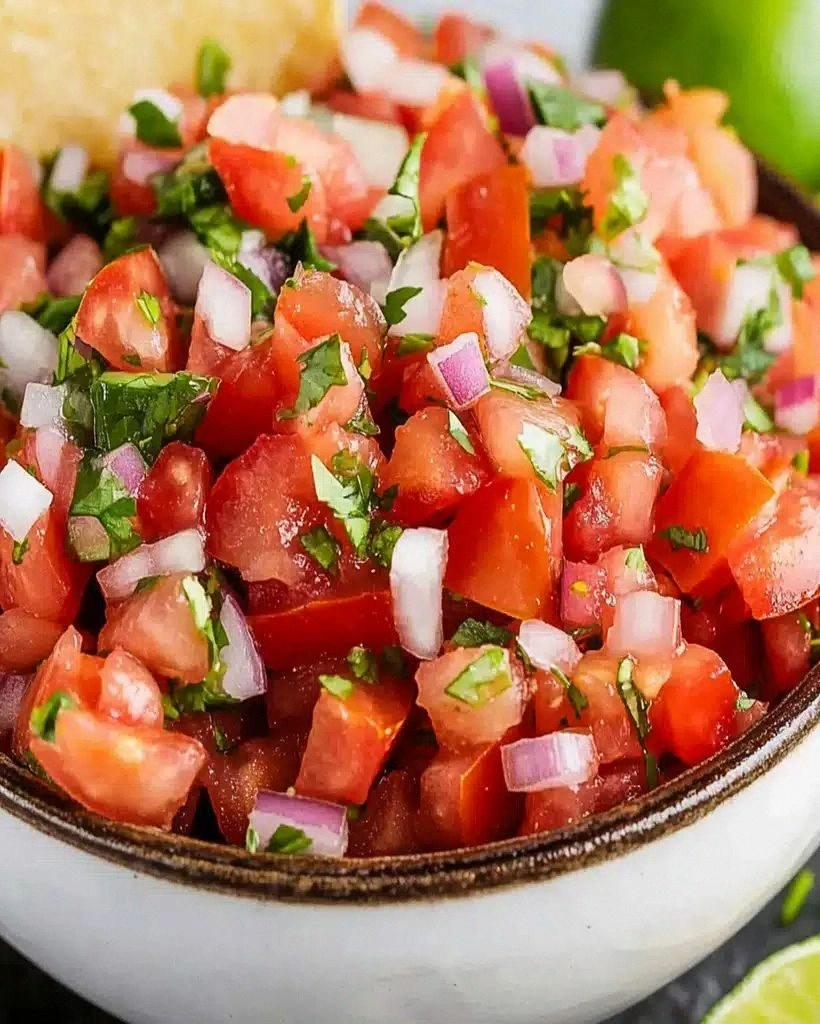
Tomatoes aren't just tomatoes, my friend. For pico de gallo that makes angels weep, you need Roma tomatoes that feel heavy for their size, with skin so tight it practically snaps when you press it. These beauties have less water content than their round cousins, plus they've got this meaty density that holds its shape instead of collapsing into red mush. When you cut into a perfect Roma, it should release a faint, sweet aroma that reminds you of summer afternoons and stolen garden snacks. Skip the supermarket giants grown for shipping, not eating—they taste like red cardboard and will turn your salsa into a watery disappointment faster than you can say "hydroponic."
Your onion choice here isn't just a detail—it's the difference between pico that sings and pico that stings. White onions bring the traditional sharpness that defines authentic Mexican flavor, but they've got to be fresh enough to make your eyes water when you cut them. If you're pulling out an onion that's been sitting in your pantry since the Clinton administration, do us all a favor and compost it. Older onions develop a sulfurous bitterness that no amount of lime juice can tame. When properly selected, white onions provide a bright, clean heat that wakes up your palate without overwhelming the delicate tomato sweetness.
The Texture Crew
Jalapeños aren't just about heat—they're about rhythm and contrast in every bite. One medium jalapeño, seeded and finely diced, adds tiny pops of grassy heat that dance between the tomato and onion. The key is uniformity: dice it so small that nobody gets a mouthful of pure fire, but large enough to contribute its distinctive crunch. Leave the seeds in if you're feeling brave, but remember that heat builds as the salsa sits. That innocent-looking green confetti will intensify its burn over time, turning your gentle warmth into a four-alarm fire if you're not careful.
Cilantro divides humanity like no other herb, but when used correctly, it becomes the bridge that connects all the other flavors. The leaves provide bright, citrusy notes, while the tender stems contribute a deeper, almost nutty complexity. Don't even think about using dried cilantro—it's like using cardboard instead of fresh flowers. When selecting cilantro, look for bunches with perky leaves that smell intensely aromatic when you give them a gentle squeeze. Yellowing or wilted cilantro has already begun its journey to flavor death, and it will take your entire salsa down with it.
The Unexpected Star
Lime juice isn't just an acid component—it's the conductor that orchestrates this entire flavor symphony. Fresh-squeezed lime juice contains volatile compounds that disappear within hours of exposure to air, taking their bright, floral notes with them. Those little plastic lime-shaped bottles contain something, but it's not lime juice—it's green sadness that will make your pico taste like cleaning products. One large lime should yield about two tablespoons of juice, which happens to be the exact amount needed to tame the onions and brighten the tomatoes without turning everything into citrus soup.
The Final Flourish
Salt isn't just salt here—it's the magnifying glass that makes every other ingredient taste more like itself. Kosher salt's larger crystals distribute more evenly and dissolve quickly, penetrating the tomatoes to draw out their natural glutamates. Sea salt works too, but avoid iodized table salt, which can impart a metallic bitterness that clashes with the fresh flavors. Start with half a teaspoon and adjust from there, tasting as you go. Remember that salt perception changes as the salsa sits, so err on the side of slightly under-salting if you're making it ahead.
Everything's prepped? Good. Let's get into the real action, because technique matters just as much as ingredients when you're aiming for pico perfection.
The Method — Step by Step
- Start with your tomatoes, because they're the divas of this operation and everything else needs to accommodate their schedule. Cut each Roma tomato in half lengthwise, then use your finger to gently scrape out the seed pockets—don't go crazy here, just remove the loose jelly and seeds that would otherwise release water. Now dice the remaining flesh into quarter-inch cubes that look like tiny red jewels. The uniformity isn't just for Instagram aesthetics—it ensures every bite has the perfect tomato-to-onion ratio. As you dice, place the tomatoes in a colander set over a bowl, sprinkling them with a quarter teaspoon of salt. This draws out excess moisture while concentrating flavor, creating tomatoes that taste more tomatoey than you thought possible.
- While your tomatoes are getting their spa treatment, it's time to tame those onions. Dice one medium white onion into pieces that match your tomato cubes exactly—this isn't the place for rustic, chunky cuts. Place the diced onion in a small bowl and squeeze the juice of one lime over it, making sure every piece gets coated. Let this sit for at least ten minutes while you prep everything else. The acid transforms harsh onion bite into sweet, complex flavor that will make you wonder why you've been suffering through raw onion all these years. You'll literally watch the onions change from sharp and aggressive to mellow and inviting.
- Now for the jalapeño—this is where precision matters more than you think. Cut off the stem end, slice it in half lengthwise, and use a small spoon to scrape out the seeds and white membrane. If you like living dangerously, leave some membrane intact for extra heat. Dice the remaining flesh into pieces so small they disappear into the salsa, contributing flavor and crunch without announcing themselves as "jalapeño" in every bite. Wash your hands immediately after handling, unless you enjoy the sensation of setting your eyeballs on fire when you inevitably rub them later.
- Cilantro time—and pay attention because this is where most home cooks go wrong. Grab your bunch of cilantro and give it a gentle rinse, then spin it dry or pat thoroughly with paper towels. Now here's the crucial part: strip the leaves from the stems, but don't discard those stems—they're packed with flavor. Finely chop both leaves and tender stems, but keep them separate. You'll add the stems first because they're sturdier and need time to meld, saving the delicate leaves for the final mix. The goal is confetti-sized pieces that distribute evenly rather than big, floppy leaves that clump together.
- Check on your tomatoes—they should have released some liquid but still look plump and inviting. Gently press them with paper towels to remove excess moisture, being careful not to crush them into mush. Transfer the tomatoes to your serving bowl, then add the lime-soaked onions (including all that citrusy liquid), the diced jalapeño, and the cilantro stems. This is where the magic starts to happen, where individual ingredients begin thinking about becoming something greater than themselves.
- Now for the seasoning dance—add the remaining quarter teaspoon of salt, but don't just dump it in. Sprinkle it from high above, letting it rain down evenly over the mixture. This prevents salt pockets that could make one bite overwhelmingly salty while the next tastes flat. Use a gentle folding motion to combine everything, turning the bowl as you go. The goal is distribution without destruction—every ingredient should stay distinct and proud. Taste a tomato cube at this point; it should taste like the best tomato you've ever eaten, only more so.
- Here's where patience becomes a virtue and separates the pros from the wannabes. Let the mixture sit for exactly five minutes—set a timer because this isn't negotiable. During this brief pause, the salt draws out just enough moisture to create a natural dressing, while the lime juice continues its mellowing work on the onions. You'll literally watch the salsa transform from a collection of separate ingredients into a cohesive, unified flavor bomb. Resist the urge to dig in with a chip; good things come to those who wait, and we're talking about five minutes, not five hours.
- Finally—finally!—add the cilantro leaves and give everything one last gentle fold. These leaves go in last because they're the most delicate, and adding them earlier would be like sending a butterfly into a hurricane. They should remain perky and bright, little green flags announcing that your salsa is fresh and alive. The aroma at this point should make you involuntarily smile, a combination of garden freshness and citrus sunshine that transports you to a Mexican plaza even if you're standing in a tiny apartment kitchen.
- Your pico de gallo is technically ready, but here's a pro move that elevates it from excellent to transcendent. Let it sit for another ten minutes before serving, but here's the key—cover it with a clean kitchen towel, not plastic wrap. The towel allows the salsa to breathe while preventing it from drying out, creating the perfect environment for flavors to marry without creating condensation that would water everything down. When you finally lift that towel and catch the first whiff, you'll understand why patience tastes so good.
That's it—you did it. But hold on, I've got a few more tricks that'll take this to another level, secrets that even my Mexican cooking teachers shared only after I'd proven myself worthy.
Insider Tricks for Flawless Results
The Temperature Rule Nobody Follows
Here's something that'll blow your mind: serve your pico de gallo at exactly 68 degrees Fahrenheit. Not cold from the fridge, not warm from sitting on the counter too long—room temperature is where every flavor molecule dances at its peak. Cold temperatures muffle the bright citrus notes and make the tomatoes taste flat and watery, while warmth makes the onions taste aggressively sharp. I keep a kitchen thermometer handy and let my salsa rest until it hits that sweet spot. My guests think I'm obsessive, but then they taste the difference and suddenly want to know my "secret." Temperature might seem like a tiny detail, but it's the difference between good pico and pico that makes people close their eyes and sigh involuntarily.
Why Your Nose Knows Best
Your sense of smell is your most underutilized cooking tool, especially when it comes to pico de gallo. Before you even taste, give your salsa a deep inhale about six inches above the bowl. You should smell bright lime first, then sweet tomato, then herbaceous cilantro, with onion providing a gentle backbone. If any one aroma dominates, adjust before serving—more lime if it smells flat, more tomato if it smells too sharp, a pinch more salt if the aromas seem muted. This 30-second aromatherapy session prevents serving salsa that's out of balance. My friend Maria taught me this trick after watching me serve over-limed salsa for the third time. She said, "Your nose is smarter than your mouth—listen to it first."
The 5-Minute Rest That Changes Everything
Most recipes tell you to let pico de gallo sit so flavors can meld, but they miss the crucial timing factor. After mixing, let your salsa rest for exactly five minutes, then taste and adjust. This brief pause allows the salt to dissolve completely and the lime to penetrate the onions, but it's not so long that the tomatoes start breaking down. It's like the culinary equivalent of letting a fine wine breathe—necessary but time-sensitive. During this window, flavors harmonize without textures degrading. Miss this window and you'll either serve under-seasoned salsa or over-salted mush. Set a timer and use those five minutes to warm your chips or prep garnishes.
The Chip Test Protocol
Here's a test that separates amateur pico from restaurant-quality versions: the chip test. Your salsa should coat a chip without immediately making it soggy, and it should stay in place without dripping. If your pico slides off like a red avalanche, it's too wet. If it sits there like a clump, it's too dry. The perfect consistency clings gently, distributing flavor evenly across the chip's surface. Test with the exact chips you'll serve—different chips have different absorption rates. I learned this the hard way after making perfect pico that turned to soup on cheap grocery store chips, then watched the same batch perform flawlessly on sturdy restaurant-style chips.
Storage Secrets for Lasting Freshness
Here's the reality: most pico de gallo starts declining the moment it's made. But you can slow that decline dramatically with proper storage. Press plastic wrap directly onto the surface before refrigerating, eliminating any air pockets that cause oxidation. Stored this way, your pico stays vibrant for up to three days, though it's best within 24 hours. Never freeze it—the texture turns to mush faster than you can say "freezer burn." And here's a revival trick: if your stored pico looks tired, brighten it up with a squeeze of fresh lime and a pinch of salt right before serving. It's like hitting the refresh button on flavors that have gone dormant.
Creative Twists and Variations
This recipe is a playground. Here are some of my favorite ways to switch things up:
The Tropical Heat Wave
Replace half the tomatoes with perfectly ripe mango cubes the same size as your tomato dice. The sweetness plays against the heat of the jalapeño, creating a salsa that works beautifully with grilled fish or as a topping for fish tacos. Add a pinch of smoked paprika to bridge the tropical and savory elements. This version disappears fastest at summer parties, especially when served alongside icy margaritas. The key is using mangoes that yield slightly to pressure but aren't mushy—think of them as having the same firmness as your ripe avocados.
The Smoky Mountain Version
Roast your tomatoes under the broiler until the skins blister and blacken in spots, then peel and dice them. The char adds incredible depth and complexity, transforming your bright fresh salsa into something that tastes like it was made over a campfire. This version pairs beautifully with grilled meats and has a mysterious quality that makes people ask for your recipe within the first bite. Don't roast the onions or jalapeños—keeping them fresh maintains the textural contrast that makes this variation interesting rather than just another roasted salsa.
The Mediterranean Mashup
Swap the jalapeño for half a diced cucumber and add a tablespoon of minced fresh oregano along with the cilantro. Use lemon juice instead of lime, and add a handful of crumbled feta on top right before serving. It's like Greece and Mexico had a beautiful baby that somehow works on everything from pita chips to grilled lamb. This version shocks people because it shouldn't work, but the herb combination creates a flavor profile that tastes both familiar and exotic.
The Breakfast Bombshell
Add one diced avocado and a tablespoon of minced chipotle pepper in adobo sauce. The avocado adds richness that makes this perfect on breakfast tacos or scrambled eggs, while the chipotle provides smoky heat that wakes up your palate better than coffee. This version has converted more non-breakfast eaters than any other recipe I've shared. The creaminess of the avocado balances the chipotle's heat, creating a salsa that feels indulgent rather than healthy.
The Winter Warmer
When tomatoes are sad and mealy in winter, roast them low and slow with olive oil and salt until they concentrate into flavor bombs. Let them cool completely before dicing and proceeding with the recipe. This technique rescues winter tomatoes and creates a pico that tastes like summer despite using out-of-season produce. It's not quite the same as peak summer pico, but it's infinitely better than no pico at all.
Storing and Bringing It Back to Life
Fridge Storage
Transfer your pico to an airtight container, but here's the crucial part: press plastic wrap directly onto the surface before sealing. This prevents the tomatoes from oxidizing and turning that unappetizing brown color. Properly stored, your pico stays fresh for up to three days, though the texture gradually softens. Keep it in the main body of the fridge, not the door, where temperature fluctuations accelerate deterioration. If you notice excess liquid pooling, simply pour it off before serving.
Freezer Friendly
Here's the hard truth: pico de gallo doesn't freeze well. The high water content in tomatoes causes ice crystals that rupture cell walls, turning everything to mush upon thawing. However, you can freeze the components separately—diced jalapeños, chopped cilantro, even lime juice in ice cube trays. Then when tomatoes are at their peak, you can assemble fresh pico in minutes. It's like having a salsa starter kit ready whenever the craving strikes.
Best Reheating Method
Reheating isn't the right word since pico de gallo should never be hot, but you can refresh refrigerated salsa. Let it come to room temperature for 30 minutes, then brighten with a squeeze of fresh lime and a pinch of salt. If it's become watery, strain briefly through a fine-mesh sieve, pressing gently to remove excess liquid without squishing the tomatoes. This revival technique brings back about 80% of the fresh-made magic, making leftovers feel intentional rather than neglected.