I was standing in my kitchen, a half‑sliced potato on the counter, when my roommate shouted, “You can’t make garlic Parmesan roasted potatoes without a secret ingredient!” The moment was absurd, but it sparked a midnight experiment that turned a humble side dish into a flavor explosion. Picture this: the sizzle as the potatoes hit the hot pan, the aroma of garlic frying into a golden perfume, and the anticipation of that first bite that melts the buttery crust into a silky, cheesy coat. My taste buds were already dancing, and I knew I had to capture every detail for you.
I’m not one to brag, but this version of garlic Parmesan roasted potato is hands down the best you’ll ever make at home. The crispy edges shatter like thin ice, revealing a fluffy interior that tastes like a cloud of garlic‑infused butter. The Parmesan isn’t just sprinkled on; it’s baked into the potatoes until it caramelizes and creates a nutty, slightly sweet finish that lingers on the palate. And there’s a surprising twist that most recipes miss—a subtle infusion of fresh parsley that brightens the dish and adds a pop of color.
If you’ve ever tried a “classic” version that feels bland or undercooked, you’re not alone. Most recipes get this completely wrong, using too much oil or forgetting to toss the potatoes with a bit of flour to crisp up the surface. That’s where this recipe steps in with a clear, foolproof method that guarantees golden perfection every time. I dare you to taste this and not go back for seconds.
Picture yourself pulling this out of the oven, the whole kitchen smelling incredible, and guests hovering around the table like they’re in a culinary cathedral. The moment the tray is opened, steam rises in a fragrant cloud, and the sound of the first crunch is music to any food lover’s ears. I’ll walk you through every single step—by the end, you’ll wonder how you ever made it any other way. Let’s dive in.
What Makes This Version Stand Out
- Flavor: The garlic is roasted to a deep, caramelized sweetness that balances the sharpness of Parmesan, creating a complex flavor profile that lingers.
- Texture: The potatoes develop a buttery, crisp exterior while the interior remains tender and fluffy—no soggy middle, just pure delight.
- Ingredient Quality: Using fresh, high‑quality Parmesan and good‑grade olive oil elevates the dish to a gourmet level without the fuss.
- Time Efficiency: The entire process takes less than an hour from prep to plate, making it a perfect weeknight winner.
- Visual Appeal: The golden crust, flecks of parsley, and subtle garlic specks make it Instagram‑ready.
- Versatility: It pairs flawlessly with steak, chicken, or can stand alone as a hearty appetizer.
- Make‑Ahead Potential: You can pre‑roast and reheat without losing the crunch, ideal for busy schedules.
- Health Conscious: The recipe balances indulgence with wholesome ingredients—potatoes, garlic, and a modest amount of cheese.
Alright, let's break down exactly what goes into this masterpiece…
Inside the Ingredient List
The Flavor Base
The foundation of this dish is the potatoes themselves. Choose russet or Yukon Gold for their starch content—this ensures a fluffy interior that swallows up the garlic‑oil mixture. If you skip the potatoes, you lose the hearty backbone that carries the flavors. A good rule of thumb: use about 4 medium potatoes for 4 servings; if you’re craving a bigger batch, simply double the amount.
The Texture Crew
Olive oil, butter, and a splash of flour work together to create that coveted crunch. The olive oil coats each cube, allowing the garlic to caramelize evenly, while the butter adds richness that melts into the potato. Flour, though optional, traps moisture and produces a golden, crispy skin. If you’re watching calories, reduce the butter by half and increase the olive oil slightly; the result will still be delicious.
The Unexpected Star
Parmesan isn’t just sprinkled on top; it’s blended into the oil and garlic mixture, forming a savory crust that hardens as it cools. The cheese’s nutty undertones complement the roasted garlic, creating a flavor that’s both comforting and sophisticated. If you prefer a sharper taste, try using a mix of Parmesan and Pecorino Romano; the latter adds a salty punch that pairs well with the mild potatoes.
The Final Flourish
Fresh parsley and optional red pepper flakes finish the dish with a burst of color and a hint of heat. Parsley brightens the flavor profile, cutting through the richness of the cheese and butter. Red pepper flakes add a subtle kick that balances the sweetness of roasted garlic. If you’re a fan of herbs, feel free to swap parsley for basil or cilantro for a different aromatic twist.
Everything's prepped? Good. Let's get into the real action…
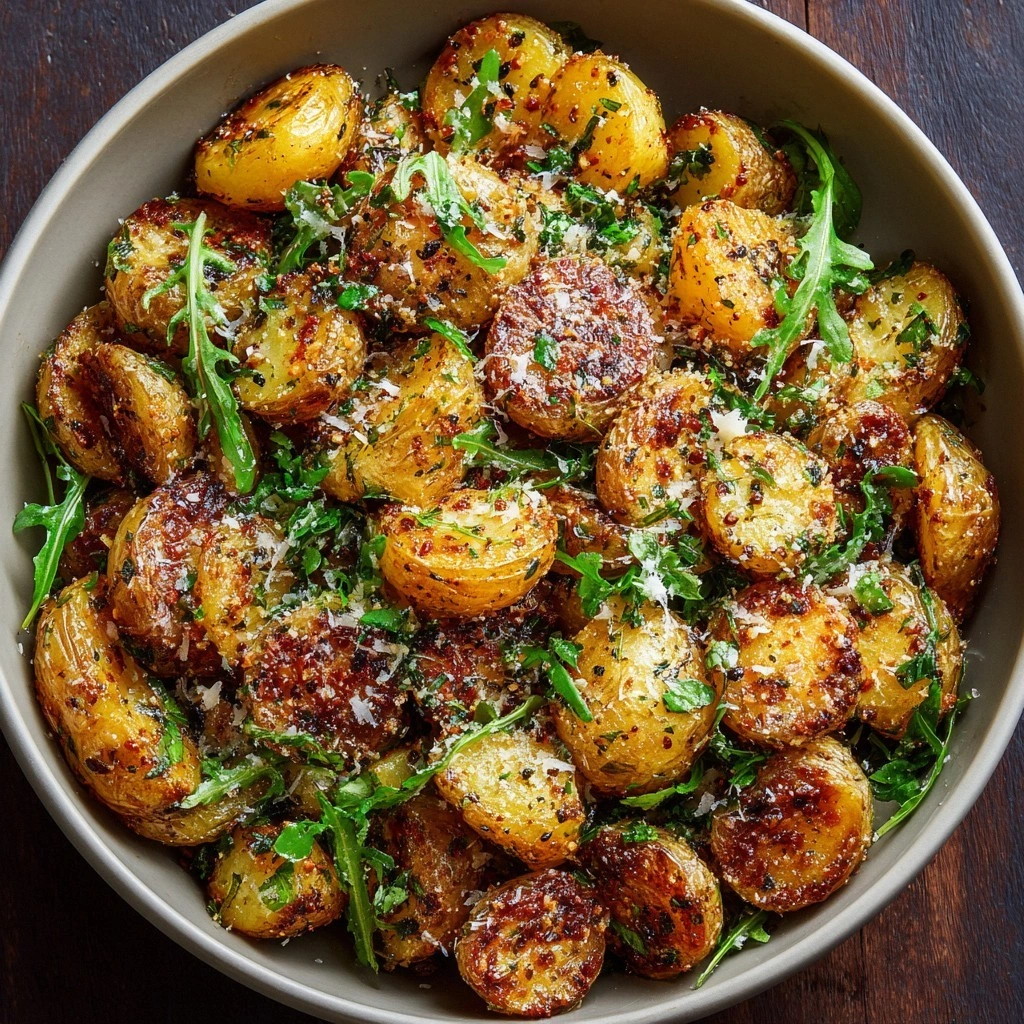
The Method — Step by Step
- Prep the Potatoes: Peel (or leave the skin on for extra texture) and cut 4 medium russet potatoes into 1‑inch cubes. Rinse them in cold water to remove excess starch, then pat dry with a clean towel. This step is crucial for preventing the potatoes from steaming instead of roasting.
- Season the Garlic: Mince 4 cloves of garlic finely. In a small bowl, combine the minced garlic with 3 tablespoons of olive oil, 2 tablespoons of melted butter, 1 teaspoon of dried oregano, 1 teaspoon of salt, and 1/2 teaspoon of black pepper. Stir until the garlic is evenly coated and the mixture is aromatic.
- Coat the Potatoes: Place the potato cubes in a large mixing bowl. Drizzle the garlic‑oil mixture over the potatoes and toss until every cube is coated. For an extra crunch, sprinkle a light dusting of all‑purpose flour over the potatoes and toss again; this will help form a golden crust.
- Preheat the Oven: Set your oven to 425°F (220°C). Line a baking sheet with parchment paper or a silicone mat to prevent sticking and make cleanup a breeze.
- Arrange and Roast: Spread the coated potatoes in a single layer on the prepared baking sheet. Make sure the cubes aren’t crowded; overlapping will cause steaming rather than roasting. Place the sheet in the preheated oven and roast for 20 minutes, flipping halfway through to ensure even browning.
- Add the Parmesan: After 20 minutes, remove the sheet from the oven and sprinkle 1 cup of grated Parmesan cheese evenly over the potatoes. Return the sheet to the oven and continue roasting for another 10–12 minutes, or until the cheese is melted, bubbly, and slightly caramelized.
- Final Touches: Once the potatoes are golden and the cheese is crisp, remove the sheet from the oven. Sprinkle 2 tablespoons of chopped fresh parsley and, if desired, 1/4 teaspoon of red pepper flakes for a subtle heat. Give everything a gentle toss to distribute the herbs.
- Serve Immediately: Transfer the roasted potatoes to a serving dish while hot. The cheese will cling to the potatoes, creating a luscious coating that’s perfect for scooping with a fork or spoon. Serve alongside your favorite protein or enjoy as a hearty side.
That's it — you did it. But hold on, I've got a few more tricks that'll take this to another level…
Insider Tricks for Flawless Results
The Temperature Rule Nobody Follows
Many cooks set their ovens to 400°F, but this recipe thrives at 425°F. The higher heat creates a dramatic caramelization on the Parmesan crust while keeping the potato interiors tender. If your oven runs hot, lower the temperature by 25°F to avoid burning the cheese. I once tried 400°F and the cheese turned a deep amber that tasted burnt; the difference is palpable.
Why Your Nose Knows Best
Before you pull the tray out, pause for a moment and inhale. The aroma of garlic and melted cheese is a reliable indicator that the potatoes are perfectly roasted. If you smell a faint burnt scent, the cheese is overcooked. Trust your nose, and you’ll never have a ruined batch again.
The 5‑Minute Rest That Changes Everything
After removing the potatoes from the oven, let them rest on the baking sheet for five minutes. This brief pause allows the steam to redistribute, ensuring the interior stays fluffy while the exterior remains crisp. I’ve seen people serve immediately and end up with soggy centers; a short rest is the secret sauce.
The Flour Trick
Dusting the potatoes with flour before roasting may seem unnecessary, but it’s a game‑changer. The flour absorbs moisture, creating a dry surface that crisps up beautifully. If you’re avoiding gluten, substitute with cornstarch or a gluten‑free flour blend.
The Herb Swap
If parsley isn’t your favorite, try fresh basil or oregano. Each herb brings its own aroma: basil adds sweetness, while oregano offers earthiness. The key is to add the herbs at the very end to preserve their bright flavors.
The Cheese Variation
Using a mix of Parmesan and Asiago gives a deeper, nuttier flavor profile. Asiago’s slightly sweeter note balances the sharpness of Parmesan, creating a layered taste that’s hard to resist. Swap it in 50/50 for a gourmet twist.
Creative Twists and Variations
This recipe is a playground. Here are some of my favorite ways to switch things up:
Smoky Chipotle Version
Add 1/2 teaspoon of chipotle powder to the garlic‑oil mixture for a smoky heat that pairs well with grilled steak. The chipotle’s earthy undertones complement the Parmesan’s nuttiness, creating a balanced flavor.
Herb‑Infused Creamy Twist
Stir 1/4 cup of Greek yogurt into the final Parmesan coating for a creamy texture. Toss the potatoes with fresh dill and thyme to add a fresh, bright herbal note that offsets the richness.
Mediterranean Medley
Replace the oregano with dried rosemary and add a handful of sun‑dried tomatoes before roasting. The rosemary’s piney aroma and tomatoes’ sweet acidity bring a Mediterranean flair to the dish.
Salsa Verde Finish
After roasting, drizzle a spoonful of salsa verde over the potatoes. The tangy, herbaceous sauce adds a zesty punch that cuts through the buttery richness.
Vegan Version
Swap the butter for a tablespoon of vegan butter and use a plant‑based Parmesan alternative. The result is a creamy, cheesy flavor without compromising the dish’s integrity.
Cheesy Bacon Bites
Fold in 1 cup of cooked, crumbled bacon into the potato mixture before roasting. The bacon’s smoky crunch adds a savory depth that pairs wonderfully with the Parmesan crust.
Storing and Bringing It Back to Life
Fridge Storage
Cool the roasted potatoes to room temperature, then store them in an airtight container in the refrigerator for up to 3 days. The cheese crust will soften slightly, but the potatoes remain delicious.
Freezer Friendly
Pack the cooled potatoes in a freezer‑safe bag, removing as much air as possible. Freeze for up to 2 months. When ready to serve, thaw overnight in the refrigerator before reheating.
Best Reheating Method
Reheat in a 350°F oven for 10–12 minutes, or until heated through. Add a splash of water (about 1 tablespoon) before reheating; the steam will keep the potatoes from drying out and restore the crispy texture.