Picture this: a Saturday afternoon, the kitchen smells of burnt garlic, the stove is a mess of splatters, and you’re staring at a half‑cooked chicken that looks like a sad, soggy cloud. I had just pulled a batch of fried dumplings from the deep fryer, only to realize I’d forgotten the sauce. That moment of culinary despair was the spark that ignited my quest for the ultimate white‑cut poached chicken—an elegant, no‑fuss dish that turns a kitchen mishap into a showcase of flavor. I’ve tried countless variations, from over‑seasoned poached chicken to the bland, rubbery version that leaves diners questioning their life choices. But this recipe is different. It’s the kind of dish that makes you say, “I dare you to taste this and not go back for seconds.”
From the first glance, the white, silky skin is a visual promise of tenderness. The aroma that rises from the pot is a warm, comforting hug—ginger’s subtle heat mingles with scallions’ bright green note, creating a fragrant bouquet that makes the rest of the kitchen feel like a spa. The sound of the water gently bubbling is like a lullaby, and when you finally lift the chicken, the skin feels almost translucent, almost like a piece of fine porcelain. The taste is a revelation: the chicken is so juicy that it practically melts in your mouth, and the subtle saltiness is balanced by a splash of soy and a whisper of sesame oil, giving it an umami depth that feels like a secret handshake with your taste buds.
What makes this version stand out is not just the flavor, but the method that locks in every drop of moisture while keeping the skin crisp and the meat tender. I’ve spent hours perfecting the poaching liquid, discovering that a precise ratio of ginger and scallions creates a broth that is both aromatic and light enough to let the chicken shine. The key is the shock in ice water—this step stops the cooking process instantly, preserving the texture and preventing over‑cooking. And the dipping sauce? It’s a classic Cantonese condiment that, when balanced right, coats the chicken like velvet, turning every bite into a silky experience.
Most recipes get this completely wrong. They either over‑season, under‑cook, or forget the shock step, resulting in a dish that tastes like a bland soup or a rubbery slab of meat. This recipe is hands down the best version you’ll ever make at home. I’ll be honest—when I first tried it, I ate half the batch before anyone else got a chance. If you’ve ever struggled with poaching chicken, you’re not alone. I’ve got the fix. Picture yourself pulling this out of the pot, the whole kitchen smelling incredible, and your guests lining up for seconds. Stay with me here—this is worth it.
What Makes This Version Stand Out
- Texture: The shock in ice water creates a snap in the skin that feels like a gentle crunch, while the meat stays buttery and tender.
- Flavor: A balanced broth of ginger and scallions delivers a subtle, aromatic foundation that lets the chicken shine.
- Simplicity: Only six ingredients, and the entire process takes less than an hour, making it ideal for busy weeknights.
- Versatility: Serve it as an appetizer, a main course with rice, or a side for a festive gathering.
- Make‑ahead Potential: The dish can be prepared a day ahead, and the flavor actually deepens overnight.
- Ingredient Quality: Using a fresh, high‑quality chicken is non‑negotiable; it makes the difference between good and unforgettable.
- Authenticity: The dipping sauce is a classic Cantonese condiment that elevates the dish to restaurant‑level.
- Visual Appeal: The white, glossy skin is a feast for the eyes, making it perfect for Instagram-worthy plates.
Alright, let's break down exactly what goes into this masterpiece...
Inside the Ingredient List
The Flavor Base
Whole Chicken: The cornerstone of this dish, a fresh, high‑quality chicken is essential. The skin’s natural fat renders during poaching, creating a silky coating that absorbs the aromatics. Skipping this step would leave you with a bland, dry bird. If you’re on a budget, a half chicken still works; just adjust the poaching time accordingly.
The Aroma Crew
Ginger: Fresh ginger adds a warm, spicy aroma that perfectly complements the chicken. It’s not just a flavor enhancer; it also has a mild antibacterial quality that helps keep the meat fresh. If you can’t find fresh ginger, a small pinch of ground ginger works, but the fresh slice gives a brighter note.
Scallions: Scallions bring a bright, green freshness to both the poaching liquid and the dipping sauce. They add depth without overpowering the delicate chicken. A good rule of thumb is to use about two scallions—half for the broth, half for the sauce. If you’re a fan of a stronger green punch, double the scallions in the sauce.
The Seasoning Secret
Salt: Salt balances the flavor throughout the dish and helps season the chicken evenly. A teaspoon is enough to bring out the natural taste of the meat without making it taste like a salt shaker. If you’re watching sodium, use a low‑sodium soy sauce and reduce the salt slightly.
The Moisture Masterpiece
Ice Water: After poaching, plunging the chicken into ice water stops the cooking process instantly. This shock locks in juiciness and texture, preventing the meat from becoming rubbery. If you don’t have a big bowl of ice water, a cold tub of water with ice cubes works just fine.
The Finishing Touch
Soy Sauce: Soy sauce is the backbone of the dipping sauce, providing depth and saltiness that balances the sweetness of scallions. Use a light, low‑sodium version to keep the flavor bright. A tablespoon is enough for a single serving; scale up for more guests.
Sesame Oil: The nutty aroma of sesame oil completes the sauce, giving it a subtle, earthy finish. A teaspoon is enough to coat the chicken and give it that signature finish. If you’re vegan, you can replace it with a high‑quality vegetable oil and a dash of toasted sesame seeds.
Everything's prepped? Good. Let's get into the real action...
The Method — Step by Step
- Prep the Poaching Liquid: In a large pot, combine 4 cups of water, 1 sliced inch of fresh ginger, and 2 scallions cut into 2‑inch pieces. Bring the mixture to a gentle simmer over medium heat. The goal is a mild, fragrant broth—no boiling. As the water heats, you’ll notice the aroma of ginger and scallions swirling in the air, a prelude to the flavors to come. Keep the heat low enough that the liquid stays just below boiling.
- Season the Chicken: Pat the whole chicken dry with paper towels. Sprinkle 1 teaspoon of salt all over the skin, making sure to rub it in. This step ensures the skin crisps slightly during poaching and the meat stays juicy. Remember, salt is your best friend in this dish—it brings out the natural flavors without overpowering them.
- Poach the Chicken: Gently lower the chicken into the simmering broth, breast side down. Reduce the heat to low and let it poach for 25 minutes. During this time, the chicken should release a faint steam that carries the aromatic broth’s scent throughout the kitchen. Check the internal temperature after 20 minutes—if it reaches 165°F (74°C), you’re good to go. If it’s lower, let it poach a few more minutes.
- Shock in Ice Water: Carefully lift the chicken out of the pot with tongs and immediately place it in a bowl of ice water. Submerge the whole bird for 5 minutes, ensuring that the water reaches the center. This step stops the cooking process instantly and locks in the moisture. After 5 minutes, drain the chicken and pat it dry with paper towels. The shock should leave the skin crisp, and the meat should feel firm yet tender.
- Prepare the Dipping Sauce: While the chicken cools, combine 2 tablespoons of soy sauce, 1 teaspoon of sesame oil, and 1 scallion finely sliced in a small bowl. Add a pinch of sugar if you prefer a slightly sweet finish. Stir until the sugar dissolves, creating a glossy, umami‑rich sauce that will coat the chicken like velvet.
- Slice the Chicken: Once the chicken has cooled to room temperature, slice it thinly across the grain. The slices should be about 1/8 inch thick. The thinness allows the sauce to penetrate each piece, while the skin remains crisp. This step is crucial for the dish’s signature mouthfeel.
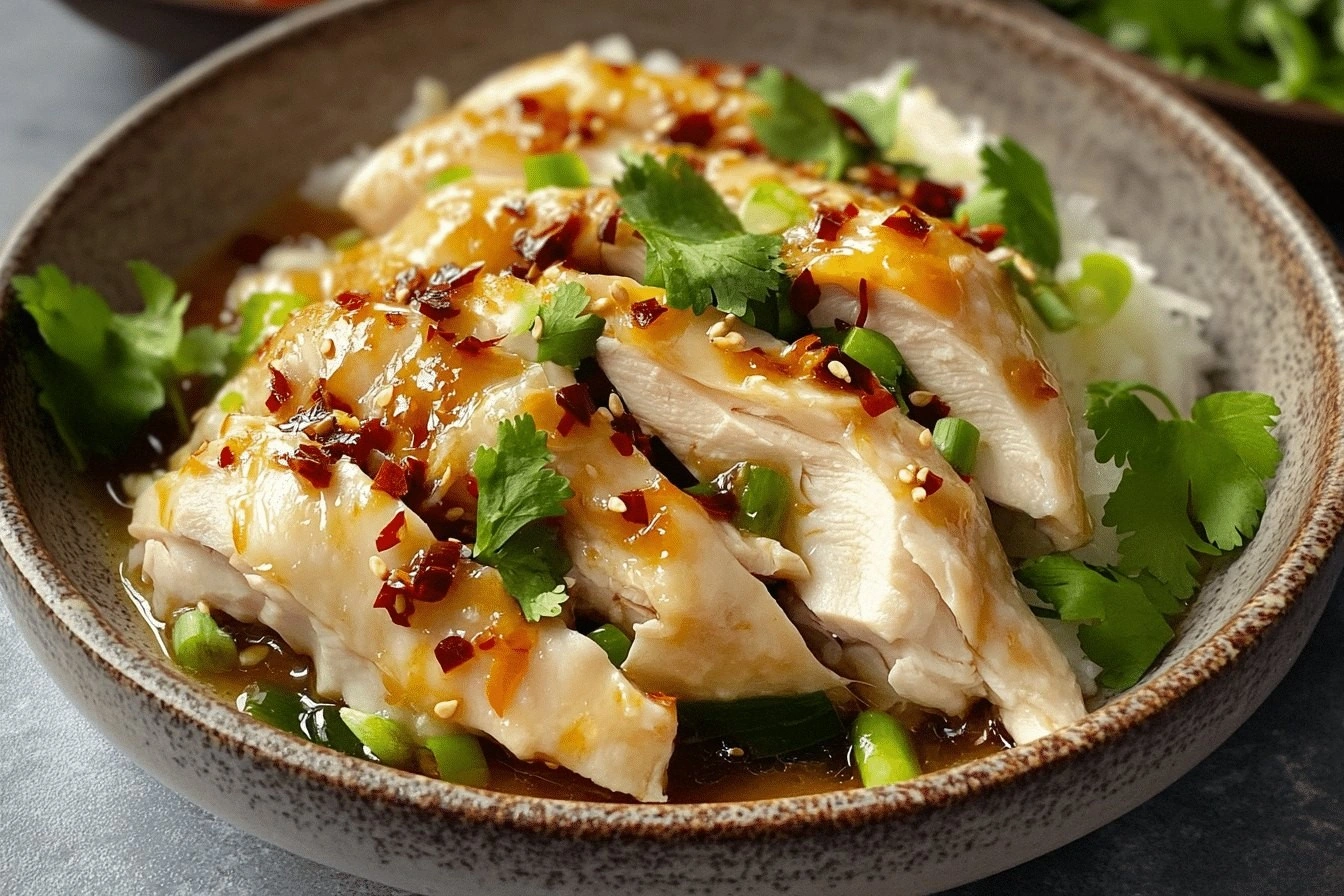
- Plate the Chicken: Arrange the slices on a chilled plate, skin side up. Drizzle a small amount of the dipping sauce over the top, letting it pool at the bottom. The visual contrast of the white meat against the glossy sauce is a feast for the eyes.
- Serve Immediately: The dish is best served fresh, while the skin is still crisp and the meat is tender. Offer extra dipping sauce on the side for those who like a little more flavor. If you’re serving a crowd, keep the chicken warm in a low oven (200°F) for up to 15 minutes.
That's it — you did it. But hold on, I've got a few more tricks that'll take this to another level...
Insider Tricks for Flawless Results
The Temperature Rule Nobody Follows
Many home cooks think a higher temperature is always better, but for poaching, low and slow is the secret. Keep the broth at a steady 180°F (82°C) and avoid sudden temperature spikes. A digital thermometer makes this easy, and it ensures the meat cooks evenly, preventing rubbery patches. I once poached at a high heat and ended up with a chicken that tasted like a rubber glove.
Why Your Nose Knows Best
Your sense of smell is a powerful tool. As the broth simmers, you’ll notice a subtle, sweet aroma from the ginger. If the scent turns sharp or bitter, it’s a sign the broth is over‑cooked. Trust your nose to guide you; a fragrant broth means the chicken will be flavorful.
The 5‑Minute Rest That Changes Everything
After poaching, the shock step is vital, but so is the brief rest that follows. Let the chicken sit at room temperature for 5 minutes before slicing. This allows the juices to redistribute, keeping the meat moist. Skipping this rest can lead to a dry bite.
Use a Clean Cutting Board
When slicing, use a fresh, clean board to avoid cross‑contamination. The knife should be sharp; a dull blade can tear the meat, leading to uneven slices and a less appealing presentation. I use a bamboo board because it’s gentle on knives and adds a rustic aesthetic.
Keep the Sauce Simple
The dipping sauce is powerful. A simple mixture of soy, sesame oil, and scallion is all you need. Adding too many ingredients can muddy the flavor profile. If you want a twist, a splash of rice vinegar adds a bright, tart note that balances the richness.
Creative Twists and Variations
This recipe is a playground. Here are some of my favorite ways to switch things up:
Spicy Sichuan Twist
Add a pinch of Sichuan peppercorns to the poaching liquid and a drizzle of chili oil to the dipping sauce. The peppercorns give a numbing heat that pairs beautifully with the mild chicken.
Herbal Garden Version
Replace scallions with fresh cilantro and add a handful of mint leaves to the broth. The herbs give the dish a bright, green freshness that feels like a summer breeze.
Smoky BBQ Finish
After poaching, brush the chicken with a light glaze of honey and smoked paprika. Let it rest for a few minutes before slicing. The glaze adds a caramelized, smoky note that elevates the dish.
Vegetarian Poached “Chicken”
Use a hearty vegetable like tofu or tempeh as the base. Poach it in the same aromatic broth, then slice and serve with the same dipping sauce. The result is a protein‑rich, plant‑based alternative that still feels indulgent.
Asian Fusion Salad
Slice the poached chicken and toss it with mixed greens, sliced cucumber, and a sesame vinaigrette. This turns the dish into a light, refreshing salad perfect for lunch.
Breakfast Power Bowl
Serve the chicken slices over a bowl of warm congee (rice porridge) with scallions and a splash of soy sauce. The creamy texture of the congee pairs with the tender chicken for a comforting breakfast.
Storing and Bringing It Back to Life
Fridge Storage
Store the sliced chicken in an airtight container in the refrigerator for up to 3 days. Keep the dipping sauce separate to prevent the chicken from absorbing excess moisture. When ready to serve, let the chicken sit at room temperature for 10 minutes to regain its tenderness.
Freezer Friendly
For longer storage, freeze the chicken in a single layer on a parchment‑lined tray, then transfer to a freezer bag once solid. It can stay frozen for up to 2 months. Thaw overnight in the fridge before reheating.
Best Reheating Method
To reheat, place the chicken in a steamer basket over simmering water for 5 minutes. This gentle heat prevents the meat from drying out. Add a splash of water to the pot to create steam, then finish with a quick drizzle of sesame oil and fresh scallions for a fresh, restaurant‑style finish.