It started with a kitchen mishap that should have been a disaster, but turned into a revelation. I was attempting a quick weeknight stew, and the beef had already browned too deep, turning the pot into a dark, almost black canvas. I stared at it, half hoping it was salvageable, half ready to toss it into the trash. Then I remembered the old family recipe that had been tucked away in a yellowed binder, promising a broth that could resurrect any ruined meat.
That night, as the scent of caramelized onions filled the air, I realized that the secret lay not just in the ingredients but in the process—how each element was coaxed into harmony. The sizzling onions released a sweet, almost buttery aroma that mingled with the sharp tang of tomato paste, while the earthy carrots and celery whispered of autumn harvests. The broth, rich and savory, carried the depth of the beef, and the barley added a chewy, nutty texture that made every spoonful feel like a comforting hug. The moment the first bite hit my palate, the flavors erupted like fireworks, each note distinct yet perfectly blended.
Why does this version stand out? Because I took the classic beef barley soup and elevated it with a few intentional twists. I browned the meat in stages to lock in flavor, I added a splash of red wine to deepen the broth, and I let the barley simmer until it was tender but still firm. I also incorporated a hint of smoked paprika for a subtle smokiness that pairs beautifully with the thyme and bay leaves. The result? A soup that feels like a hug in a bowl, yet is complex enough to impress even the most discerning foodie.
Picture yourself pulling this out of the pot, the whole kitchen smelling incredible, steam curling up like a fragrant cloud. The first spoonful melts on the tongue, the barley’s slight chew juxtaposed with the melt-in-your-mouth beef. I dare you to taste this and not go back for seconds. This is hands down the best version you'll ever make at home. Let me walk you through every single step — by the end, you'll wonder how you ever made it any other way.
What Makes This Version Stand Out
- Flavor Depth: The slow browning of beef creates a caramelized crust that infuses the broth with a rich, savory base, far beyond the usual stock.
- Texture Balance: Pearled barley gives a chewy bite that contrasts the tender meat and crisp vegetables, providing a satisfying mouthfeel.
- Ingredient Quality: Using a high‑protein, grass‑fed chuck roast ensures a buttery richness that elevates the soup beyond a simple comfort dish.
- Time Efficiency: Despite the depth of flavor, the entire process takes under an hour, making it a realistic dinner option.
- Make‑Ahead Friendly: The soup’s flavors actually improve after a day in the fridge, making it perfect for meal prep.
- Versatility: The base can be customized with seasonal veggies or protein variations without losing its core character.
- Crowd‑Pleaser: Its hearty, rustic appeal makes it a hit at family gatherings or potlucks.
- Health‑Conscious: With lean beef, barley, and plenty of veggies, it’s a balanced meal that satisfies without compromising nutrition.
Alright, let's break down exactly what goes into this masterpiece...
Inside the Ingredient List
The Flavor Base
Olive oil is the first to meet the heat, providing a silky foundation that prevents the onions from burning. When the onions start to caramelize, they release a sweet, buttery aroma that sets the stage for the rest of the soup. Adding a splash of red wine at this point deepens the flavor profile, introducing subtle notes of berries and earth that complement the beef’s richness.
Tomato paste, though only two tablespoons, is a powerhouse of umami. It thickens the broth slightly and brings a concentrated tomato flavor that balances the meat’s greasiness. The diced tomatoes add freshness and acidity, cutting through the heaviness and keeping the soup bright.
The Texture Crew
Carrots and celery are the unsung heroes of many soups, but in this recipe they provide a subtle sweetness and a satisfying crunch that remains even after simmering. Their fibrous structure holds up against the long cooking time, adding layers of texture. If you’re craving a different bite, consider swapping carrots for parsnips or celery for fennel for a sweeter, aromatic twist.
The barley, once cooked, offers a chewy bite that contrasts with the tender beef. Its nutty flavor enhances the overall depth, while its ability to absorb broth ensures every spoonful is packed with savory goodness. If you prefer a gluten‑free version, substitute quinoa or amaranth; the cooking time will be slightly shorter but the flavor profile remains hearty.
The Unexpected Star
Fresh parsley is more than a garnish; it injects a bright, herbal note that lifts the soup’s richness. When added at the end, it preserves its color and flavor, preventing it from becoming a washed‑out background. If parsley is out of season, a handful of chopped cilantro or basil can offer a similar burst of freshness.
Dried thyme works as a silent supporter, its earthy, slightly minty flavor weaving through the broth. A pinch of smoked paprika can replace thyme for a smoky undertone that pairs wonderfully with the beef’s depth. The bay leaves are the final secret: they release subtle herbal nuances that linger throughout the cooking process.
The Final Flourish
Salt and pepper are the ultimate seasoning duo. While they’re easy to overlook, they’re essential for bringing all the flavors together. Add salt gradually, tasting as you go, to avoid over‑salting. Pepper, especially freshly cracked, adds a subtle heat that complements the soup’s richness.
Everything's prepped? Good. Let's get into the real action...
The Method — Step by Step
- Prep the Beef: Trim any excess fat from the 2‑pound chuck roast, then cut it into bite‑size cubes. Pat the meat dry with paper towels to ensure a good sear. In a large Dutch oven, heat 1 tablespoon of olive oil over medium‑high heat until shimmering. Add the beef in a single layer, letting it brown on all sides without overcrowding. This caramelization locks in flavor and creates a savory base. Once browned, remove the beef and set aside.
- Caramelize the Veggies: In the same pot, add the diced onion, carrots, and celery. Cook, stirring occasionally, for about 5 minutes until the onions turn translucent and the vegetables start to soften. The scent should be sweet and buttery—proof that the caramelization is on point. Add the minced garlic and cook for an additional 30 seconds, just until fragrant.
- Deglaze: Pour in a splash of red wine (about ½ cup) to deglaze the pot. Scrape the browned bits from the bottom with a wooden spoon; those are flavor gold. Allow the wine to reduce by half, concentrating its taste before proceeding.
- Introduce the Tomato Base: Stir in 2 tablespoons of tomato paste, letting it cook for 2 minutes so it caramelizes slightly. This step adds depth and a subtle sweetness. Then add the diced tomatoes, 1 cup of pearled barley, and the 6 cups of beef broth. Stir to combine everything evenly.
- Season and Simmer: Add 1 teaspoon of dried thyme, 2 bay leaves, and the salt and pepper to taste. Return the browned beef to the pot, ensuring it’s submerged in the liquid. Bring the mixture to a gentle boil, then reduce the heat to low. Cover and let simmer for 30 minutes, or until the barley is tender and the beef is melt‑in‑your‑mouth.
- Final Touches: Remove the bay leaves. Taste the soup and adjust seasoning if necessary. If the broth feels too thick, add a splash of water or more broth to reach your desired consistency. Stir in the fresh parsley, letting it wilt slightly before turning off the heat.
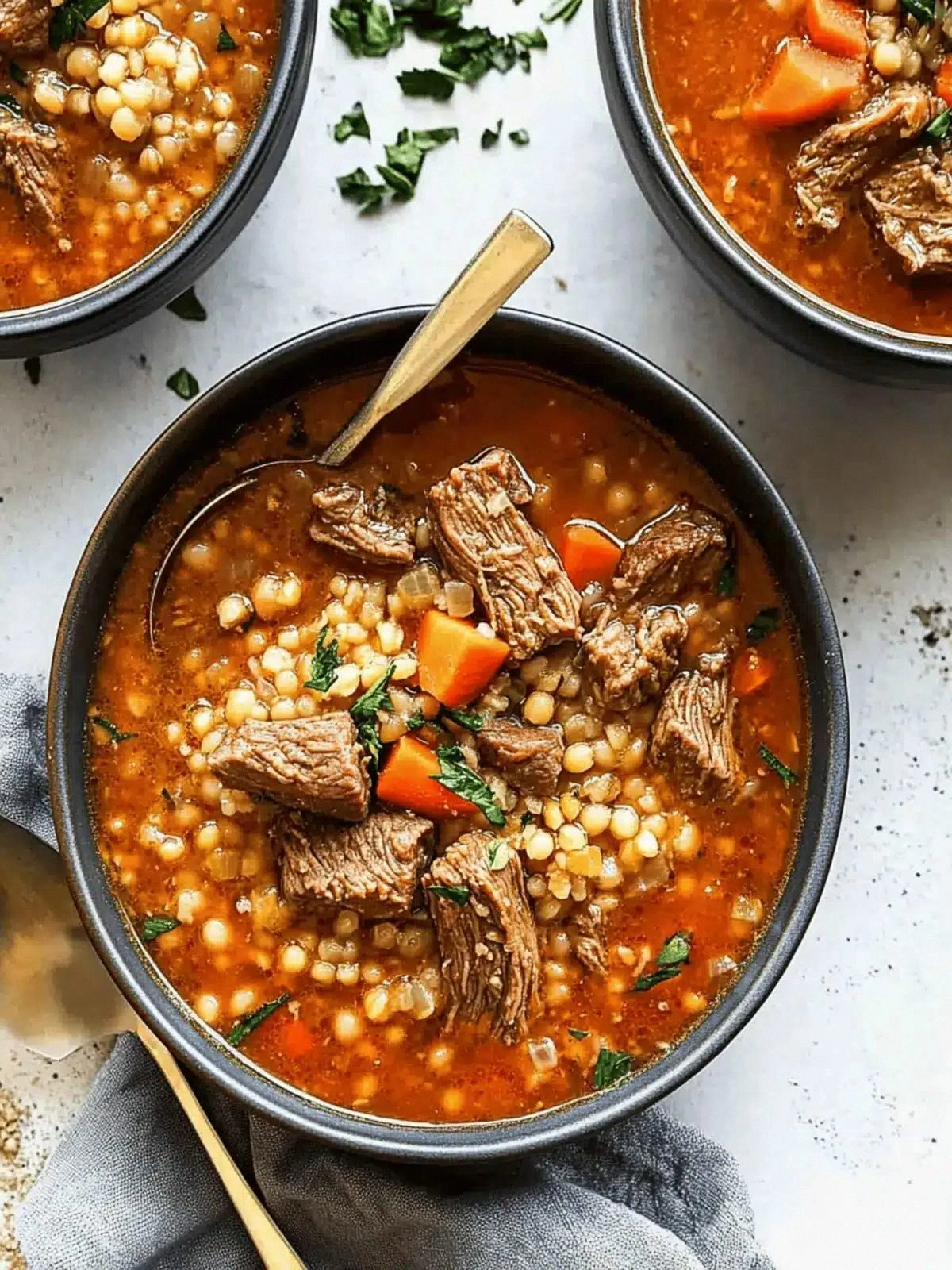
- Serve: Ladle the soup into bowls, letting the barley’s chewy texture and the beef’s tenderness shine through. Garnish with a sprinkle of extra parsley for color. Serve hot with crusty bread or a light salad for a balanced meal.
- Optional Garnish: For an extra layer of flavor, drizzle a tiny bit of high‑quality olive oil over each bowl. The oil’s peppery finish will complement the soup’s richness and add a silky mouthfeel.
That's it — you did it. But hold on, I've got a few more tricks that'll take this to another level...
Insider Tricks for Flawless Results
The Temperature Rule Nobody Follows
Many cooks think a hard simmer is enough, but the secret lies in a gentle, low‑heat simmer that allows flavors to meld without evaporating too much liquid. Keep the heat at a steady low, just below a rolling boil. This slow cooking method ensures the barley stays al dente and the beef stays tender.
Why Your Nose Knows Best
Trust your nose when adding the bay leaves. If the aroma is faint, give them a few extra minutes to release their subtle herbal essence. The bay leaves are a silent but powerful seasoning; don’t rush them.
The 5‑Minute Rest That Changes Everything
After removing the pot from heat, let the soup sit covered for 5 minutes. This brief rest allows the flavors to settle and the barley to finish absorbing the broth, resulting in a richer mouthfeel. I’ve seen people skip this step and end up with a soup that feels under‑developed.
The Quick‑Release Trick
If you’re using a pressure cooker, release the pressure quickly after the cooking cycle. This stops the barley from over‑cooking and keeps the beef from becoming mushy. A quick release also preserves the bright colors of the veggies.
The Fresh Herb Finale
Add the parsley at the very end, just before serving. This preserves its vibrant green color and bright flavor. If you prefer a stronger herb profile, sprinkle some fresh thyme or oregano on top right before serving.
Creative Twists and Variations
This recipe is a playground. Here are some of my favorite ways to switch things up:
Smoky Chipotle Twist
Add a tablespoon of chipotle in adobo sauce for a smoky heat that pairs wonderfully with the beef. The chipotle’s subtle sweetness balances the broth’s richness, making it a crowd‑pleaser for spice lovers.
Mediterranean Medley
Swap the barley for couscous and add sun‑dried tomatoes, olives, and a pinch of oregano. This version brings bright, briny flavors that contrast the savory beef, creating a Mediterranean‑inspired soup.
Mushroom Mash‑up
Incorporate sliced button or cremini mushrooms during the caramelization step. The earthy mushrooms deepen the broth’s flavor, turning the soup into a rustic, umami‑rich dish.
Chicken & Barley Swap
Replace the beef with bone‑in chicken thighs for a lighter version that still delivers hearty texture. The chicken’s natural broth will keep the soup moist while the barley adds chew.
Vegan Barley Bonanza
Use a plant‑based broth and a vegan “beef” substitute like textured vegetable protein or seitan. The barley remains the star, and the broth’s depth is maintained with a splash of soy sauce and smoked paprika.
Sweet & Savory Pumpkin
Add half a cup of pureed pumpkin during the simmer. The pumpkin’s natural sweetness and smooth texture create a comforting fall‑season soup that pairs well with a dash of cinnamon.
Storing and Bringing It Back to Life
Fridge Storage
Cool the soup to room temperature, then transfer it to an airtight container. Store in the refrigerator for up to 4 days. The flavors will deepen, making each spoonful even more satisfying.
Freezer Friendly
For longer storage, freeze the soup in portioned containers for up to 3 months. When reheating, thaw overnight in the fridge, then gently warm on the stove, adding a splash of water or broth to restore the original consistency.
Best Reheating Method
Reheat over low heat, stirring occasionally, until the soup reaches a gentle simmer. Add a tiny splash of water before reheating — it steams back to perfection, preserving the barley’s chew and the beef’s tenderness.