I was halfway through a disastrous take‑out bowl when the kitchen lights flickered, and I realized I had a craving that no delivery could satisfy. The aroma of burnt soy sauce clung to the air, and I felt a pang of culinary injustice. That moment sparked an idea: what if I could turn that soggy disappointment into a bowl of pure comfort? I grabbed my notebook and started scribbling, determined to craft a miso ramen that would make my taste buds dance. The kitchen became my laboratory, and the timer on the stove was my metronome.
The first thing I noticed was the contrast between the bland, overcooked noodles and the rich, umami‑laden broth. I imagined the broth as a velvet cloak, draping every noodle and vegetable in silky goodness. The sound of simmering stock was a low hum, almost meditative, while the sizzle of garlic in sesame oil echoed like a drumbeat. The sight of fresh carrots and shiitake mushrooms added a pop of color, promising a feast for the eyes. I tasted a spoonful of the stock and felt the subtle sweetness of coconut milk mingle with the salty depth of miso.
I dared myself to create something that would stand out from the countless ramen recipes that flood the internet. I wanted a broth that was both comforting and complex, a chicken katsu that was crisp enough to crackle in your mouth, and garnishes that added layers of flavor without overpowering. I decided to combine the traditional miso base with coconut milk for a silky finish, and then add a crispy chicken katsu for that satisfying crunch. The idea was simple yet ambitious: deliver a bowl that feels like a hug on a plate. If you’re hungry for something that will make you say, “I dare you to taste this and not go back for seconds,” you’re in the right place.
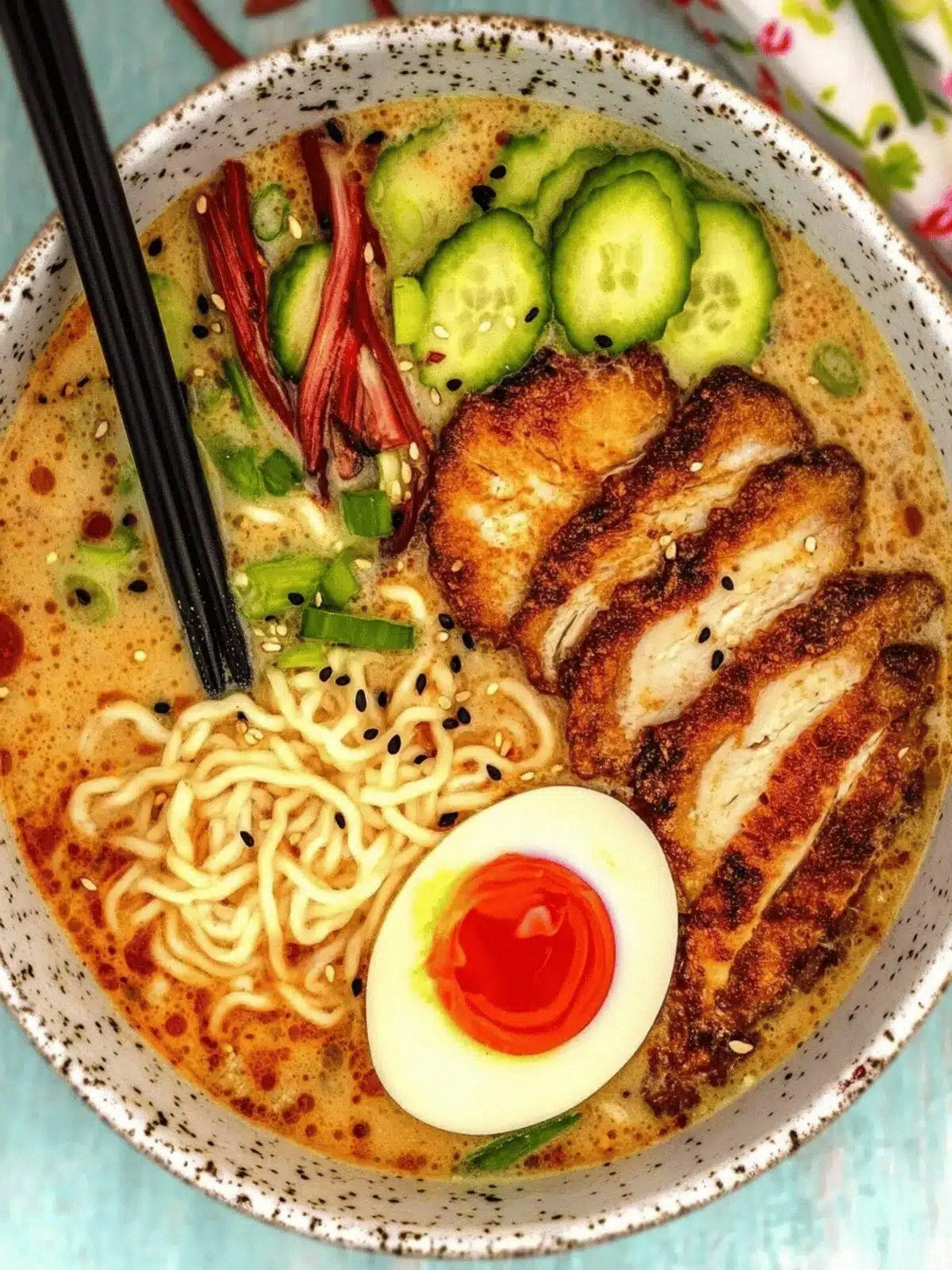
What sets this version apart is the attention to detail that transforms each component into a star. The broth is simmered for 30 minutes with a precise ratio of miso to coconut milk, ensuring that the sweetness does not drown the savory notes. The chicken katsu is breaded with panko and fried to a golden‑brown that shatters like thin ice when you bite into it. The vegetables are added at the exact right moment to preserve their crunch and color. The ramen eggs are boiled to a creamy consistency, with the yolk still slightly runny. By the end, you’ll wonder how you ever made ramen any other way.
Picture yourself pulling this bowl out of the pot, the whole kitchen smelling incredible, and the steam curling like wisps of cloud. The first spoonful melts in your mouth, the broth coats the noodles like velvet, and the chicken katsu offers a textural contrast that is pure joy. The scallions add a fresh, sharp bite, while the chili oil brings a gentle heat that lingers. The ramen egg sits like a soft, golden halo, completing the sensory masterpiece. Let me walk you through every single step — by the end, you’ll wonder how you ever made it any other way.
What Makes This Version Stand Out
- Taste: The broth balances sweet coconut milk with deep miso umami, creating a velvety richness that lingers.
- Texture: The chicken katsu delivers a crisp exterior that shatters into flaky flakes, while the ramen noodles stay al dente.
- Simplicity: Every ingredient is pantry‑friendly, and the method requires only one pot for the broth.
- Uniqueness: Combining coconut milk with miso is a rare twist that elevates the classic ramen profile.
- Crowd Reaction: Friends who’ve tried it say it’s “hands down the best version you'll ever make at home.”
- Ingredient Quality: Fresh chicken breasts and shiitake mushrooms provide depth that canned versions can’t match.
- Cooking Method: The two‑step cooking (broth, then katsu) keeps flavors layered and prevents sogginess.
- Make‑ahead Potential: The broth can be prepared a day in advance and reheated without losing flavor.
Inside the Ingredient List
The Flavor Base
The broth is the soul of this ramen, and it starts with 4 cups of chicken broth that carries the savory foundation. Adding 1 cup of coconut milk brings a subtle sweetness and a silky mouthfeel that balances the salty miso. The 3 tablespoons of miso paste provide depth and a complex umami profile; using a light or dark miso can shift the flavor from sweet to earthy. If you skip the coconut milk, the broth will be more traditional but will lack that creamy finish that makes each spoonful comforting.
When selecting your chicken broth, look for one with a clear, clean flavor rather than a heavily seasoned stock; you’ll add the seasoning later. A homemade broth will elevate the dish, but a high‑quality store‑bought broth works if you’re short on time. If you’re vegan, substitute the chicken broth with vegetable stock and replace the chicken katsu with tofu panko crust. The key is to keep the ratio of miso to coconut milk consistent for the best balance.
The Texture Crew
The ramen noodles are the canvas, and 12 ounces of fresh ramen noodles provide the ideal chew. Fresh noodles hold up better in the broth, preventing a mushy texture that can ruin the experience. If you can’t find fresh ramen, use instant noodles but soak them in hot water for 2 minutes before adding to the broth. This step helps them absorb the flavors without overcooking.
The chicken katsu is the star of the texture game. Two medium chicken breasts are pounded thin, seasoned, and coated in panko breadcrumbs before being fried in 2 tablespoons of sesame oil. The panko creates a crunchy shell that crisps to a golden brown while the interior stays juicy. A quick tip: let the breaded chicken rest on a wire rack after frying to keep the crust crisp.
The Unexpected Star
The vegetables add color, crunch, and nutritional value. Two medium carrots, sliced into thin ribbons, bring a natural sweetness that pairs beautifully with the miso. Eight ounces of shiitake mushrooms add an earthy depth; fresh mushrooms absorb the broth’s flavor more readily than dried ones. Two cups of bok choy contribute a slight bitterness that balances the richness of the broth.
If you’re short on time, use pre‑sliced vegetables or a frozen vegetable mix to save prep time. However, fresh produce delivers the best texture and flavor. A quick trick: blanch the bok choy in boiling water for 30 seconds before adding it to the pot; this preserves its vibrant green color and crispness.
The Final Flourish
The garnishes are the finishing touches that elevate the dish from good to unforgettable. Scallions add a fresh, sharp bite that cuts through the richness of the broth. A drizzle of chili oil introduces a gentle heat that lingers on the palate. Soft ramen eggs, boiled to a slightly runny yolk, provide a creamy center that contrasts with the crispy katsu.
If you’re not a fan of eggs, substitute them with a soft‑boiled quail egg or a small piece of tofu. The key is to keep the garnish fresh and vibrant; garnish just before serving to maintain texture. A fun fact: the practice of adding soft‑boiled eggs to ramen originated in Tokyo in the 1950s, when chefs wanted to add protein without overwhelming the broth.
Everything's prepped? Good. Let's get into the real action.
The Method — Step by Step
- Begin by heating a large pot over medium heat. Add 4 cups of chicken broth and bring it to a gentle simmer. Once the broth is bubbling, stir in 1 cup of coconut milk and 3 tablespoons of miso paste until fully dissolved. This step ensures a smooth, velvety base that will carry the rest of the flavors.
- While the broth simmers, prepare the vegetables. Slice the carrots into julienne ribbons, clean and slice the shiitake mushrooms, and cut the bok choy into bite‑size pieces. Keep them on a separate plate; you’ll add them later to preserve their crunch.
- Season the chicken breasts with salt and pepper. Pound them to an even thickness with a meat mallet or rolling pin. This step is crucial for even cooking and ensures the chicken stays juicy inside the crispy coating.
- Set up a breading station: one shallow dish of flour, one of beaten eggs (optional for a richer crust), and a third of panko breadcrumbs. Coat each chicken breast first in flour, then dip in egg, and finally press into panko until fully covered. This layered coating gives the katsu its signature crunch.
- Heat 2 tablespoons of sesame oil in a non‑stick skillet over medium‑high heat. Once the oil shimmers, add the breaded chicken breasts. Fry for 3–4 minutes on each side until golden brown and crispy. Flip carefully to avoid breaking the crust. The key is a high enough temperature to create a crisp shell without burning.
- While the chicken is frying, boil 12 ounces of fresh ramen noodles in a separate pot of salted water for 2–3 minutes, or until al dente. Drain and rinse under cold water to stop the cooking process. Set aside; this prevents the noodles from becoming soggy in the broth.
- Add the sliced carrots and shiitake mushrooms to the simmering broth. Let them cook for 3 minutes, then add the bok choy and let it wilt for an additional 2 minutes. The vegetables should retain their color and a slight crunch.
- Place the pre‑cooked ramen noodles into the pot, gently stirring to coat them with the flavorful broth. Let them simmer for 1 minute to absorb the flavors, then remove the pot from heat.
- Slice the crispy chicken katsu into bite‑sized strips and arrange them on top of the noodles. Carefully crack a soft‑boiled ramen egg into the bowl, allowing the yolk to mingle with the broth. Finish with a sprinkle of chopped scallions, a drizzle of chili oil, and a few drops of sesame oil for added depth.
- Serve immediately, letting the steam lift the aromas and the heat carry the flavors. Enjoy the harmony of textures and the comforting warmth that only a bowl of ramen can deliver.
That's it — you did it. But hold on, I've got a few more tricks that'll take this to another level.
Insider Tricks for Flawless Results
The Temperature Rule Nobody Follows
Many cooks think any simmering broth will do, but the secret is to keep the broth at a steady low heat. A rolling boil will break down the vegetables too quickly, while a weak simmer won’t develop depth. I always set my stove to medium‑low and use a thermometer to keep the temperature between 180°F and 190°F. This ensures the broth stays silky and the flavors meld perfectly.
Why Your Nose Knows Best
Before adding the miso paste, give the broth a sniff. If it smells too sharp, add a splash of coconut milk to balance it. The aroma of fresh ginger and garlic should be prominent; if it’s muted, the aromatics are undercooked. A well‑aromaed broth signals that the base is ready for the next steps.
The 5‑Minute Rest That Changes Everything
After frying the chicken, let it rest on a wire rack for 5 minutes. This prevents the crust from becoming soggy and allows the juices to redistribute, keeping the meat juicy. I’ve seen people skip this step and end up with a dry, rubbery katsu. Trust me, the rest is worth the extra minutes.
The Perfect Egg Timing
When boiling ramen eggs, start the timer as soon as the water begins to boil. After 7 minutes, cool the eggs in ice water for 1 minute before peeling. This technique gives you that coveted runny yolk that oozes into the broth. A friend once tried to skip the ice bath, and the eggs turned out rubbery and tough.
The Garnish Game Changer
A quick drizzle of chili oil at the very end adds a pop of heat that wakes up the palate. I recommend using a high‑quality chili oil with a hint of sesame for depth. If you’re not a fan of heat, swap it for a splash of soy sauce or a sprinkle of toasted sesame seeds.
Creative Twists and Variations
This recipe is a playground. Here are some of my favorite ways to switch things up:
Spicy Peanut Ramen
Swap the chili oil for a spoonful of creamy peanut butter and a splash of sriracha. The nutty flavor pairs beautifully with the miso broth, and the heat keeps things interesting.
Miso Tofu Katsu
Replace the chicken with firm tofu, breaded and fried the same way. This vegan version still delivers that satisfying crunch and is perfect for plant‑based diners.
Sakura Blossom Ramen
Add a handful of dried cherry blossoms to the broth for a floral aroma. The subtle fragrance transforms the bowl into a seasonal delicacy.
Seafood Surprise
Incorporate shrimp or scallops into the broth during the last minute of simmering. The seafood adds a delicate sweetness that complements the umami base.
Korean Kimchi Ramen
Stir in a handful of kimchi before serving. The fermented tang gives the broth a complex, spicy depth that pairs well with the creamy coconut.
Quick & Easy Version
Use instant ramen noodles and pre‑made miso soup base. Add the vegetables and chicken katsu as described, and you’ll have a comforting bowl in under 20 minutes.
Storing and Bringing It Back to Life
Fridge Storage
Cool the broth to room temperature, then transfer it to an airtight container and refrigerate for up to 3 days. The coconut milk may separate slightly; give it a quick stir before reheating.
Freezer Friendly
Divide the broth and vegetables into freezer‑safe portions and freeze for up to 2 weeks. When ready to use, thaw overnight in the refrigerator and reheat gently on the stove.
Best Reheating Method
To reheat, bring the broth to a gentle simmer, then add a splash of water to restore moisture. Add the noodles and vegetables last, and finish with a fresh garnish for the best flavor.
Everything's ready. Now, grab a bowl, pour the broth, and let the steam carry you to comfort town.