Picture this: you’re halfway through a week of bland dinners, the fridge a gray canvas, and your stomach growls like a distant thunderstorm. You pull out a bag of frozen peas and a sack of russet potatoes, feeling the faint promise of comfort. That moment when you realize you can turn a simple pantry staple into a velvety, savory masterpiece—now that’s culinary alchemy.
I remember the first time I tried this dish, my kitchen was a mess of splattered butter and a burnt bottom. The peas were a dull green, the potatoes a mushy gray. My taste buds were in distress, and I was ready to give up. Then I added a splash of milk, a dash of cream, and a pinch of garlic, and the whole thing transformed into a silky, golden sauce that clung to the potatoes like a velvet blanket. That was the moment I knew I had found something special.
What makes this version stand out? It’s not just the creamy texture or the bright green peas. It’s the harmony of flavors, the simple yet precise technique, and the fact that you can make it in under an hour. I dare you to taste this and not go back for seconds. It’s hands down the best version you’ll ever make at home, and if you’re skeptical, you’ll be proven wrong by the first bite.
I’ll be honest—my first batch was a disaster, but I learned quickly. I’ll share the exact method, the insider tricks, and the variations that make this dish a playground for flavor. Picture yourself pulling this out of the oven, the whole kitchen smelling incredible, and your guests reaching for seconds without a word. Stay with me here—this is worth it.
Let me walk you through every single step—by the end, you’ll wonder how you ever made it any other way.
What Makes This Version Stand Out
- Flavor: The subtle sweetness of peas marries the savory depth of butter and cream, creating a sauce that sings with every bite.
- Texture: The potatoes stay al dente, while the peas are tender but still vibrant, giving a pleasant contrast.
- Ease: No fancy equipment—just a skillet, a saucepan, and a spoonful of patience.
- Versatility: Works as a side, a main, or even a hearty stew when you add protein.
- Crowd-pleaser: Even the pickiest eaters love the creamy, comforting nature of this dish.
- Ingredient Quality: Fresh, seasonal peas and high‑quality butter make the difference between good and great.
- Make‑Ahead: It stores beautifully and can be reheated without losing its silky sheen.
- Budget Friendly: Uses pantry staples, keeping the cost low while maximizing flavor.
Alright, let’s break down exactly what goes into this masterpiece…
Inside the Ingredient List
The Flavor Base
At the heart of this dish is a simple yet powerful combination: butter, milk, and heavy cream. Butter provides a rich, golden backdrop; milk gives body; cream adds a velvety finish. Together they form a sauce that coats each potato and pea like a silky blanket. If you skip any of these, you lose that luxurious mouthfeel that makes the dish unforgettable.
The Texture Crew
Potatoes and peas are the star players. Choose firm, waxy potatoes like Yukon Golds for a buttery bite that holds up. The peas should be fresh or frozen; frozen peas are convenient and retain their bright green color. Dice potatoes into uniform cubes to ensure even cooking, and keep peas whole to maintain their vibrant color and bite.
The Unexpected Star
Garlic powder and black pepper add a subtle depth that lifts the entire dish. Garlic powder is a secret weapon—its mellow flavor permeates the sauce without the risk of burning raw garlic. A pinch of pepper brings a gentle heat that balances the richness. If you’re a fan of bold flavors, a dash of smoked paprika can add a smoky undertone.
The Final Flourish
Parmesan cheese is the finishing touch that turns a simple side into a gourmet experience. It melts into the sauce, adding umami and a slight nutty note. Fresh parsley, chopped, adds a burst of color and a bright, herbaceous finish that cuts through the creaminess. If you prefer a stronger cheese flavor, substitute part of the Parmesan with cheddar or Gruyère.
Everything's prepped? Good. Let’s get into the real action…
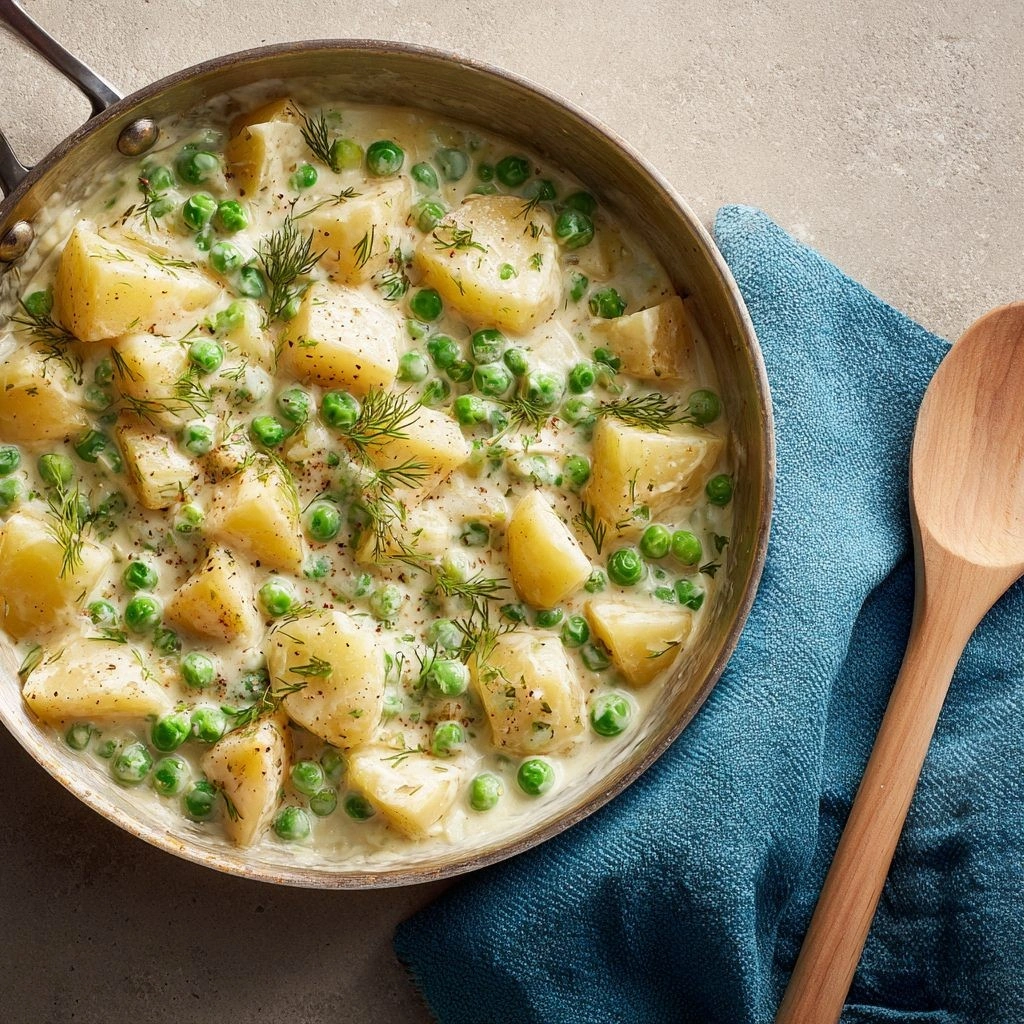
The Method — Step by Step
- Heat a large skillet over medium heat and melt 2 tablespoons of butter until foamy but not browned. Add 1 cup of milk and ½ cup of heavy cream, whisking constantly until the mixture is smooth and begins to thicken slightly. This base will be the canvas for our peas and potatoes.
- Dice 2 cups of potatoes into uniform ½‑inch cubes. Add them to the skillet, stirring to coat each piece in the buttery sauce. Cook for 10 minutes, stirring occasionally, until the potatoes start to turn golden and develop a slight crust.
- Add 2 cups of frozen peas to the skillet. Stir to combine, then reduce the heat to low. Let the peas cook for 5–6 minutes, just until they thaw and become tender, but still retain their bright green color. The peas will release a subtle sweetness that enhances the sauce.
- Season the mixture with ½ teaspoon of salt, ¼ teaspoon of black pepper, and ¼ teaspoon of garlic powder. Stir gently, ensuring the seasonings are evenly distributed. This is the moment of truth—your dish should smell toasty and fragrant.
- Reduce the heat to very low and stir in ¼ cup of grated Parmesan cheese. Let the cheese melt into the sauce, creating a silky, golden glaze that clings to each potato cube and pea. If you prefer a thicker sauce, let it simmer for an extra minute.
- Fold in ¼ cup of chopped fresh parsley. The fresh herbs add a burst of color and a bright, herbaceous finish that cuts through the richness.
- Taste the dish and adjust seasoning if needed. If you like a bit of heat, sprinkle a pinch of smoked paprika or a dash of cayenne pepper.
- Transfer the creamed peas and potatoes to a serving dish. Serve hot as a side to roasted meats or as a comforting main dish with a side salad. The sauce will keep its silky texture and bright color for up to 24 hours in the refrigerator.
That’s it— you did it. But hold on, I’ve got a few more tricks that’ll take this to another level.
Insider Tricks for Flawless Results
The Temperature Rule Nobody Follows
Cooking at too high a temperature can cause the potatoes to burn on the outside while staying raw inside. Keep the skillet at medium and reduce to low once the potatoes start to brown. This slow, steady approach ensures even doneness and prevents a burnt crust that ruins the dish’s texture.
Why Your Nose Knows Best
Your sense of smell is the ultimate gauge for seasoning. As soon as the sauce starts to thicken, inhale deeply; the buttery, creamy scent will tell you if you need more salt or pepper. Trust your nose—it’s been trained by countless kitchens to detect flavor balance.
The 5‑Minute Rest That Changes Everything
Once you transfer the dish to a serving bowl, let it rest for five minutes. During this time, the sauce will thicken slightly, and the flavors will meld. The result is a richer, more cohesive dish that feels like it was made fresh.
The Secret of Fresh Herbs
Chop parsley just before serving. Fresh herbs lose their vibrant color and flavor quickly. If you’re prepping ahead, keep the parsley in a sealed container with a paper towel in the fridge to maintain freshness.
The Right Potatoes for Creamy Perfection
Yukon Golds or red potatoes hold their shape and develop a buttery texture. Avoid starchy varieties like russets, which can become gummy when cooked in a creamy sauce. If you’re short on time, pre‑boil the potato cubes for 5 minutes to reduce overall cooking time.
The Cheese Swap
If you’re lactose intolerant or simply want a lighter version, replace Parmesan with a dairy‑free cheese or nutritional yeast. The nutty flavor will still coat the potatoes, and the sauce will remain silky.
Creative Twists and Variations
This recipe is a playground. Here are some of my favorite ways to switch things up:
Herb‑Infused Cream
Add 1 tablespoon of chopped rosemary or thyme to the sauce for an aromatic, earthy flavor that pairs wonderfully with roasted chicken.
Cheesy Baked Version
Transfer the mixture to a baking dish, top with ½ cup of shredded cheddar, and bake at 375°F for 15 minutes. The top will crisp into a golden crust that contrasts the silky interior.
Vegan Twist
Use plant‑based milk and coconut cream, and replace butter with vegan margarine. Add nutritional yeast for a cheesy flavor, and the dish remains creamy and comforting.
Spicy Kick
Stir in a tablespoon of sriracha or a pinch of cayenne pepper. The heat will cut through the richness, making it a bold side for grilled steak.
Seafood Pairing
Add a handful of cooked shrimp or scallops to the sauce in the final minute of cooking. The seafood’s sweet, briny flavor complements the peas and potatoes beautifully.
Storing and Bringing It Back to Life
Fridge Storage
Store leftovers in an airtight container for up to 3 days. The sauce may thicken slightly; simply reheat gently on the stovetop and stir in a splash of milk to restore silky texture.
Freezer Friendly
Freeze in a freezer‑safe container for up to 2 months. Thaw overnight in the refrigerator, then reheat slowly, adding a little water or milk to loosen the sauce.
Best Reheating Method
Reheat on low heat, stirring frequently. Add a tiny splash of water or milk before reheating—it steams back to perfection, preventing the sauce from drying out.