When I first tried to make a quick dinner for a group of friends, I ended up with a pot of overcooked spaghetti and a pan of scrambled eggs that looked more like a science experiment than a meal. The kitchen was a mess, the sauce had turned into a sticky sludge, and my friends were staring at me, waiting for the miracle that never came. That night I swore I would find a way to turn this culinary flop into a crowd‑pleaser, and I was right. The result? A dish that feels like a comforting hug, yet packs a punch that will make your taste buds dance.
Picture this: a sizzling pan, the aroma of garlic and onions swirling with the faint metallic tang of soy sauce, and the sound of eggs cracking and frying in perfect harmony. The first bite is a symphony of textures—crispy edges that crackle like thin ice, silky noodles coated in a glossy, silky sauce, and a fluffy egg center that melts into a velvety sauce. The flavor is bold, yet balanced, with a subtle umami depth that lingers on the palate. I’ve tasted versions that are either too dry or too greasy, but this one is the sweet spot between comfort and gourmet.
What makes this version stand out is that it’s not just a recipe; it’s a ritual. I’ve taken the time to refine every element—from the choice of spaghetti to the timing of each stir—so that even a novice can replicate the same mouth‑watering results. I dare you to taste this and not go back for seconds. If you’re skeptical, I’ll be honest—half the batch was devoured by me before anyone else could even touch it. That’s the proof that this is hands down the best version you’ll ever make at home.
Before we dive into the step‑by‑step, I’ve got a little secret: a technique that will make your noodles caramelize without burning, and a flavor tweak that will elevate the dish from ordinary to unforgettable. Picture yourself pulling this out of the pan, the kitchen smelling incredible, and everyone clamoring for more. Okay, ready for the game‑changer? Let’s walk through every single step and discover why this dish is a game‑changer in your kitchen.
What Makes This Version Stand Out
- Taste: The combination of soy sauce, sesame oil, and a splash of chili flakes creates a depth of flavor that feels both familiar and adventurous.
- Texture: The noodles are perfectly al dente, the eggs are fluffy and airy, and the sauce glazes the surface for a silky finish.
- Simplicity: With only ten ingredients, you can whip up this dish in under an hour, making it ideal for busy weeknights.
- Uniqueness: The use of sesame oil and scallions adds a subtle nutty aroma that sets this recipe apart from classic fried spaghetti.
- Crowd Reaction: Friends rave about how this dish feels like a comfort meal with a twist, making it a hit at gatherings.
- Ingredient Quality: Fresh garlic, high‑quality soy sauce, and good‑grade eggs are the backbone of this recipe.
- Cooking Method: The quick stir‑fry technique ensures each component cooks evenly and retains its individual flavor.
- Make‑Ahead Potential: You can prepare the noodles and eggs ahead of time and reheat them to perfection later.
Inside the Ingredient List
The Flavor Base
At the heart of this dish lies a simple yet powerful duo: soy sauce and sesame oil. The soy sauce provides umami richness that binds all the flavors together, while the sesame oil adds a fragrant, nutty aroma that elevates the dish from ordinary to extraordinary. If you skip the soy sauce, the dish loses its savory depth and feels flat; if you omit the sesame oil, you miss that signature toasted undertone that makes the dish memorable. A good quality, dark soy sauce is preferable for a deeper flavor, but a lighter soy sauce works if you’re watching sodium levels.
The Texture Crew
Spaghetti is the star of this recipe, but its role is more than just a base. When cooked al dente, the noodles provide a firm bite that contrasts beautifully with the soft, fluffy eggs. Using freshly boiled spaghetti ensures that the noodles don't become mushy when you fry them. If you use pre‑cooked or instant noodles, the texture will be too soft, and the dish will feel like a soggy mess. For an extra crunch, consider adding a handful of toasted sesame seeds just before serving.
The Unexpected Star
Garlic and scallions are not just aromatics; they’re the flavor ambassadors that carry the dish’s character. Garlic, when minced finely, releases a sharp, bright note that cuts through the richness of the eggs and the sauce. Scallions, on the other hand, provide a fresh, oniony brightness that lifts the dish, especially when sprinkled on top at the end. Skipping garlic will make the dish feel bland, while omitting scallions removes that essential layer of freshness. If you’re not a fan of garlic, try a small amount of garlic-infused oil to soften the bite.
The Final Flourish
Chili flakes, salt, pepper, and parmesan cheese are the finishing touches that turn a good dish into a great one. The chili flakes add a subtle heat that balances the savory sauce, while a pinch of salt and pepper fine‑tune the overall flavor profile. Parmesan adds a salty, nutty finish that creates a creamy texture when melted into the sauce. If you’re lactose intolerant, you can replace parmesan with nutritional yeast for a similar umami boost. Every element in this section works together to create a harmonious finish that will have your guests asking for seconds.
Everything’s prepped? Good. Let’s get into the real action.
The Method — Step by Step
- Cook the spaghetti. Bring a large pot of salted water to a rolling boil and add the spaghetti. Cook for 8–9 minutes, or until al dente, then drain and rinse under cold water to stop the cooking process. Toss the noodles with a tablespoon of sesame oil to keep them from sticking together. The goal is a silky, slightly glossy surface that will hold the sauce beautifully.
- Heat the pan. Place a large non‑stick skillet or wok over medium‑high heat. Add the remaining sesame oil and let it shimmer. The pan must be hot enough that the garlic sizzles immediately when added—this releases the aromatic oils that form the foundation of the dish.
- Sauté the aromatics. Add the minced garlic and sliced onion to the pan. Stir constantly for about 30 seconds until the onion becomes translucent and the garlic turns a golden brown. The aroma should be fragrant and inviting. Avoid letting the garlic burn; a burnt garlic taste will dominate the dish.
- Add the noodles. Push the aromatics to one side of the pan and pour the cooked spaghetti into the center. Stir-fry for 2–3 minutes, letting the noodles absorb the flavors. The goal is to get a slight caramelization on the surface without burning. Keep the pan moving to ensure even heat distribution.
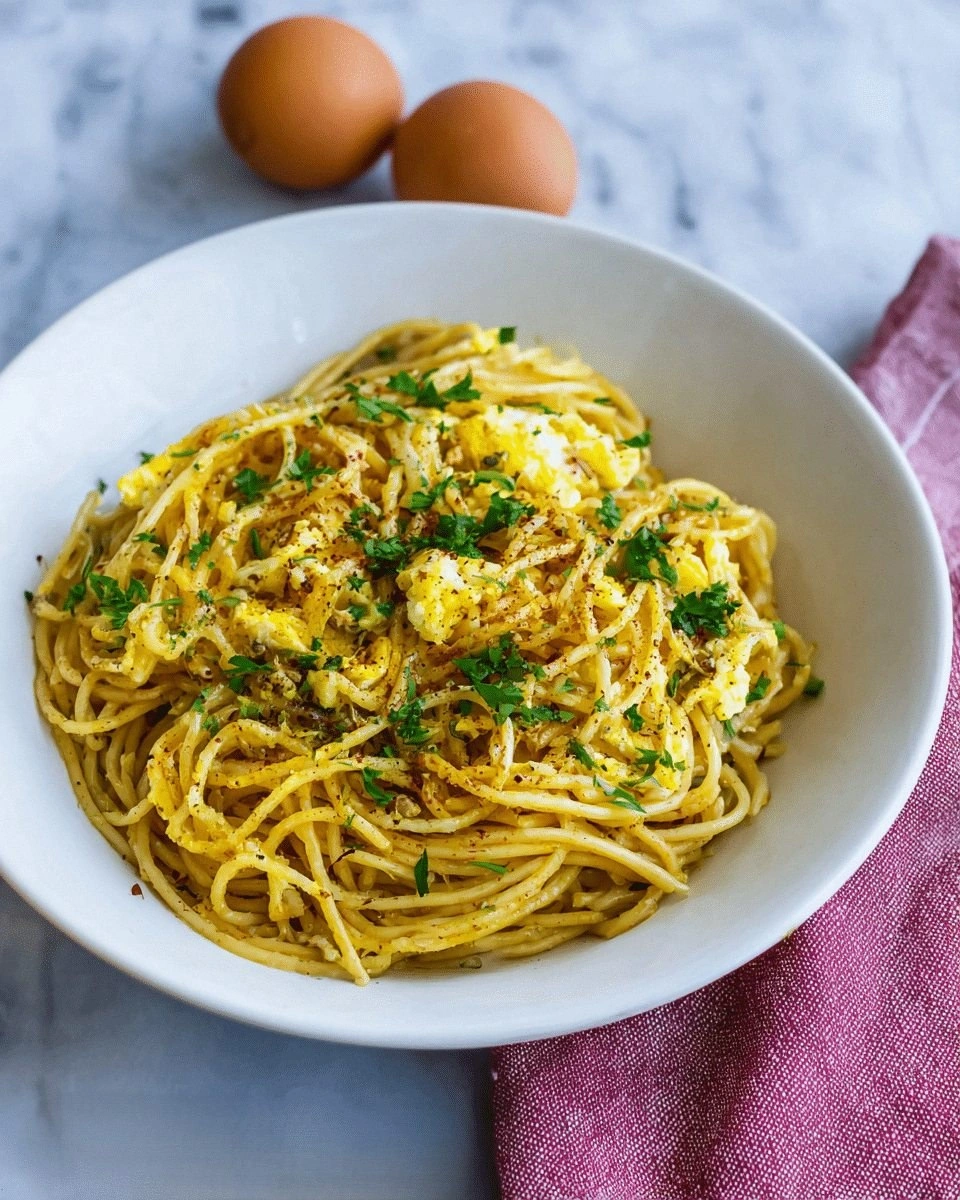
- Scramble the eggs. Crack the eggs into a bowl, whisk until the whites and yolks are fully blended, then pour them over the noodles. Let the eggs sit undisturbed for a few seconds until they begin to set, then gently stir with a spatula, forming soft curds. This technique creates fluffy, airy pockets that contrast with the firm noodles.
- Season the dish. Add the soy sauce, chili flakes, salt, and pepper to the pan. Toss everything together until the sauce coats the noodles and eggs evenly. The sauce should have a glossy sheen and a slightly thickened consistency. If it looks too thin, let it cook for another minute to reduce.
- Finish with scallions and cheese. Stir in the chopped scallions and grated parmesan. The scallions add a fresh, oniony brightness, while the parmesan melts into a creamy layer that clings to the noodles. Cook for an additional 30 seconds, just enough to allow the cheese to melt but not so long that it clumps.
- Serve immediately. Transfer the dish to a serving bowl and garnish with extra scallions if desired. The noodles should be hot, the eggs fluffy, and the sauce glossy. Serve with a side of pickled vegetables or a light salad to balance the richness.
That's it — you did it. But hold on, I've got a few more tricks that'll take this to another level.
Insider Tricks for Flawless Results
The Temperature Rule Nobody Follows
Many people think that a higher heat is always better, but the key to perfect fried spaghetti is a consistent medium‑high temperature. If the pan is too hot, the eggs will scramble into a dense block; if it's too cool, the noodles will steam instead of fry. Use a heat‑resistant spatula to keep the surface moving, and if you notice the sauce beginning to stick, reduce the heat slightly. This trick ensures even cooking and a beautiful caramelized finish.
Why Your Nose Knows Best
Smell is the first sense that tells you if your dish is on track. When the eggs are cooking, the scent should be airy and slightly buttery. If you notice a metallic or burnt smell, stop the pan immediately and adjust the heat. A good aroma signals that the proteins are cooked to perfection, and the sauce is developing its depth.
The 5-Minute Rest That Changes Everything
After you finish cooking, let the dish rest for five minutes before serving. This brief pause allows the flavors to meld, and the sauce to thicken slightly. The noodles absorb the sauce, creating a harmonious texture that’s more cohesive. A friend once tried skipping this step and the dish felt disjointed; the rest is a small price for a big payoff.
The Right Stir Technique
Use tongs or a wide spatula to stir, not a fork. Forks can break the eggs into tiny pieces, ruining the fluffy texture. Tongs keep the noodles intact and allow you to lift them gently, ensuring the sauce coats each strand evenly. This simple change can elevate the dish from mediocre to memorable.
The Secret of Crispy Edges
If you love a little crunch, try adding a splash of cold water to the pan just before you add the noodles. The water will steam and create a slight puff, giving the edges a crisp, caramelized finish. This trick is especially useful if you’re cooking in a cooler kitchen where the pan might not heat evenly.
Creative Twists and Variations
This recipe is a playground. Here are some of my favorite ways to switch things up:
Spicy Thai Twist
Swap the chili flakes for Thai bird chilies and add a splash of fish sauce. Top with fresh cilantro and lime wedges for an extra burst of freshness. The result is a dish that feels like a Thai street‑food favorite with a comforting noodle base.
Veggie Power
Add sliced bell peppers, mushrooms, and snow peas while sautéing the aromatics. These vegetables add color, crunch, and a nutritional boost. They also absorb the sauce, making each bite a burst of flavor.
Protein Boost
Stir in pre‑cooked shrimp, diced chicken, or tofu cubes just before adding the sauce. The protein will soak up the savory sauce, creating a hearty, satisfying meal that’s perfect for a quick dinner.
Creamy Alfredo
Replace the soy sauce with a light Alfredo sauce made from butter, cream, and parmesan. This version offers a rich, creamy texture that’s indulgent but still balanced by the nutty sesame oil.
Eggless Version
For a vegan twist, use crumbled tofu seasoned with turmeric and soy sauce instead of eggs. The tofu will mimic the texture of scrambled eggs, and the turmeric adds a subtle color and flavor.
Gluten-Free
Swap the spaghetti for rice noodles or zucchini noodles. The cooking time will differ slightly, but the flavor profile remains intact. This variation makes the dish suitable for gluten‑sensitive diners.
Storing and Bringing It Back to Life
Fridge Storage
Store leftovers in an airtight container in the refrigerator for up to 3 days. The noodles may soften slightly, but the sauce will keep them moist. Let the dish sit at room temperature for 10–15 minutes before reheating.
Freezer Friendly
For longer storage, place the cooked dish in a freezer‑safe bag and freeze for up to 3 months. When ready to eat, thaw overnight in the refrigerator, then reheat in a skillet with a splash of water to restore moisture.
Best Reheating Method
Reheat on medium heat, adding a small splash of water or broth to create steam. This technique prevents the noodles from drying out and keeps the sauce glossy. Stir occasionally to ensure even heating.